
Preventing Future Problems: Water Removal in Coastal Neighborhoods Near Biscayne Bay
Living near Biscayne Bay has obvious advantages — waterfront views, ocean breezes, and high property value. But coastal living also brings one ongoing challenge: water intrusion.
In neighborhoods near Biscayne Bay — including North Miami, Miami Shores, Biscayne Park, Aventura, and surrounding waterfront communities — water removal isn’t just about cleaning up after a flood. It’s about preventing long-term structural problems in an environment where moisture is constant.
Whether the water comes from heavy rain, storm surge, plumbing failures, or rising groundwater, the way it’s handled determines whether the issue ends quickly or becomes a recurring problem.
Here’s what property owners need to understand.
Why Coastal Properties Face Higher Water Risk
Homes and condos near Biscayne Bay operate under steady environmental pressure.
Local conditions include:
- High year-round humidity
- Wind-driven rain during storm season
- Elevated water tables
- King tide events
- Salt-heavy coastal air
- Concrete block construction
- Slab foundations
Even without major flooding, water can seep into structures more easily in these areas.
When moisture isn’t removed quickly and thoroughly, it lingers.
And in South Florida’s climate, lingering moisture is where long-term damage begins.
The Most Common Causes of Water Intrusion
Water removal becomes necessary in coastal neighborhoods for several reasons.
1. Storm Surge and Heavy Rain
During hurricane season, rising water levels and wind-driven rain can enter:
- Ground-floor living spaces
- Garage thresholds
- Sliding glass doors
- Drainage systems
Even minor flooding can saturate drywall, flooring, and insulation.
2. Elevated Groundwater
After extended rainfall, groundwater levels rise.
Moisture can migrate upward through slab foundations, leading to damp flooring and musty odors.
3. Plumbing Failures
Burst pipes, washing machine hose failures, and water heater leaks often cause interior flooding.
In waterfront condos, water from upper units can spread into neighboring properties.
4. AC Condensation Issues
Clogged condensate lines frequently cause overflow inside air handler closets, soaking surrounding materials.
Regardless of the source, rapid water removal is critical.
Why Immediate Water Removal Matters
In coastal climates, time works against you.
If materials remain wet for more than 24–48 hours:
- Mold growth becomes likely
- Insulation deteriorates
- Wood framing weakens
- Flooring warps
- Odors develop
Humidity slows natural drying.
Simply opening windows or running household fans is not enough.
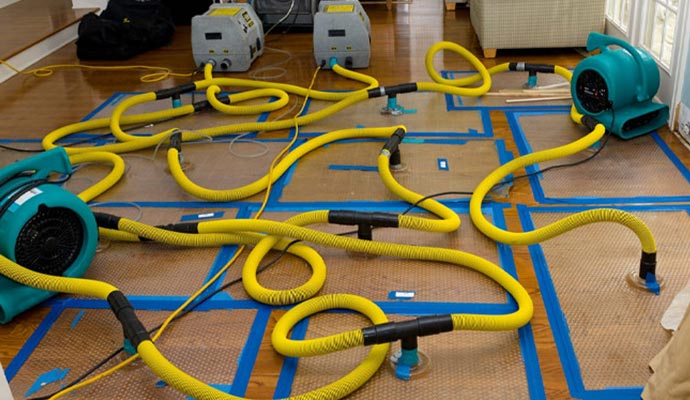
Professional water removal uses extraction equipment, dehumidifiers, and air movers to stabilize moisture quickly.
The Hidden Spread of Water
Water rarely stays in one place.
It travels into:
- Wall cavities
- Subflooring
- Baseboards
- Cabinet interiors
- Duct insulation
In slab-based homes common near Biscayne Bay, moisture can remain trapped beneath flooring.
Surface dryness does not mean structural dryness.
Moisture detection tools confirm whether water has migrated beyond visible areas.
Saltwater Adds Another Risk
When flooding involves saltwater — common during storm surge near Biscayne Bay — damage can accelerate.
Salt exposure:
- Increases corrosion
- Weakens electrical components
- Deteriorates metal fasteners
- Leaves residue that attracts moisture
Saltwater requires thorough cleaning and drying to prevent long-term deterioration.
Ignoring salt contamination can lead to ongoing structural issues.
The Mold Connection
Water removal and mold prevention are directly linked.
In humid coastal neighborhoods, mold can develop quickly after water events.
Common mold-prone areas include:
- Behind drywall
- Under carpet padding
- Inside HVAC systems
- Beneath laminate flooring
Prompt water removal significantly reduces the need for full mold remediation later.
Moisture control is always the first line of defense.
The Role of HVAC Systems After Water Intrusion
Flooding or interior leaks often affect air conditioning systems.
Water may enter:
- Air handler closets
- Duct insulation
- Return vents
If HVAC systems are not inspected after water events, moisture may circulate through the property.
Air duct cleaning and AC maintenance may be necessary after significant water intrusion.
Ignoring the HVAC system increases recurrence risk.
Why DIY Water Removal Often Falls Short
Property owners often attempt to handle minor flooding themselves.
However, without industrial equipment:
- Deep moisture remains in subfloors
- Insulation stays damp
- Humidity levels remain elevated
- Hidden mold risk increases
Professional water removal includes:
- High-powered extraction
- Industrial dehumidification
- Air movement
- Moisture mapping
- Daily monitoring
Verification of dryness prevents long-term damage.
Guessing does not.
Preventing Future Water Problems
Water removal should always be paired with preventive measures.
Property owners near Biscayne Bay can reduce risk by:
- Inspecting roof flashing before storm season
- Maintaining sliding door seals
- Monitoring indoor humidity
- Servicing AC systems regularly
- Installing backflow prevention devices
- Replacing aging plumbing lines
- Scheduling post-storm moisture inspections
Waterfront properties require extra vigilance due to groundwater influence.
Routine maintenance prevents emergency restoration.
The Importance of Post-Storm Inspections
Even if no visible flooding occurs, wind-driven rain may have entered concealed areas.
Post-storm inspections help identify:
- Attic moisture
- Wall cavity dampness
- Slab moisture migration
- HVAC contamination
Early detection prevents slow structural deterioration.
In nearby communities like North Miami Beach, Bal Harbour, and Surfside, minor storm intrusion often leads to delayed water damage cases when inspection is skipped.
Why Local Experience Matters
Water removal in coastal neighborhoods near Biscayne Bay requires understanding:
- Coastal humidity behavior
- Saltwater impact
- Slab foundation moisture patterns
- High-rise drainage systems
- Hurricane-driven water intrusion
Professionals familiar with North Miami, Miami Shores, Aventura, and surrounding bayfront communities know how water spreads in these specific environments.
Tip Top Water and Fire Damage Restoration approaches water removal with local insight, focusing on moisture stabilization and long-term protection.
Experience helps prevent incomplete drying and repeat damage.
A Practical, Preventive Approach
Living near Biscayne Bay means moisture will always be part of the environment.
The goal isn’t to eliminate risk — it’s to manage it.
If water enters your property:
- Act immediately
- Remove standing water
- Measure hidden moisture
- Dry structural materials completely
- Inspect HVAC systems
- Confirm dryness before rebuilding
Preventing future problems starts with thorough water removal.
In coastal South Florida, early response protects your structure, indoor air quality, and long-term property value.
Handled correctly, even significant water events remain manageable — and preventable — in the future.