
A Property Owner’s Guide to Mold Inspection in Miami Shores
In Miami Shores, mold problems rarely begin with dramatic black patches spreading across walls.
More often, they start quietly — a musty odor after heavy rain, slight discoloration along baseboards, soft drywall near an AC vent. Because this community sits just west of Biscayne Bay and experiences year-round humidity, moisture behaves differently here than in dry inland cities.
Mold inspection in Miami Shores is not about creating alarm. It’s about identifying hidden moisture, confirming whether growth is present, and preventing small issues from becoming larger structural problems.
For homeowners, landlords, and property managers, understanding how mold inspection works is part of responsible home maintenance in coastal South Florida.
Why Miami Shores Homes Are Vulnerable to Mold
Miami Shores properties face several environmental pressures:
- Elevated year-round humidity
- Heavy seasonal rainfall
- Salt air exposure
- Slab-on-grade construction
- Aging plumbing systems in older homes
- Continuous AC operation
Many homes in Miami Shores were built decades ago. While solidly constructed, older materials may have experienced years of moisture exposure.
Even small leaks can escalate quickly in this climate.
Nearby areas like North Miami, Biscayne Park, and North Miami Beach experience similar conditions — particularly during summer storms.
What Mold Inspection Actually Involves
Mold inspection is not just looking for visible growth.
A thorough inspection typically includes:
- Visual evaluation of walls, ceilings, and baseboards
- Attic inspection
- Moisture meter readings
- HVAC system assessment
- Slab moisture evaluation
- Air or surface sampling when appropriate
The goal is to identify both:
- Active mold growth
- Conditions that support growth
Moisture detection is the foundation of effective inspection.
Tip Top Water and Fire Damage Restoration often begins inspections in Miami Shores with detailed moisture mapping to locate hidden damp areas.
Without identifying moisture sources, inspection is incomplete.
Common Mold Sources in Miami Shores Homes
Mold inspection frequently reveals moisture from:
1. AC Condensation Problems
Clogged condensate drain lines can cause water to back up into ceiling cavities.
Because AC systems run nearly year-round, condensation leaks are common.
2. Roof Leaks
Wind-driven rain can enter through flashing or aging roof materials.
Attics trap warm air, making them ideal for mold growth when damp.
3. Plumbing Leaks
Slow drips behind walls may go unnoticed for months.
4. Slab Moisture Migration
After prolonged rain, groundwater levels may rise.
Moisture can travel upward through concrete and appear along baseboards.
5. Window and Door Seal Failures
Large windows exposed to coastal wind may allow minor intrusion over time.
Identifying the source prevents recurring mold problems.
Signs Property Owners Should Watch For
Mold often develops before it becomes visible.
Early warning signs include:
- Persistent musty odor
- Peeling or bubbling paint
- Discoloration along drywall seams
- Soft drywall near baseboards
- Elevated indoor humidity
- AC running longer than usual
In Miami Shores, odor is often the first indicator.
Humidity intensifies mold-related smells during rainy periods.
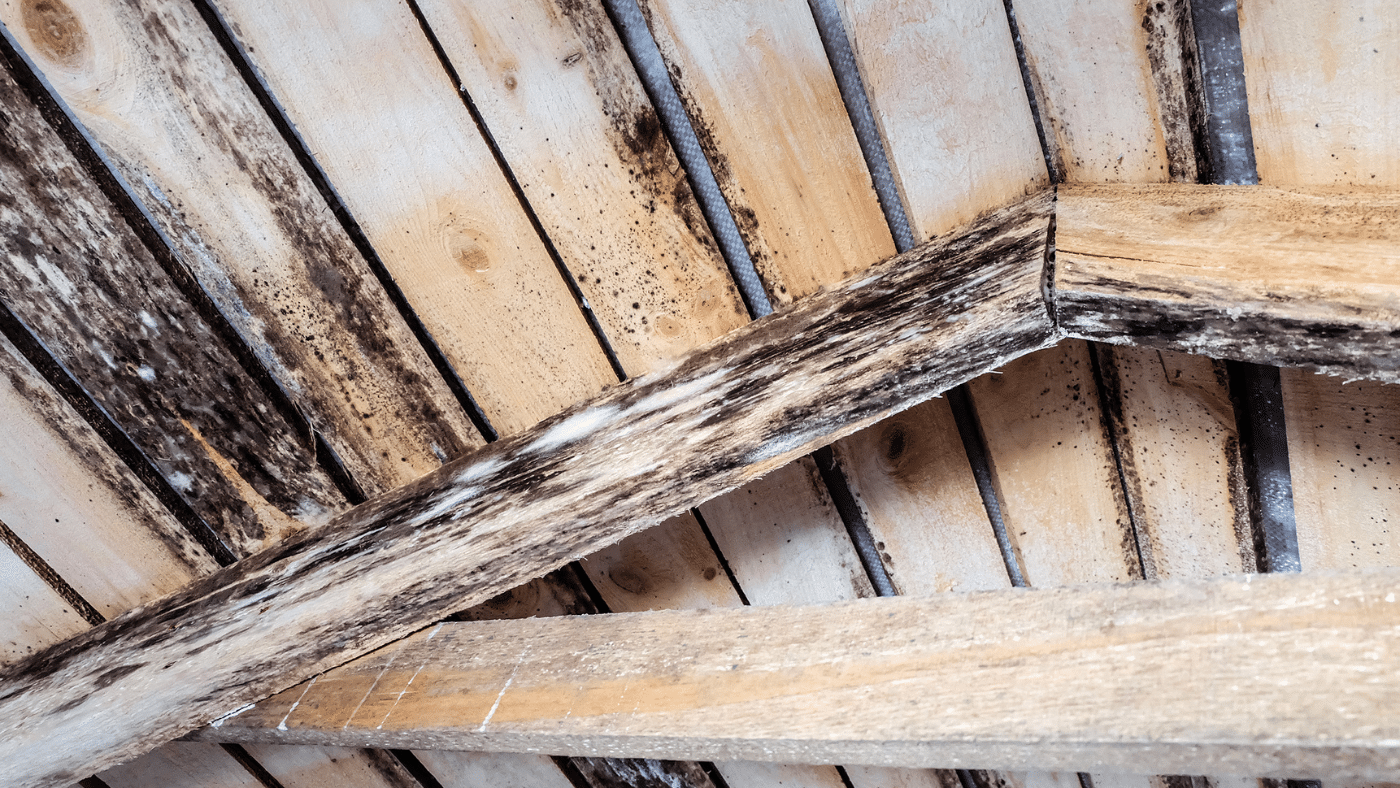
The Importance of Attic Inspections
Attics are frequently overlooked.
During heavy rain, small roof leaks may dampen insulation without visible ceiling stains.
Warm attic temperatures combined with humidity create ideal mold conditions.
Inspection should include:
- Checking insulation
- Examining roof decking
- Measuring attic moisture levels
Ignoring attic moisture often allows mold to spread unnoticed.
HVAC Systems and Mold Spread
Air conditioning systems can circulate spores if contamination is present.
Inspection should evaluate:
- Air handler units
- Drain pans
- Condensate lines
- Duct interiors
Damp duct insulation can contribute to indoor air quality concerns.
Continuous AC operation in South Florida makes HVAC evaluation essential during mold inspection.
Slab Foundations and Hidden Dampness
Many Miami Shores homes are built on concrete slabs.
After heavy rain, moisture may:
- Rise along flooring edges
- Appear beneath carpet
- Swell baseboards
Slab moisture spreads laterally before becoming visible.
Moisture meters confirm whether dampness originates from below rather than from plumbing or roof issues.
Air Sampling and Surface Testing
In some cases, testing helps clarify conditions.
Air sampling compares indoor spore levels to outdoor baselines.
Surface samples may identify the type of mold present.
In coastal environments, outdoor mold levels are often naturally elevated.
Interpreting results requires understanding local humidity patterns.
Testing provides data, but moisture correction remains the priority.
Why Quick Inspection Makes a Difference
In Miami Shores’ humid climate, mold can begin developing within 48–72 hours after water exposure.
Delaying inspection allows growth to:
- Spread deeper into wall cavities
- Affect insulation
- Increase remediation scope
- Impact indoor air quality
Early detection limits structural damage and repair costs.
Small moisture issues rarely resolve on their own in coastal conditions.
Preventative Maintenance for Mold Control
Mold inspection often highlights preventable issues.
Property owners can reduce risk by:
- Servicing AC systems annually
- Flushing condensate drain lines
- Inspecting roofs after storms
- Sealing window and door frames
- Monitoring indoor humidity
- Scheduling periodic moisture evaluations
In humid climates, prevention is always easier than remediation.
High-Rise vs. Single-Family Homes
While Miami Shores primarily consists of single-family homes, nearby Aventura and Sunny Isles Beach feature high-rise condos.
In multi-story buildings:
- Plumbing failures may affect multiple units
- Shared ventilation systems complicate inspection
- Vertical moisture migration is common
In slab homes:
- Groundwater migration plays a larger role
- Exterior drainage is critical
Understanding building type shapes inspection strategy.
Why Local Experience Matters
Mold inspection in Miami Shores requires understanding:
- Elevated humidity baselines
- Salt air exposure
- Slab foundation behavior
- Storm-driven rain patterns
- Continuous AC operation
Inspection strategies used in dry inland regions may not fully account for these coastal variables.
Tip Top Water and Fire Damage Restoration approaches mold inspection with knowledge specific to South Florida’s environmental conditions.
Local experience ensures accurate interpretation of moisture readings and testing results.
Protecting Your Property Long-Term
Mold inspection is not just about identifying growth.
It’s about protecting:
- Structural integrity
- Indoor air quality
- Property value
- Long-term maintenance stability
In Miami Shores, moisture is a constant environmental factor.
But mold does not have to be.
With early detection, proper moisture control, and consistent maintenance, homeowners can prevent small issues from escalating into larger restoration projects.
In coastal South Florida, vigilance and proactive inspection are key to keeping homes dry, stable, and healthy.