
Property Maintenance Insights: Fire Damage Restoration in Coastal Neighborhoods Near Biscayne Bay
Coastal neighborhoods near Biscayne Bay — including North Miami, Miami Shores, Biscayne Park, Aventura, and Surfside — are often associated with water-related damage. But fire damage is just as disruptive, and in many cases, more complex.
What makes fire damage restoration especially challenging in these waterfront communities is the combination of smoke contamination, salt air exposure, high humidity, and corrosion risk. Fire damage in coastal South Florida is not just about burned materials. It’s about how smoke, moisture, and salt interact afterward.
Understanding how restoration works in these environments helps property owners protect both structure and long-term value.
Why Fire Damage Is Different in Coastal Areas
Inland fire restoration focuses primarily on soot removal, odor control, and rebuilding.
Near Biscayne Bay, restoration must also address:
- High humidity after suppression efforts
- Salt air corrosion
- Moisture retention in structural materials
- HVAC contamination
- Mold risk following water use
Fire departments use significant amounts of water to extinguish flames. In coastal neighborhoods, that water combines with already humid air, slowing drying and increasing the chance of secondary damage.
Fire damage restoration here often includes water removal and moisture control as critical steps.
Immediate Concerns After a Fire
When a fire occurs in North Miami or Miami Shores, the most visible damage may be limited to one room.
However, smoke travels quickly through:
- Ceiling cavities
- Air ducts
- Wall assemblies
- Attic spaces
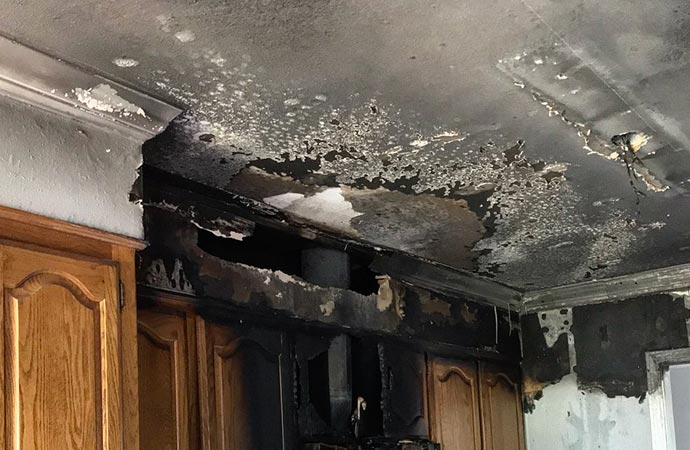
Even properties that experience minor kitchen fires may have widespread soot contamination.
In coastal environments, soot particles mix with humidity and cling to surfaces more aggressively.
Immediate response is essential to prevent permanent staining and corrosion.
The Hidden Damage from Smoke and Soot
Smoke damage is often underestimated.
Soot is acidic. When combined with South Florida’s humidity, it accelerates corrosion of:
- Metal fixtures
- Electrical wiring
- Appliances
- HVAC components
- Window frames
In waterfront homes near Biscayne Park and Surfside, salt exposure already stresses metal materials. After a fire, corrosion can progress rapidly if surfaces are not cleaned promptly.
Professional fire damage restoration includes specialized soot removal to prevent long-term deterioration.
Water Damage from Fire Suppression
Even small fires often require heavy water application.
In high-rise buildings near Aventura and North Miami Beach, water from upper units may flow downward during suppression efforts.
Water from extinguishing efforts can:
- Saturate drywall
- Soak insulation
- Pool in subfloors
- Enter duct systems
Because coastal air remains humid, drying must begin immediately.
Without controlled dehumidification, mold growth may develop within days.
Fire restoration in coastal neighborhoods nearly always includes structural drying.
HVAC Systems and Smoke Contamination
Air conditioning systems circulate smoke and soot throughout a property during a fire.
Afterward, HVAC systems may contain:
- Soot buildup
- Smoke odor
- Moisture from suppression efforts
In humid coastal air, soot residue becomes sticky and more difficult to remove.
Air duct cleaning is often required as part of comprehensive fire restoration.
If ducts are not cleaned, odors may persist long after visible damage is repaired.
Structural Cleaning in Coastal Conditions
Fire restoration in coastal homes requires thorough cleaning of:
- Framing
- Concrete surfaces
- Attic decking
- Cabinetry
- Insulation
Because humidity slows drying, restoration professionals use industrial dehumidifiers and air movers to stabilize indoor conditions.
Moisture monitoring ensures materials are fully dry before reconstruction begins.
Skipping this step increases the risk of mold growth weeks later.
Electrical and Mechanical System Inspections
Fire damage near Biscayne Bay often requires additional attention to electrical systems.
Salt air exposure combined with fire residue can accelerate corrosion in wiring and panels.
Post-fire inspections typically include:
- Electrical panel evaluation
- Appliance inspection
- HVAC component testing
- Lighting fixture replacement if necessary
These steps protect long-term safety.
Odor Removal in Humid Environments
Smoke odor removal is more challenging in humid climates.
Moisture causes odor particles to reabsorb into porous materials.
Effective odor control may involve:
- HEPA air filtration
- Hydroxyl or ozone treatment (when appropriate)
- Deep cleaning of structural surfaces
- Replacement of heavily affected materials
In waterfront properties, humidity control during odor treatment improves effectiveness.
Proper containment ensures odors do not spread to unaffected areas.
Reconstruction After Fire Damage
Once cleaning and drying are complete, reconstruction begins.
Repairs may include:
- Replacing drywall
- Installing new insulation
- Repainting
- Repairing cabinetry
- Replacing flooring
Reconstruction should only proceed after moisture levels and air quality are verified.
In coastal environments, rushing this stage leads to future complications.
Mold Risk After Fire Suppression
One of the most overlooked risks in fire damage restoration near Biscayne Bay is mold.
Water used to extinguish flames saturates materials quickly.
If drying is incomplete, mold growth may begin within 48 hours.
Fire restoration must include:
- Moisture detection
- Humidity monitoring
- Rapid drying
- Inspection for microbial growth
Ignoring water damage while focusing only on fire damage leads to secondary restoration costs.
Multi-Unit Buildings and Shared Systems
In condo communities near North Miami Beach and Aventura, fire damage may affect multiple units.
Smoke travels through shared ventilation systems.
Water from suppression may drip into units below.
Restoration must be coordinated carefully to prevent cross-contamination.
Containment barriers and negative air machines are often used to isolate affected spaces.
Preventive Maintenance Insights for Coastal Properties
While fires are unpredictable, property owners in coastal neighborhoods can reduce risk by:
- Inspecting electrical systems regularly
- Cleaning dryer vents
- Maintaining kitchen exhaust systems
- Servicing HVAC systems
- Replacing aging wiring
- Installing smoke detection devices
After any minor fire event, professional inspection ensures hidden damage is addressed before it worsens.
Why Local Coastal Experience Matters
Fire damage restoration in coastal neighborhoods near Biscayne Bay requires understanding:
- How humidity impacts soot behavior
- How salt exposure accelerates corrosion
- How storm patterns affect drying timelines
- How slab foundations retain moisture
- How multi-unit buildings complicate restoration
A restoration professional familiar with North Miami, Miami Shores, Biscayne Park, Surfside, and Aventura understands these environmental challenges.
Tip Top Water and Fire Damage Restoration has addressed fire and smoke damage throughout these communities, applying drying and cleaning strategies tailored to South Florida’s coastal climate.
Local experience improves efficiency and long-term results.
A Practical Perspective for Property Owners
Fire damage restoration in coastal neighborhoods is not just about repairing what burned.
It involves:
- Removing soot contamination
- Addressing water damage
- Controlling humidity
- Inspecting HVAC systems
- Preventing mold growth
- Protecting against corrosion
Coastal weather adds complexity to every stage.
Quick action, structured cleaning, proper drying, and professional evaluation ensure that properties near Biscayne Bay recover fully.
With careful restoration and preventive maintenance, waterfront homes can remain safe, stable, and protected — even after unexpected fire events.