
A Property Owner’s Guide to Flood Restoration in Aventura
Aventura is known for luxury high-rise condos, waterfront communities along the Intracoastal, and beautifully maintained residential neighborhoods. But being surrounded by water comes with risk. Flooding — whether from heavy rain, storm surge, plumbing failures, or upper-unit leaks — is a reality property owners must be prepared for.
Flood restoration in Aventura is not just about removing standing water. It’s a structured process designed to protect structural integrity, prevent mold growth, stabilize indoor air quality, and preserve long-term property value.
If you own property in Aventura, understanding how flood restoration works — and what makes it different in a coastal environment — can save time, money, and unnecessary stress.
Understanding What “Flood” Means in Aventura
Flooding in Aventura doesn’t always mean several inches of water covering the floor.
Common flood scenarios include:
- Balcony drainage overflow during storms
- Wind-driven rain intrusion
- Roof leaks in high-rise buildings
- Broken pipes in upper floors
- Storm surge in ground-level units
- Rising groundwater beneath slab foundations
Even a small amount of water can saturate drywall, insulation, carpet padding, and subfloors.
In South Florida’s humid climate, moisture spreads quickly.
Flood restoration becomes necessary when water penetrates beyond the surface layer.
Why Flood Restoration Is More Complex in Coastal Areas
Aventura’s proximity to Biscayne Bay and the Intracoastal creates additional challenges:
- High humidity slows drying
- Salt exposure accelerates corrosion
- Multi-unit buildings allow water migration
- Slab foundations retain moisture
Unlike inland areas, opening windows rarely helps dry a flooded space.
Outdoor humidity often exceeds indoor levels.
Professional drying methods are required to restore stable conditions.
Step 1: Stop the Water Source
Before restoration begins, the source of flooding must be controlled.
This may involve:
- Shutting off plumbing lines
- Repairing roof penetrations
- Clearing clogged balcony drains
- Securing damaged windows
- Coordinating with building management in high-rises
Flood restoration cannot succeed if water continues entering the property.
Immediate stabilization limits secondary damage.
Step 2: Rapid Water Extraction
Standing water spreads quickly across flooring and into adjacent rooms.
Professional extraction equipment removes water from:
- Tile and grout
- Hardwood floors
- Carpet and padding
- Concrete slabs
- Subfloor assemblies
In high-rise condos, water may migrate through shared wall cavities.
Extraction must address both visible and hidden areas.
Rapid removal within the first 24 hours significantly reduces mold risk.
Step 3: Removal of Saturated Materials
Not all materials can be saved.
Common materials requiring removal include:
- Carpet padding
- Wet insulation
- Lower sections of drywall
- Warped baseboards
- Damaged cabinetry
In Aventura’s humid climate, leaving saturated materials in place increases microbial growth risk.
Selective demolition protects unaffected areas while allowing structural drying to begin.
Step 4: Structural Drying and Dehumidification
After water extraction and removal of damaged materials, drying begins.
Flood restoration in Aventura requires:
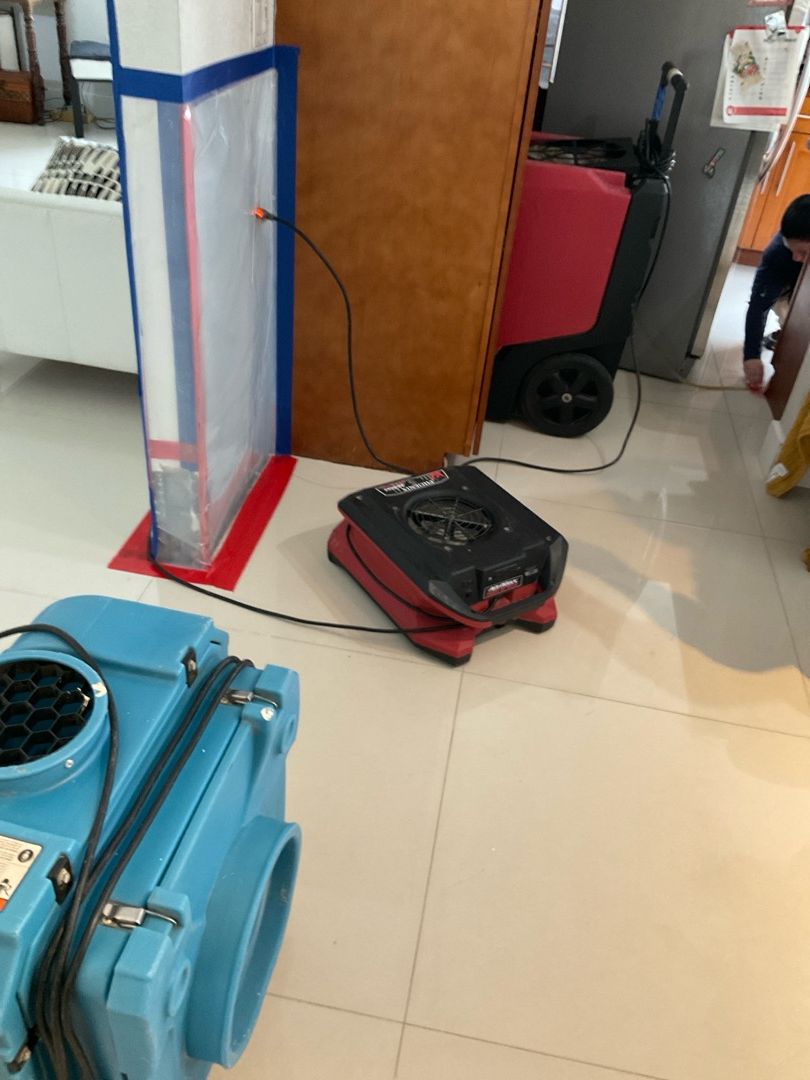
- Commercial-grade dehumidifiers
- High-velocity air movers
- Controlled airflow management
- Daily moisture monitoring
Concrete slabs and framing retain moisture longer in humid environments.
Drying continues until moisture readings confirm safe levels.
Surface dryness is not enough.
Step 5: Mold Risk Assessment
In South Florida, mold can begin developing within 24–48 hours after water exposure.
Flood restoration often includes inspection for:
- Musty odors
- Visible microbial growth
- Damp insulation
- Elevated humidity
If mold is detected, remediation may be necessary before reconstruction.
Addressing mold early prevents indoor air quality concerns later.
Step 6: HVAC System Evaluation
Flooding can impact HVAC systems in several ways:
- Water entering air handlers
- Damp duct insulation
- Clogged condensate drain lines
- Corroded components from salt exposure
In high-rise Aventura buildings, HVAC systems may serve multiple units.
Inspection ensures that moisture does not circulate through the ventilation system.
Air duct cleaning may be recommended if contamination occurred.
Special Considerations for High-Rise Condos
Flood restoration in Aventura high-rises presents unique challenges:
- Water from upper floors affecting lower units
- Shared plumbing stacks
- Vertical moisture migration
- Common area involvement
Coordination with building management is essential.
Documentation of damage protects property owners during insurance claims.
Containment may be required to prevent cross-unit contamination.
Saltwater Contamination and Corrosion
If flooding involves storm surge or exterior intrusion near the Intracoastal, saltwater may be present.
Saltwater accelerates:
- Electrical corrosion
- Metal fastener deterioration
- Appliance damage
- HVAC component failure
Thorough cleaning and inspection are necessary to prevent long-term corrosion.
Ignoring salt residue leads to gradual structural decline.
Reconstruction and Restoration
Once drying and mold assessment are complete, reconstruction begins.
This may include:
- Installing new drywall
- Replacing insulation
- Repainting walls and ceilings
- Repairing flooring
- Restoring cabinetry
Rebuilding should only begin after moisture readings confirm stability.
Premature reconstruction traps moisture and increases recurrence risk.
Preventive Strategies for Aventura Property Owners
While flood restoration addresses immediate damage, prevention reduces future risk.
Property owners can:
- Inspect balcony and roof drainage before storm season
- Maintain AC drain lines
- Install water leak sensors
- Monitor indoor humidity levels
- Schedule annual moisture inspections
- Maintain exterior seals and flashing
Vacation properties should maintain moderate climate control year-round.
Humidity buildup in empty units is a frequent cause of hidden damage.
Insurance and Documentation
Flood restoration often involves insurance claims.
Accurate documentation includes:
- Photographs of damage
- Moisture readings
- Removal logs
- Drying records
- Repair estimates
Clear records simplify claim processing.
Early assessment supports faster resolution.
Why Local Coastal Experience Matters
Flood restoration in Aventura requires understanding:
- High-rise building dynamics
- Wind-driven rain patterns
- Saltwater contamination
- Slab moisture migration
- Coastal humidity behavior
A restoration professional familiar with Aventura, North Miami Beach, Sunny Isles Beach, and nearby bayfront communities recognizes how these environmental pressures affect structures.
Tip Top Water and Fire Damage Restoration has handled flood restoration projects throughout these coastal neighborhoods, applying drying strategies tailored specifically to South Florida’s climate.
Local expertise ensures complete recovery — not temporary cleanup.
A Practical Perspective for Property Owners
Flood restoration in Aventura is about more than water removal.
It involves:
- Immediate source control
- Thorough extraction
- Removal of saturated materials
- Controlled structural drying
- Mold prevention
- HVAC evaluation
- Careful reconstruction
In coastal South Florida, humidity and salt exposure complicate every stage.
Quick action within the first 24–48 hours significantly improves outcomes.
Flooding may be part of waterfront living, but long-term damage does not have to be.
With a structured restoration approach and proactive prevention, Aventura property owners can protect structural integrity, indoor air quality, and long-term property value — even in the face of coastal challenges.