
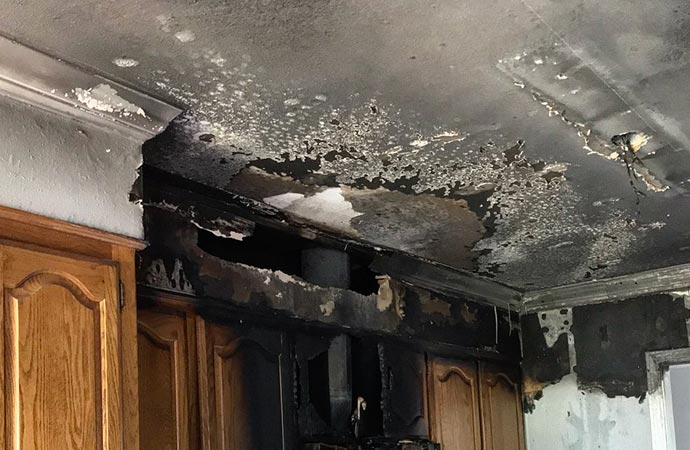
Property Maintenance Insights: Smoke Damage Cleanup in Bayfront Homes in North Miami
Bayfront homes in North Miami are designed for open views, natural light, and seamless indoor-outdoor living. Large windows, sliding glass doors, high ceilings, and continuous air conditioning define many waterfront properties near Biscayne Bay.
But when a fire event occurs — even a small one — smoke behaves differently in a coastal environment.
Smoke damage cleanup in bayfront homes is not simply about wiping down soot. In humid, salt-influenced air, smoke residue becomes more corrosive, spreads further, and lingers longer. Property maintenance after a smoke event must address not only visible staining, but hidden contamination and long-term material stability.
If you own a bayfront home in North Miami, understanding how smoke interacts with coastal conditions is essential.
Why Smoke Spreads So Easily in Waterfront Homes
Bayfront properties often feature open layouts with fewer interior barriers. When smoke is introduced into the space, it can move quickly through:
- Vaulted ceilings
- Open staircases
- Large living areas
- HVAC return vents
- Attic cavities
Even a contained kitchen fire may result in soot deposition in bedrooms, closets, and mechanical spaces.
Because air conditioning systems run nearly year-round in North Miami, smoke particles can circulate through ductwork rapidly.
Smoke damage cleanup becomes necessary even when flames were limited to a single room.
Coastal Humidity Increases Corrosion Risk
Smoke residue contains acidic particles.
In North Miami’s humid climate, soot absorbs moisture from the air. When combined with salt exposure from Biscayne Bay, this mixture becomes even more corrosive.
Within hours, soot may begin affecting:
- Stainless steel appliances
- Light fixtures
- Door hardware
- HVAC components
- Electrical panels
The longer residue remains, the greater the potential for permanent damage.
Humidity accelerates this process.
Odor Embeds Faster in Humid Environments
Bayfront homes often include porous materials such as:
- Upholstery
- Hardwood cabinetry
- Area rugs
- Decorative fabrics
- Acoustic ceiling materials
In humid air, smoke particles bond more deeply to porous surfaces.
If cleanup is delayed, odor becomes embedded and harder to neutralize.
Property maintenance after smoke exposure must include air scrubbing and thorough surface cleaning to prevent long-term odor retention.
HVAC Systems Are a Critical Factor
In waterfront homes, HVAC systems operate continuously to manage heat and humidity.
When smoke enters the system, soot can:
- Accumulate in duct interiors
- Settle on evaporator coils
- Spread into return vents
- Recirculate during cooling cycles
If HVAC inspection is skipped, odor and fine particles may persist.
Smoke damage cleanup should always include evaluating air handlers and ductwork.
Protecting indoor air quality is part of proper restoration.
Fire Suppression Adds Moisture
Even small fires often involve:
- Sprinkler activation
- Fire extinguisher discharge
- Fire hose spray
That moisture combines with soot to create sticky residue that spreads easily.
In bayfront homes, where humidity is already elevated, this combination increases the risk of:
- Surface staining
- Mold development
- Material swelling
Moisture detection and drying are important components of smoke damage cleanup.
Ceiling Cavities and Attics Are Often Overlooked
Smoke rises.
In homes with attic spaces, soot may settle into:
- Insulation
- Roof decking
- Duct insulation
- Structural framing
Because these areas are not immediately visible, contamination can remain unnoticed.
Property maintenance after smoke exposure should include inspection of upper cavities.
Ignoring these spaces may allow odor to linger for months.
Electronics and Appliances Require Early Attention
Fine soot particles settle into electronics quickly.
In salt-exposed waterfront properties, corrosion risk increases.
Affected items may include:
- Smart home systems
- HVAC control panels
- Refrigerators
- Dishwashers
- Garage door systems
Early cleaning reduces long-term failure risk.
Delays often lead to replacement rather than repair.
Multi-Property Considerations Near Biscayne Bay
In some North Miami waterfront communities, homes sit close together or share mechanical systems in townhome-style layouts.
Smoke can migrate through:
- Shared ventilation pathways
- Roof cavities
- Attic connections
Property maintenance may involve confirming that adjacent spaces were not affected.
Cross-contamination is often overlooked.
The Structured Smoke Damage Cleanup Process
Effective smoke damage cleanup in bayfront homes typically includes:
- Detailed inspection and contamination mapping
- HEPA air filtration to capture airborne particles
- Surface cleaning using appropriate solutions
- HVAC inspection and cleaning if needed
- Odor neutralization treatments
- Moisture detection and drying
- Sealing and repainting if necessary
Each step reduces long-term deterioration.
Surface wiping alone is insufficient in humid coastal climates.
Long-Term Maintenance After Cleanup
Once smoke damage cleanup is complete, ongoing maintenance protects the property.
Bayfront homeowners should:
- Maintain indoor humidity between 45–55%
- Replace HVAC filters regularly
- Schedule annual HVAC inspections
- Monitor for odor recurrence
- Clean metal fixtures periodically
- Inspect attic spaces after major events
Consistent maintenance prevents residue reactivation.
Humidity control remains essential.
Why Acting Quickly Matters
Time directly affects outcome.
Within 24–48 hours after smoke exposure:
- Corrosion begins
- Odor embeds deeper
- Staining darkens
- HVAC contamination spreads
Quick action reduces restoration scope.
Waiting increases both cost and structural impact.
Why Local Coastal Experience Matters
Smoke damage cleanup in bayfront homes requires understanding:
- Coastal humidity behavior
- Salt air corrosion patterns
- HVAC circulation in waterfront properties
- Wind exposure during fire events
- Attic and roof cavity contamination
A restoration professional familiar with North Miami, Miami Shores, Biscayne Park, Aventura, and nearby waterfront neighborhoods understands how these environmental factors influence smoke damage progression.
Tip Top Water and Fire Damage Restoration has addressed smoke-related incidents throughout these coastal communities, applying cleanup strategies tailored specifically to South Florida’s climate.
Local experience ensures long-term protection — not temporary surface cleaning.
A Practical Perspective for Bayfront Property Owners
Smoke damage cleanup in North Miami bayfront homes becomes necessary not only because something burned — but because of how smoke interacts with humidity and salt air.
Even small fires can result in:
- Widespread soot deposition
- HVAC contamination
- Corrosion of metals
- Persistent odors
- Moisture-related secondary damage
Waterfront living adds environmental pressure that accelerates deterioration.
With structured cleanup, humidity control, and proactive maintenance, property owners can restore indoor air quality, preserve finishes, and protect long-term structural integrity.
In coastal South Florida, quick action and consistent maintenance make the difference between minor cleanup and long-term repair.
Smoke may dissipate quickly. Residue does not — unless addressed properly.