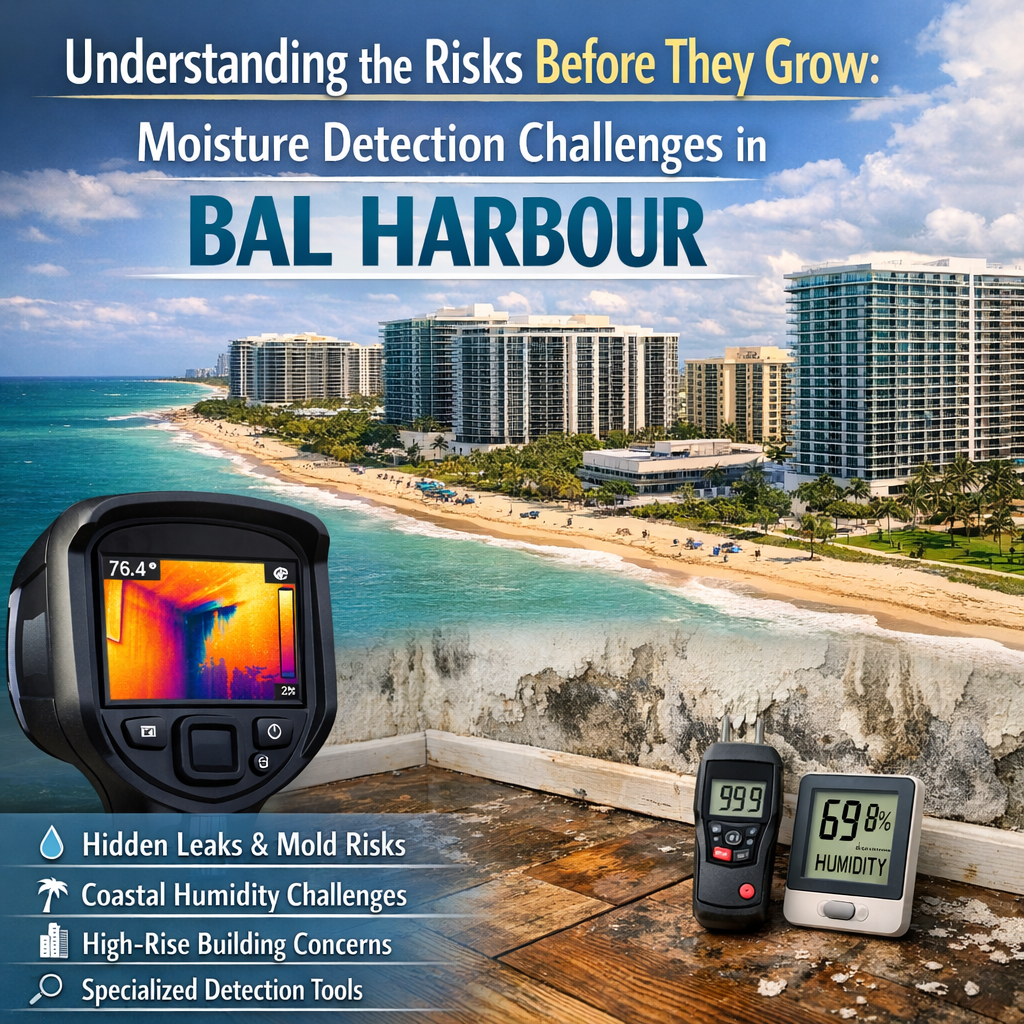
Understanding the Risks Before They Grow: Moisture Detection Challenges in Bal Harbour
Living in Bal Harbour offers the allure of waterfront living, luxurious high-rise condos, and access to some of South Florida’s most picturesque neighborhoods. Yet, these coastal advantages come with unique property maintenance challenges. Among the most significant is moisture intrusion, which often goes unnoticed until it has already caused structural or health-related damage. For homeowners and property managers, understanding moisture detection challenges in Bal Harbour is essential for preventing costly restoration work and long-term issues.
Why Moisture Detection Is Critical in Bal Harbour
Moisture is often the silent precursor to more serious problems such as mold growth, wood rot, and compromised indoor air quality. Coastal conditions in Bal Harbour amplify these risks, making proactive detection a cornerstone of home maintenance.
Local Environmental Factors
- High year-round humidity
- Salt-laden air from the Atlantic Ocean
- Frequent storms and heavy rainfall
- Elevated groundwater in some neighborhoods
- High-rise structures and slab foundations
These factors make it easy for moisture to penetrate walls, floors, ceilings, and ductwork, often in hidden ways. Detecting moisture early prevents small problems from escalating into large-scale damage.
1. Sources of Moisture in Bal Harbour Homes
Moisture can enter properties from several pathways, each with its own detection challenges.
A. HVAC Systems
Air conditioning units are crucial in the humid coastal climate but can also be a major source of water intrusion:
- Condensate line clogs
- Overflowing drip pans
- Coil condensation dripping into ceilings or walls
- Leaks in duct insulation
B. Plumbing Leaks
Hidden plumbing leaks in high-rise condos or single-family homes can remain unnoticed for weeks or months. Even minor leaks may saturate floors, walls, or cabinets, creating ideal conditions for mold growth.
C. Storm Water Intrusion
Bal Harbour experiences heavy wind-driven rain, especially during hurricane season. Water can penetrate through:
- Windows and sliding doors
- Balcony thresholds
- Roof flashing and wall penetrations
D. Ground Moisture
Concrete slabs in coastal homes absorb water from the soil beneath. Slab moisture often migrates upward, leading to damp flooring, baseboards, and subflooring over time.
2. The Challenge of Hidden Moisture
One of the key difficulties in moisture detection is that most moisture remains hidden until damage becomes visible. Walls, ceilings, floors, and even ductwork can trap water for extended periods. By the time homeowners notice discoloration or musty odors, the affected area may have expanded significantly.
Common Hidden Moisture Locations
- Behind bathroom and kitchen cabinetry
- Within wall cavities adjacent to exterior walls
- Beneath tile or laminate flooring
- In attic spaces and crawl spaces
- Inside HVAC ductwork
Hidden moisture increases the complexity and cost of remediation because it requires specialized equipment and careful assessment.
3. Signs That Moisture May Be Present
While moisture can remain hidden, several indicators can suggest the need for professional detection:
- Persistent musty odors
- Warping or buckling flooring
- Discoloration on walls or ceilings
- Condensation on windows or vents
- Higher-than-normal humidity readings indoors
Noticing these signs early can prevent small moisture issues from evolving into structural or health hazards.
4. The Tools Used in Professional Moisture Detection
Professional moisture detection goes beyond visual inspection. Coastal properties often require specialized tools due to the high humidity and hidden nature of water intrusion.
A. Moisture Meters
Pin or pinless meters measure moisture levels in wood, drywall, and flooring. They provide a quick assessment of affected areas.
B. Thermal Imaging Cameras
Thermal imaging identifies temperature differences caused by moisture. Cool spots often indicate water intrusion, condensation, or leaks.
C. Hygrometers
These devices measure indoor humidity levels, helping assess the risk of condensation or mold growth in the building envelope.
D. Inspection Cameras
Small cameras can be inserted into wall cavities, ceilings, or ducts to visualize hidden moisture without demolition.
5. Coastal Challenges That Complicate Detection
High Humidity Masks Moisture
Bal Harbour’s coastal environment means that elevated humidity is normal. This makes it difficult to distinguish between everyday moisture and problematic leaks without precise instruments.
Salt Air Accelerates Material Degradation
Salt-laden air accelerates corrosion in plumbing and HVAC systems. Moisture that may have been minor in another climate can quickly compromise building materials.
Wind-Driven Rain Causes Intermittent Leaks
Some leaks only occur during storms, making them hard to detect during routine inspections.
High-Rise Construction Adds Complexity
In multi-story condos, water from one unit can migrate to others, spreading unnoticed. Shared systems like HVAC and plumbing require coordinated detection and monitoring.
6. Risks of Ignoring Moisture Detection
Failing to detect moisture early can lead to:
- Mold Growth: Hidden moisture creates ideal conditions for black and other molds, threatening indoor air quality.
- Structural Damage: Prolonged dampness weakens wood framing, drywall, and flooring systems.
- HVAC Complications: Moisture in ducts or near air handlers can reduce efficiency and spread contaminants.
- Health Concerns: Indoor allergens and microbes flourish in damp environments, affecting occupant health.
- Increased Restoration Costs: Delayed detection often results in more extensive water removal, drying, and mold remediation.
7. Best Practices for Homeowners
Regular Inspections
Schedule annual moisture and HVAC inspections, especially before and after the rainy season.
Monitor Humidity
Maintain indoor humidity between 45–55% to reduce condensation risk. Consider using dehumidifiers in particularly humid periods.
Check Common Entry Points
- Windows, doors, and balcony seals
- AC drip pans and condensate lines
- Plumbing joints and fixtures
- Roof penetrations
Respond Immediately to Suspicious Signs
Any musty odor, water stain, or warped surface should trigger a professional moisture assessment.
8. The Role of Local Expertise
Bal Harbour properties require specialized knowledge due to:
- Coastal climate patterns
- High-rise construction
- Slab foundation moisture issues
- Salt air material degradation
Professionals like Tip Top Water and Fire Damage Restoration have experience in identifying moisture risks unique to Bal Harbour homes. Their expertise ensures that detection is accurate, minimally invasive, and effective in preventing recurring issues.
9. Integrating Moisture Detection Into Long-Term Home Maintenance
Moisture detection should not be a one-time event. Incorporating it into a broader maintenance strategy helps prevent long-term damage.
Suggested Practices
- Seasonal checks of AC systems and ductwork
- Post-storm inspections for leaks or standing water
- Periodic moisture mapping using professional tools
- Coordinated maintenance with shared high-rise systems
A proactive approach ensures that moisture issues are identified before they grow, protecting both property and occupant health.
10. Financial and Property Value Considerations
Early detection of moisture can save homeowners significant expenses:
- Less extensive mold remediation
- Reduced structural repair costs
- Fewer HVAC replacements
- Maintained property aesthetics and resale value
In Bal Harbour’s competitive real estate market, demonstrating proactive moisture management can enhance property desirability.
Final Thoughts
Moisture detection in Bal Harbour is not just about finding water—it is about understanding how water interacts with coastal homes and high-rise structures. Hidden leaks, humidity, AC condensation, and storm-related intrusion all combine to create an environment where moisture can silently compromise property.
By employing professional detection techniques, maintaining regular inspections, and acting on early warning signs, homeowners and property managers can prevent minor issues from becoming major restoration projects. In a coastal city like Bal Harbour, early awareness and strategic prevention are the most effective ways to safeguard homes, maintain indoor air quality, and protect long-term property value.