
Mold Testing in Miami Shores: Early Clues Most People Miss
In Miami Shores, mold rarely starts with a dramatic leak.
It starts quietly.
A faint odor. A small stain. A slight change in how the air feels inside your home. And because the climate here is warm and humid most of the year, mold doesn’t need much encouragement to grow.
The problem? Most homeowners miss the early clues.
By the time visible black spotting appears, mold has usually been active behind walls or inside ductwork for weeks — sometimes months.
Let’s break down the early warning signs people in Miami Shores often overlook — and why mold testing becomes necessary sooner than most expect.
The Climate Factor: Why Miami Shores Is High Risk
Miami Shores sits close to Biscayne Bay, which means:
- Elevated year-round humidity
- Salt-heavy air
- Frequent rain
- High groundwater levels
Even without flooding, indoor humidity can hover above safe levels for long periods.
When indoor humidity stays above 60%, drywall, wood framing, and insulation begin absorbing moisture from the air itself.
That’s when mold begins forming — often before you ever see it.
Early Clue #1: A Slight Musty Smell
This is the most ignored sign.
If a room smells slightly earthy, damp, or stale — especially when the AC turns on — that’s not “just humidity.”
That’s often microbial activity.
In Miami Shores homes, we frequently trace faint odors back to:
- Damp attic insulation
- Moisture around air handlers
- Wall cavities near bathrooms
- Duct condensation
If the odor disappears when you leave the house and returns when you come back, it’s time to investigate.
Mold testing confirms whether spores are elevated indoors.
Early Clue #2: Condensation Around Vents
Because air conditioning runs constantly in South Florida, small temperature differences create condensation.
If you notice:
- Dark rings around ceiling vents
- Moisture droplets on registers
- Discoloration on nearby drywall
That’s not cosmetic.
It’s a sign that humid air is condensing repeatedly in the same area.
Repeated condensation feeds mold growth inside duct insulation and surrounding drywall.
Testing the air near these vents often reveals elevated spore counts.
Early Clue #3: Slightly Warped Baseboards
In slab-on-grade homes common in Miami Shores, moisture can migrate upward from the foundation.
You might see:
- Baseboards separating from the wall
- Small paint cracks near the floor
- Slight swelling at door frames
These subtle signs often indicate hidden moisture behind drywall.
And where moisture lingers, mold follows.
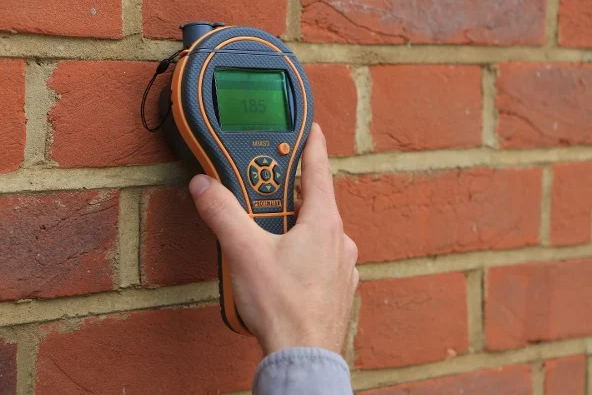
Moisture mapping combined with air sampling helps confirm whether hidden growth is present.
Early Clue #4: Allergy Symptoms Indoors Only
If allergy-like symptoms improve when you leave your home, that’s a red flag.
Common complaints include:
- Sinus pressure
- Sneezing
- Headaches
- Dry throat
- Fatigue
When symptoms are worse indoors — especially at night — airborne spores may be circulating through your HVAC system.
Mold testing identifies whether indoor spore levels exceed normal outdoor levels.
In Miami Shores’ humid climate, this imbalance happens more often than people realize.
Early Clue #5: HVAC Running but Air Feels “Heavy”
You lower the thermostat.
The house cools.
But the air still feels damp.
That’s usually a humidity control issue.
If your AC system isn’t removing moisture efficiently, indoor humidity stays elevated. That creates ideal mold conditions inside:
- Ductwork
- Air handlers
- Closet interiors
- Insulated wall cavities
Testing helps determine whether microbial growth is already affecting air quality.
Early Clue #6: Small Dark Spots That Don’t Seem Urgent
A tiny black dot near a vent.
A faint discoloration in a corner.
A shadowy line behind furniture.
Many homeowners ignore these small signs.
But in Miami Shores’ humid environment, surface spotting often means there’s larger growth behind the material.
Testing allows you to confirm whether it’s isolated surface mildew or active mold colonization inside the wall.
Why Visual Inspection Isn’t Enough
Here’s the reality:
Most mold in Miami Shores homes grows out of sight.
It hides inside:
- Wall cavities
- Attic insulation
- Subfloor areas
- Behind kitchen cabinets
- Inside HVAC ducts
You can’t see inside these spaces without invasive removal.
Mold testing uses air samples and sometimes surface samples to measure spore concentration.
If indoor levels are significantly higher than outdoor levels, contamination is likely present somewhere inside the property.
The Role of Attics in Mold Growth
Attics in Miami Shores often become moisture traps.
Hot air rises, carrying humidity with it.
If ventilation is unbalanced, moisture gets trapped in insulation and on roof decking.
Early signs include:
- Rusting nails
- Dark spotting on wood framing
- Damp insulation texture
Homeowners rarely enter their attic often enough to notice.
Testing helps confirm whether attic mold is affecting indoor air below.
When Mold Testing Is Most Important
You should strongly consider mold testing if:
- You’ve had a recent roof leak
- Your AC system overflowed
- The home experienced past flooding
- You smell persistent mustiness
- Family members have unexplained respiratory symptoms
In Miami Shores, waiting for visible mold usually means waiting too long.
Testing provides clarity before damage spreads.
What Mold Testing Actually Involves
Professional mold testing typically includes:
- Indoor air sampling
- Outdoor control sample
- Moisture readings
- Visual inspection
- Laboratory analysis
The goal isn’t just to confirm mold exists — because spores always exist.
The goal is to determine whether your indoor environment shows abnormal elevation or harmful species dominance.
That data guides the next step: remediation or preventative moisture control.
Why Early Detection Saves Money
Small, localized mold growth is far less expensive to address than widespread contamination.
If caught early:
- Limited drywall removal may be sufficient
- HVAC cleaning can prevent full duct replacement
- Moisture sources can be corrected quickly
If ignored:
- Structural framing can become affected
- Insulation may require removal
- Entire rooms may need containment
In humid coastal communities like Miami Shores, early action prevents large-scale restoration.
Final Thoughts
Mold testing in Miami Shores isn’t about paranoia.
It’s about understanding how local climate conditions create ongoing moisture pressure inside homes.
The early clues are subtle:
- Faint odors
- Minor discoloration
- Slight condensation
- Allergy symptoms indoors
Most people ignore them.
But in a high-humidity coastal environment, those small signs are often the beginning of something larger.
Testing provides answers.
And in Miami Shores, early answers protect both your property and your health.