A Property Owner’s Guide to Mold Remediation in Bal Harbour
Mold is one of the most persistent and hidden problems in coastal Florida homes, and properties in Bal Harbour are no exception. High humidity, frequent storms, aging construction, and coastal air moisture create an environment where mold can thrive, often unnoticed until significant damage occurs. For homeowners, landlords, and property managers, understanding mold remediation is essential to protect both the health of occupants and the long-term structural integrity of a home.
Mold remediation in Bal Harbour is not just about removing visible growth—it involves identifying moisture sources, conducting thorough inspections, and employing professional remediation strategies that prevent recurrence. This guide provides property owners with practical insights and best practices for effective mold remediation, drawing from real-world observations in Bal Harbour properties.
Why Mold Remediation Is Critical
Mold can damage homes in ways that are not immediately visible. Some reasons remediation is critical include:
- Mold spores spread easily, colonizing hidden areas such as wall cavities, ductwork, and attics.
- Moisture trapped in older homes accelerates growth, creating health risks and structural damage.
- Untreated mold can stain and deteriorate drywall, wood, and insulation.
- Early remediation reduces costs and prevents long-term complications.
Even minor leaks, AC condensation, or storm-driven water intrusion can initiate mold growth that quickly becomes a hidden problem.
Common Causes of Mold in Bal Harbour Homes
Several factors make Bal Harbour homes particularly susceptible:
- Coastal Humidity: Average year-round humidity levels often exceed 60%, creating ideal conditions for fungal growth.
- Storm Water Intrusion: Hurricanes and heavy rains can lead to leaks through roofs, windows, and foundations.
- AC System Condensation: Older or poorly maintained air conditioning units can overflow or create moisture pockets.
- Slab Foundations: Homes built on concrete slabs may trap moisture beneath flooring, promoting mold.
- Aging Construction Materials: Older insulation, drywall, and wood framing can retain moisture and organic matter for mold colonization.
These factors combined make proactive mold testing and remediation essential in coastal Bal Harbour properties.
Signs That Mold Remediation Is Needed
Homeowners often notice early warning signs, but many signs are subtle:
- Musty odors in closets, attics, or basements
- Water stains on ceilings or walls
- Peeling paint or wallpaper
- Warping of wooden floors or baseboards
- Visible mold growth on surfaces
- Recurring respiratory irritation among occupants
Because mold often grows in hidden locations, professional inspection is often necessary to confirm the extent of contamination.
The Mold Remediation Process
Effective mold remediation is a structured process, typically handled by professionals:
1. Inspection and Assessment
- Technicians identify moisture sources, visible mold, and high-risk areas.
- Moisture meters, thermal imaging, and air quality testing help detect hidden growth.
- Comprehensive assessment ensures that all affected areas are addressed.
2. Containment
- Containment prevents spores from spreading during cleanup.
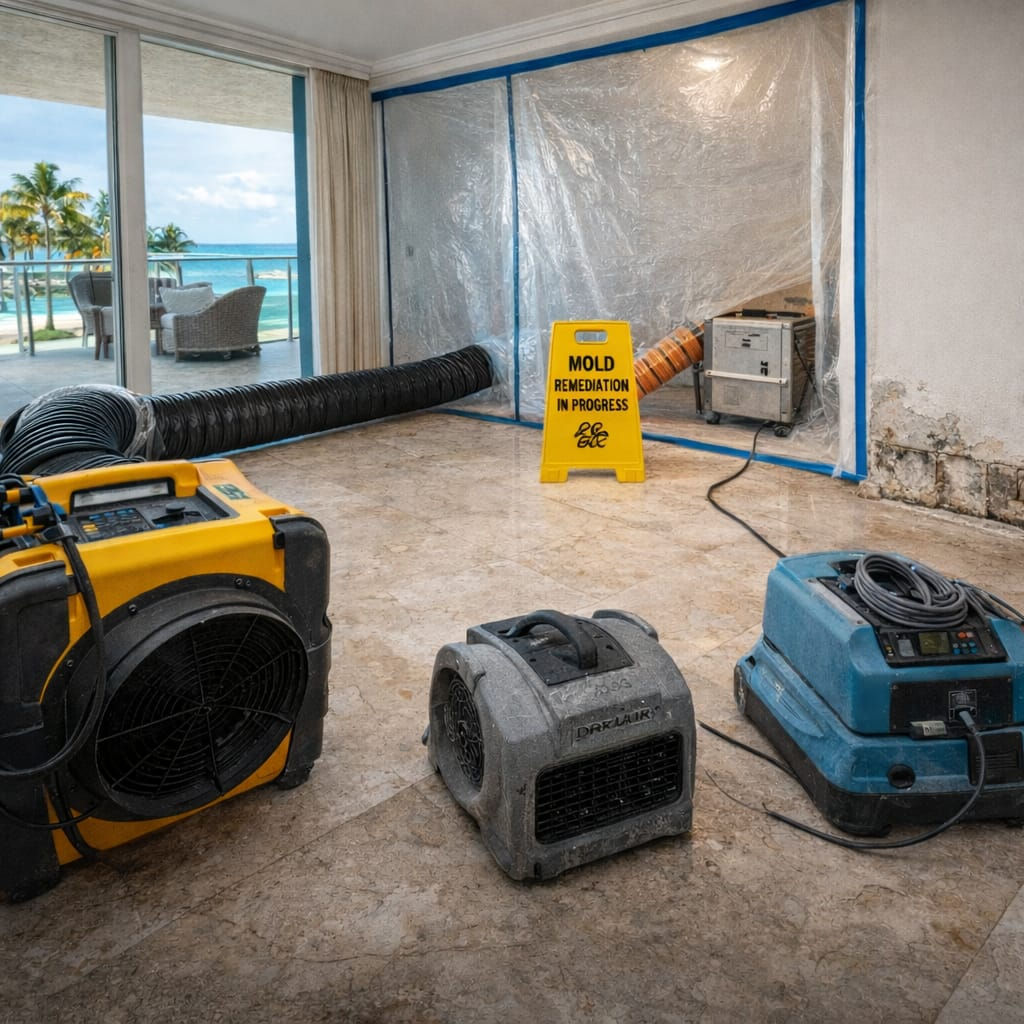
- Plastic sheeting, negative air machines, and HEPA filtration isolate affected areas.
- Containment strategies vary depending on the size and location of the mold.
3. Removal of Contaminated Materials
- Porous materials like drywall, insulation, and carpet with heavy mold growth are often removed.
- Non-porous surfaces are cleaned and disinfected.
- Proper disposal is essential to prevent recontamination.
4. Cleaning and Air Filtration
- HEPA vacuums remove residual spores.
- Surfaces are cleaned with antimicrobial agents to inhibit regrowth.
- Air scrubbers and dehumidifiers improve indoor air quality and remove airborne contaminants.
5. Moisture Control
- Identifying and repairing leaks is critical to prevent recurrence.
- AC systems, plumbing, roofs, and foundations are inspected and repaired as needed.
- Dehumidification ensures moisture levels remain below thresholds favorable to mold growth.
6. Final Inspection
- Post-remediation testing verifies that spore counts have returned to safe levels.
- Professional reports document the work for insurance or property records.
- Follow-up plans may include ongoing monitoring or maintenance to prevent future issues.
Common Mistakes Homeowners Make
In Bal Harbour, property owners sometimes attempt DIY mold removal or ignore early signs. Common missteps include:
- Painting or sealing mold without removing the source
- Using bleach or household cleaners on large infestations
- Ignoring moisture behind walls or under floors
- Skipping professional inspections after water events
- Failing to monitor indoor humidity or AC performance
These actions often exacerbate the problem and increase the cost of professional remediation later.
Preventive Measures for Bal Harbour Homes
Even after successful remediation, preventive strategies are essential:
- Control Indoor Humidity: Use AC and dehumidifiers to maintain levels between 45–55%.
- Regular AC Maintenance: Inspect condensate pans, drain lines, and ductwork for moisture.
- Prompt Leak Repairs: Address roof, window, and plumbing leaks immediately.
- Ventilation: Ensure attics, closets, and enclosed spaces have adequate airflow.
- Routine Inspections: Annual professional assessments help detect early moisture or mold issues.
Proactive prevention reduces the likelihood of costly remediation in the future.
Challenges Specific to Coastal Homes
Bal Harbour’s coastal environment amplifies mold risk:
- High Humidity: Encourages faster mold growth in hidden areas.
- Salt Air: Accelerates corrosion and may reduce the lifespan of HVAC and metal components.
- Storms: Heavy rainfall increases water intrusion and hidden dampness.
- Older Homes: Slab foundations and older building materials may retain moisture.
Restoration strategies must account for these factors to be effective.
The Role of Local Expertise
Professional mold remediation in Bal Harbour requires local knowledge:
- Understanding how coastal humidity and storms affect homes
- Identifying common trouble spots in older constructions
- Applying industry-standard remediation techniques tailored to local conditions
Tip Top Water and Fire Damage Restoration brings both technical expertise and local experience, ensuring effective mold remediation while minimizing disruption to the home.
Financial and Health Implications
Failure to properly remediate mold can result in:
- Structural damage to walls, floors, and ceilings
- Health risks from prolonged exposure to spores
- Reduced property value and insurance complications
- Recurring mold infestations requiring repeated interventions
Investing in professional remediation and preventive measures saves time, money, and protects the well-being of occupants.
Final Thoughts
Mold remediation in Bal Harbour is a critical aspect of property maintenance for coastal homes. Hidden moisture, aging materials, and high humidity create an environment where mold can thrive silently. Effective remediation involves careful inspection, containment, cleaning, and moisture management to ensure the problem is fully addressed.
Property owners who act early, use professional services, and adopt preventive strategies can protect both their homes and their families. In Bal Harbour, understanding local environmental challenges and responding proactively is the key to maintaining safe, healthy, and durable homes