
Property Maintenance Insights: Moisture Detection in Coastal Neighborhoods Near Biscayne Bay
If you own property near Biscayne Bay, moisture is not an occasional issue.
It’s a constant presence.
From North Miami and Miami Shores to Biscayne Park and the bayfront edges of North Miami Beach, coastal air carries humidity year-round. Add heavy summer rain, tidal influence, and constant AC operation, and moisture becomes part of everyday property management.
The difference between routine maintenance and major restoration often comes down to one thing: early moisture detection.
Why Coastal Homes Behave Differently
Properties near Biscayne Bay experience environmental stress that inland homes simply don’t.
You’re dealing with:
- Elevated humidity
- Salt-laden air
- High groundwater levels
- Wind-driven rain
- Frequent AC condensation
Even when no visible water intrusion occurs, moisture migrates into building materials over time.
Drywall, insulation, subflooring, and framing absorb humidity gradually. Without monitoring, that slow buildup leads to:
- Mold growth
- Warped materials
- Musty odors
- Structural deterioration
Moisture detection isn’t a luxury here. It’s preventative maintenance.
The Most Common Moisture Sources in Bayfront Areas
Across properties near Biscayne Bay, certain patterns repeat.
AC Condensation
Because air conditioning systems run nearly nonstop in South Florida, condensation production is constant.
Clogged drain lines or cracked pans allow slow leaks into:
- Air handler closets
- Adjacent drywall
- Subflooring
Many mold inspections in North Miami begin with undetected AC moisture.
Wind-Driven Rain
Summer storms push rain sideways.
Water penetrates through:
- Window frames
- Sliding door assemblies
- Roof flashing
- Exterior wall penetrations
Even minor seal degradation allows moisture to seep behind walls.
Often, staining doesn’t appear for weeks.
Ground Saturation and Slab Moisture
Homes near Biscayne Bay often sit on slab foundations.
During extended rain periods, groundwater levels rise.
Moisture migrates upward through slab cracks and beneath flooring systems.
Tile may look dry on the surface while subfloor materials remain damp.
Professional moisture meters are the only way to confirm internal dryness.
Balcony and Roof Drainage Failures
In high-rise buildings throughout North Miami Beach and Sunny Isles Beach, clogged balcony drains frequently cause water intrusion.
Water backing up against thresholds seeps into flooring and wall cavities.
Without early detection, moisture spreads laterally before visible damage appears.
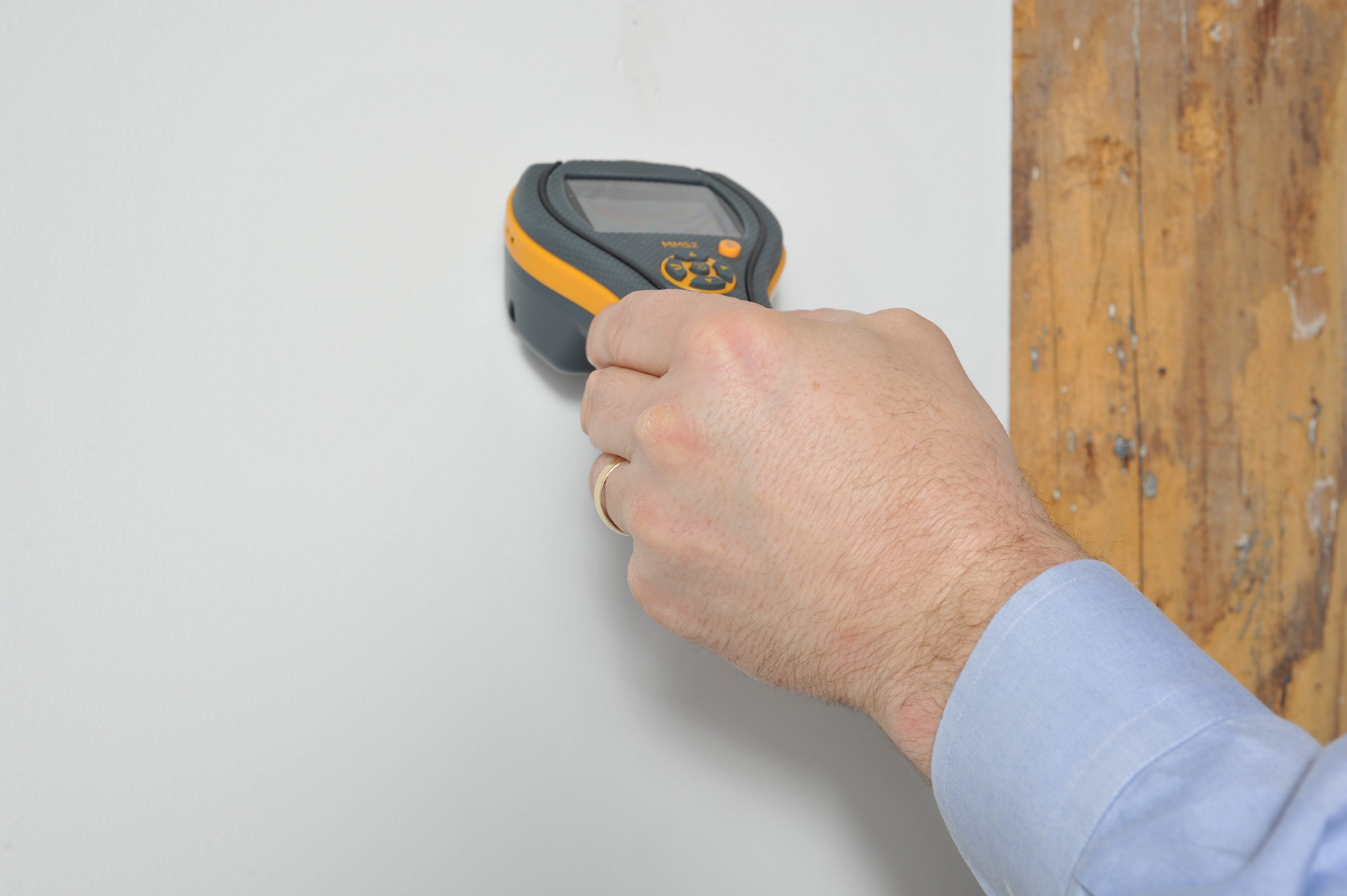
What Moisture Detection Actually Involves
Moisture detection isn’t guesswork.
It uses specialized tools to measure moisture content in:
- Drywall
- Wood framing
- Insulation
- Flooring systems
- Ceiling cavities
Thermal imaging may also be used to identify temperature variations indicating damp areas.
This process reveals hidden moisture before odor or mold becomes obvious.
In coastal environments, that early detection prevents larger remediation projects.
Why Visual Inspections Aren’t Enough
In Biscayne Park and Miami Shores homes, moisture often hides behind intact paint and drywall.
By the time you see:
- Bubbling paint
- Ceiling stains
- Warped baseboards
…moisture has likely been present for some time.
Because humidity remains high year-round, natural drying is slow.
Professional moisture mapping identifies problems before structural repairs are needed.
The Connection Between Moisture Detection and Mold Prevention
Mold requires two things: spores and moisture.
Spores are always present in the air.
Controlling moisture is the only practical prevention method.
Routine moisture detection helps:
- Identify AC leaks early
- Confirm proper drying after water damage
- Detect slow plumbing drips
- Prevent attic condensation buildup
In coastal neighborhoods, mold remediation often traces back to undetected moisture months earlier.
Early detection reduces remediation costs significantly.
When Should Coastal Property Owners Schedule Moisture Checks?
In neighborhoods near Biscayne Bay, consider moisture evaluation:
- After heavy storms
- Following any water intrusion
- When purchasing a property
- If musty odor develops
- After AC system repairs
- Before and after major renovations
Properties that remain unoccupied seasonally are especially vulnerable.
Closed homes with limited airflow trap humidity inside.
The Role of Structural Drying
If moisture is detected, structural drying must follow.
In coastal South Florida, drying requires:
- Commercial-grade dehumidifiers
- Continuous airflow
- Moisture monitoring until safe levels are reached
Because outdoor air is humid, relying on open windows is ineffective.
Companies like Tip Top Water and Fire Damage Restoration frequently emphasize moisture verification before repairs begin.
Repairing materials without confirming dryness traps moisture inside walls.
That leads to repeat issues.
Salt Air: The Overlooked Factor
Salt exposure accelerates corrosion of:
- Plumbing fittings
- HVAC components
- Fasteners
- Window hardware
Corroded fittings eventually fail, causing water leaks.
Routine inspection of these components is part of moisture prevention in coastal homes.
This is especially important in bayfront properties where exposure is constant.
High-Rise Considerations Near the Bay
In condo towers near North Miami Beach and Bal Harbour, moisture detection extends beyond individual units.
Water can travel through:
- Vertical plumbing stacks
- Mechanical shafts
- Shared ventilation systems
When one unit experiences water damage, adjacent units should be inspected.
Coastal high-rise infrastructure requires coordinated attention.
Long-Term Property Maintenance Strategy
Effective moisture management near Biscayne Bay includes:
- Quarterly AC drain line flushing
- Annual roof inspections
- Window and door seal checks
- Balcony drain cleaning
- Humidity monitoring
- Periodic professional moisture assessments
This proactive approach prevents larger water damage repair and mold removal projects later.
Moisture is easier to control early than repair later.
Why Local Experience Matters
Moisture detection in coastal South Florida differs from inland environments.
Professionals familiar with North Miami, Miami Shores, Biscayne Park, and surrounding bayfront communities understand:
- Slab moisture behavior
- Tidal influence
- Coastal corrosion patterns
- High-rise mechanical systems
- Extended drying timelines
Local experience improves accuracy in identifying high-risk areas.
A Practical Perspective
Near Biscayne Bay, moisture is part of the climate.
The question isn’t whether humidity exists.
It’s whether it’s being monitored.
Property maintenance in coastal neighborhoods depends on early detection, thorough drying, and consistent inspection.
When moisture is identified quickly, most issues can be resolved before structural damage or mold remediation becomes necessary.
In a coastal environment, proactive moisture detection isn’t optional.
It’s smart property management.