
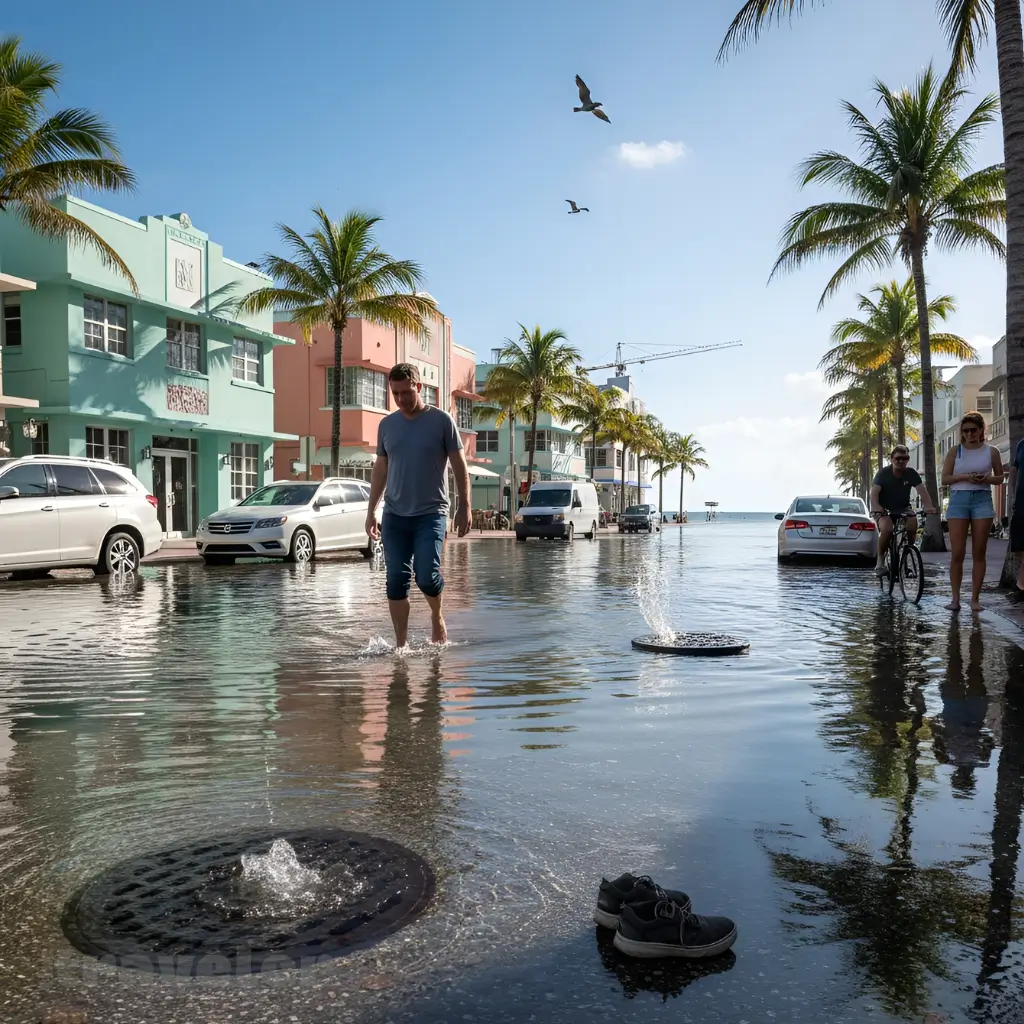
Flood Restoration in North Miami Beach: Real-World Observations from Local Properties
Flooding in North Miami Beach doesn’t always look dramatic.
It’s often a few inches of water after a heavy storm. A balcony drain that backed up. A ground-floor condo that took on water during king tide. A plumbing failure in an upper unit that soaked ceilings below.
But in this coastal environment, even minor water intrusion turns into a larger restoration issue quickly.
After working in properties throughout North Miami Beach, Sunny Isles Beach, and nearby Aventura, certain patterns repeat. Flood restoration here isn’t just about removing water. It’s about understanding how humidity, slab construction, and high-rise infrastructure affect the drying process.
Here’s what real-world projects consistently reveal.
Observation #1: Water Spreads Farther Than Homeowners Expect
Most properties in North Miami Beach sit on slab foundations.
When water enters — whether from street flooding or interior leaks — it spreads laterally beneath tile and laminate flooring.
Even when:
- The surface looks dry
- Standing water has been removed
- Walls appear unaffected
…moisture often remains inside:
- Subfloor materials
- Drywall cores
- Baseboards
- Insulation
Moisture mapping tools routinely reveal damp areas several feet beyond the visible water line.
Surface drying is never enough in coastal slab construction.
Observation #2: Coastal Humidity Slows Drying
In inland cities, materials can dry naturally once standing water is removed.
In North Miami Beach, ambient humidity remains high — especially during summer and storm season.
This means:
- Evaporation slows
- Insulation holds moisture longer
- Subfloors remain damp
- Odor develops quickly
Without commercial dehumidifiers and air movers, drying may take weeks instead of days.
Incomplete drying is one of the most common reasons mold remediation follows flood restoration in coastal neighborhoods.
Observation #3: High-Rise Buildings Add Complexity
North Miami Beach has a large number of condo towers.
Flooding doesn’t always originate at ground level.
We frequently see:
- Plumbing failures in upper floors
- AC condensation overflows
- Water migrating through ceiling cavities
- Shared wall saturation
In these cases, damage may not be obvious immediately.
A small leak in one unit can affect two or three units below before staining becomes visible.
Coordination with building management is often necessary during restoration.
Moisture detection must extend beyond the initial complaint area.
Observation #4: Saltwater Changes the Damage Profile
Storm surge and tidal flooding introduce saltwater into structures.
Saltwater accelerates:
- Corrosion of fasteners
- Deterioration of drywall
- Electrical system risk
- Degradation of flooring adhesives
In these cases, simply drying materials is not enough.
Porous materials exposed to saltwater often require removal.
Salt residue left behind can cause long-term structural deterioration if not addressed properly.
Observation #5: AC Systems Often Worsen the Situation
After flooding, many property owners immediately turn on their air conditioning.
If ductwork or air handler closets were exposed to moisture, this can:
- Circulate contaminated air
- Spread spores
- Introduce odor throughout the property
Air duct inspection is often recommended during flood restoration in North Miami Beach.
HVAC systems that operate continuously in humid conditions can quickly distribute contamination.
The Structured Flood Restoration Process
Based on local projects, effective flood restoration in North Miami Beach follows a structured sequence.
1. Detailed Inspection and Moisture Mapping
Identify the source of water and measure moisture levels inside walls, ceilings, and flooring.
2. Immediate Water Extraction
Remove standing water and saturated carpet padding.
3. Controlled Structural Drying
Install industrial dehumidifiers and air movers.
Drying continues until moisture readings confirm materials are safe.
4. Removal of Compromised Materials
If drywall, insulation, or flooring cannot be dried properly — especially after saltwater exposure — removal is necessary.
5. Cleaning and Sanitization
Affected areas are cleaned to remove residue and prevent microbial growth.
6. Repair and Reconstruction
Only after drying is confirmed do repairs begin.
Companies like Tip Top Water and Fire Damage Restoration emphasize moisture verification before reconstruction to prevent repeat issues.
Observation #6: Mold Growth Is a Common Secondary Issue
In North Miami Beach, mold growth can begin within 24–48 hours if materials remain damp.
Signs often include:
- Musty odor
- Dark staining along baseboards
- Peeling paint
- Damp air handler closets
Flood restoration and mold remediation frequently overlap in this region.
Fast response reduces that risk significantly.
What Property Owners Should Watch For After Flooding
Even after professional drying, monitor for:
- Recurring odor
- Soft drywall
- Warped trim
- Condensation on vents
- Elevated indoor humidity
These signs may indicate lingering moisture.
Periodic moisture checks provide reassurance that drying was complete.
Preventing Future Flood Damage
While coastal flooding can’t be eliminated entirely, risk can be reduced by:
- Cleaning balcony and roof drains
- Inspecting sliding door seals
- Installing backflow prevention devices
- Maintaining proper grading around foundations
- Servicing AC systems regularly
Preventive maintenance is critical in neighborhoods near Biscayne Bay and along the Intracoastal.
Small water intrusions escalate quickly in humid climates.
Why Local Experience Matters
Flood restoration in North Miami Beach is not identical to restoration in dry regions.
Professionals familiar with North Miami Beach, Sunny Isles Beach, and Bal Harbour understand:
- Slab moisture migration
- Tidal flooding patterns
- High-rise infrastructure
- Salt corrosion effects
- Extended drying timelines
That local knowledge improves both speed and accuracy during restoration.
A Practical Perspective
Flooding in North Miami Beach doesn’t have to be dramatic to cause serious damage.
Even shallow water can saturate walls and floors in slab-based, high-humidity environments.
Real-world experience shows that successful restoration depends on:
- Early moisture detection
- Thorough structural drying
- Proper material removal when necessary
- HVAC inspection
- Ongoing humidity control
Handled methodically, most flood-damaged properties can be fully restored.
But in a coastal climate where humidity rarely drops, thorough drying — not just water removal — is the foundation of lasting recovery.