How Coastal Weather Influences Water Leak Detection in Bayfront Homes in North Miami
Water intrusion is a common and persistent problem in bayfront homes in North Miami, and the coastal climate plays a significant role in both the development and detection of leaks. Bayfront properties are particularly vulnerable due to their proximity to saltwater, high humidity, frequent rainfall, and exposure to storms and hurricanes. Understanding how coastal weather influences water leak detection is crucial for homeowners who want to protect their property, preserve structural integrity, and prevent health hazards associated with mold and water damage.
Water leak detection in coastal homes is often more complex than in inland properties. The subtropical environment accelerates wear on roofing, plumbing, and building materials, and moisture can penetrate hidden areas that are difficult to inspect. This article explores how coastal conditions affect water leak detection, the common challenges homeowners face, and the best practices for identifying and mitigating leaks effectively.
Why Water Leak Detection Is Crucial for Bayfront Homes
Bayfront homes are often exposed to unique environmental stressors:
1. Humidity and Moisture Retention
High coastal humidity creates a persistent layer of moisture in the air, which can condense on surfaces and seep into building materials. Moisture accumulation behind walls, under flooring, and in attics may remain hidden, making leak detection more difficult.
2. Stormwater and Heavy Rainfall
Frequent storms and seasonal tropical rains introduce sudden and significant water loads. Even minor roof or window vulnerabilities can result in substantial water intrusion.
3. Saltwater Exposure
Salt-laden air accelerates corrosion and deterioration of metal fixtures, plumbing, and roofing components. Over time, this can cause subtle leaks that are difficult to detect without professional equipment.
4. Aging Infrastructure
Many bayfront homes have older construction materials such as wooden subfloors, porous insulation, and older plumbing, which retain moisture longer and increase the risk of hidden leaks.
5. Health and Property Risks
Undetected leaks contribute to:
- Mold and mildew growth
- Structural deterioration
- Compromised indoor air quality
- Damaged personal belongings and flooring
Early leak detection mitigates these risks and reduces costly repairs.
Common Challenges in Water Leak Detection in Coastal Homes
1. Hidden Leaks Behind Structures
Water often penetrates behind walls, under flooring, or in crawlspaces. Coastal moisture can mask these leaks, and traditional visual inspections may not reveal the full extent of the problem.
2. Slow Seepage
Some leaks develop gradually over time, particularly around aging roofing or plumbing. The moisture slowly saturates building materials, making detection difficult until significant damage occurs.
3. Mixed Sources of Water Intrusion
In bayfront homes, water damage may originate from multiple sources:
- Roof leaks during storms
- Condensation from high humidity
- Leaking windows or doors
- Plumbing failures in bathrooms or kitchens
Identifying the primary source requires professional inspection and advanced diagnostic tools.
4. Salt-Induced Material Degradation
Salt in the air accelerates corrosion in metal pipes and fixtures, sometimes causing microscopic leaks that are difficult to detect without specialized equipment.
5. Seasonal Variations
Leaks may be intermittent, appearing only during heavy rain or high tides, which complicates detection. Homeowners often miss these events, allowing damage to accumulate over time.
Professional Water Leak Detection Methods
Modern leak detection in coastal homes relies on advanced technology and professional expertise:
1. Moisture Meters
Used to detect hidden moisture in walls, floors, and ceilings, helping pinpoint areas of concern before visible damage occurs.
2. Thermal Imaging Cameras
Identify temperature variations caused by moisture intrusion. Wet areas cool differently, revealing hidden leaks behind walls or under floors.
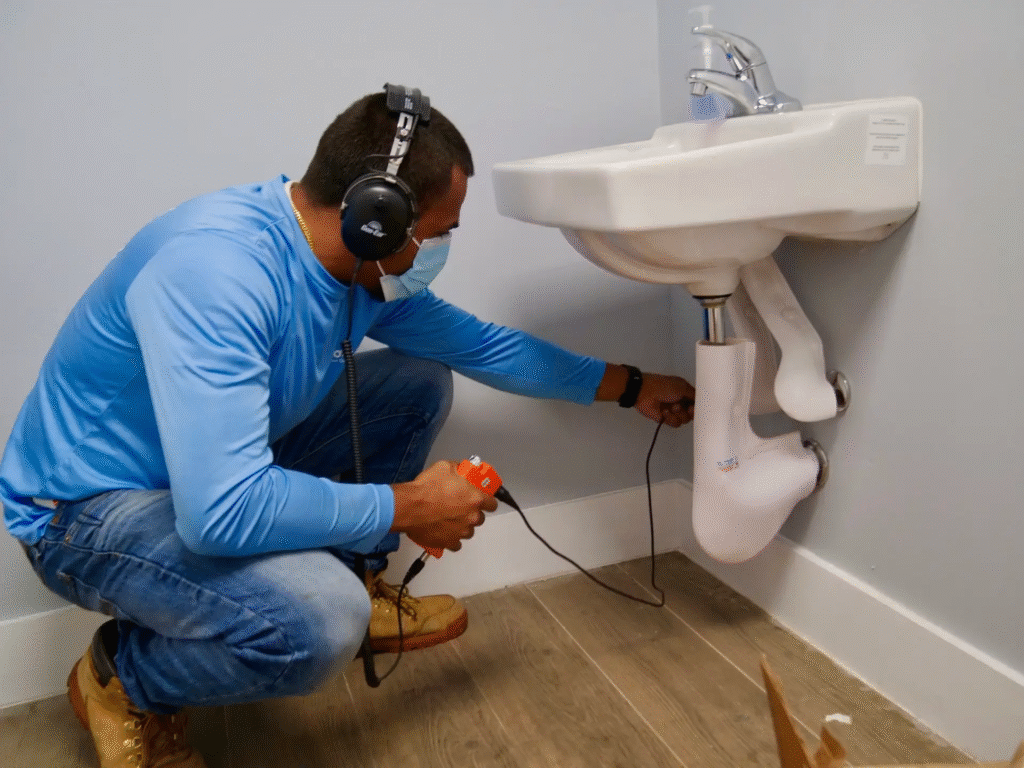
3. Acoustic Leak Detection
Specialized microphones detect the sound of water escaping from pipes, even when it is not visible.
4. Dye Testing
Dye introduced into plumbing systems or water sources highlights leak paths in hard-to-reach areas.
5. Air Pressure Testing
Used in pressurized systems such as plumbing or roofing membranes to identify leaks by monitoring pressure drops.
6. Infrared Scanning
Combines with thermal imaging to provide a detailed map of moisture accumulation throughout a property.
Preventive Measures for Bayfront Homeowners
- Regular Roof Inspections: Inspect and maintain roofing, flashing, and gutters, particularly after storms.
- Plumbing Maintenance: Check pipes, faucets, and joints regularly for signs of corrosion or leakage.
- Window and Door Sealing: Ensure all exterior seals are intact to prevent water intrusion.
- HVAC System Monitoring: Condensation from air conditioning can cause hidden water damage; inspect drip pans and ducts.
- Use of Moisture Barriers: Install barriers under carpets, flooring, and in crawlspaces to prevent water absorption.
- Seasonal Leak Checks: Conduct inspections during wet seasons or after storms to identify intermittent leaks.
Lessons Learned from Real North Miami Bayfront Homes
Local case studies reveal several insights:
- Early Detection Saves Costs: Homes that utilized professional water detection services experienced fewer structural issues and lower restoration expenses.
- Hidden Leaks Are Common: Even newly renovated or well-maintained homes often contained moisture in hidden areas such as behind cabinetry or in subfloors.
- Humidity Amplifies Problems: Without controlling indoor humidity, minor leaks can quickly evolve into extensive water damage.
- Professional Technology Is Essential: Advanced methods such as thermal imaging and acoustic detection provide a level of precision that DIY approaches cannot achieve.
Long-Term Benefits of Timely Leak Detection
- Prevent Mold and Mildew Growth: Moisture control reduces health risks associated with allergens and spores.
- Preserve Structural Integrity: Early identification prevents rot and corrosion of wood and metal supports.
- Protect Property Value: Maintaining the integrity of waterfront homes preserves market value.
- Reduce Restoration Costs: Addressing leaks promptly avoids extensive repairs and replacements.
- Enhance Indoor Air Quality: Dry, mold-free interiors improve resident comfort and safety.
Conclusion
Coastal weather in North Miami greatly influences water leak detection in bayfront homes. High humidity, frequent storms, salt-laden air, and aging construction materials all contribute to hidden moisture and leak risks. Professional detection methods, including thermal imaging, moisture meters, and acoustic testing, are critical for identifying issues before they escalate into structural damage, mold growth, and health hazards.
Homeowners who understand these coastal influences, implement preventive maintenance, and engage professional services for leak detection protect both their investment and the well-being of their family. Early detection, regular inspections, and comprehensive monitoring are the keys to maintaining safe, healthy, and resilient bayfront properties in North Miami.