
Property Maintenance Insights: Mold Remediation in Surfside
Surfside is known for ocean views, walkable streets, and coastal living that feels open and bright. But behind the balconies and glass doors, one constant remains: moisture.
In Surfside, mold remediation isn’t just an occasional emergency service. It’s part of ongoing property maintenance. Between high humidity, salt-heavy air, storm-driven rain, and nonstop AC operation, moisture management is something property owners must think about year-round.
Whether you own a beachfront condo, manage a rental unit near Collins Avenue, or maintain a single-family home closer to North Miami Beach, understanding how mold develops — and how to prevent it from returning — is essential.
Why Mold Is a Maintenance Issue in Surfside
In many inland cities, mold is typically linked to a specific water event — a burst pipe or a flooded basement.
In Surfside, mold often develops without a dramatic incident.
The local environment includes:
- Year-round elevated humidity
- Wind-driven coastal rain
- Salt air corrosion
- Continuous air conditioning use
- Compact mechanical closets in condos
- Slab construction in many properties
When humidity remains above 60% for extended periods, drywall, wood framing, and insulation begin absorbing moisture directly from the air.
That’s why mold remediation in Surfside often starts with humidity control, not just removal.
Common Sources of Mold in Coastal Properties
From real inspections in Surfside and nearby Bal Harbour and Sunny Isles Beach, the most common contributors include:
AC condensate drain overflows
Duct sweating in hot attic spaces
Poorly insulated refrigerant lines
Leaky balcony doors
Roof flashing failures during storms
Bathroom exhaust fans venting into attic spaces
Shared plumbing stack leaks in high-rise buildings
In multi-unit buildings, moisture from an upper unit can travel through wall cavities into lower floors without obvious warning.
The result is mold growth in areas that never experienced standing water.
Early Warning Signs Property Owners Should Watch
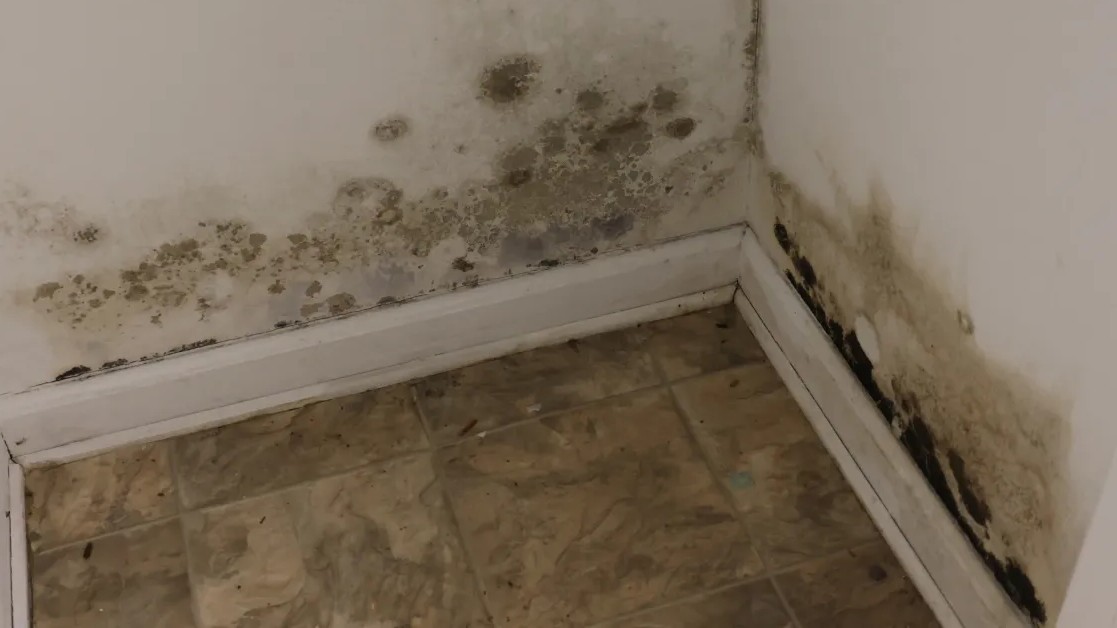
Mold rarely appears suddenly in large patches. It often begins subtly.
Common early signs include:
- Persistent musty odor
- Slight discoloration along ceiling edges
- Paint bubbling near exterior-facing walls
- Damp closets with limited airflow
- Warping baseboards
- Condensation around AC vents
In oceanfront units, salt air can accelerate corrosion inside AC systems, increasing the likelihood of condensate leaks.
The sooner these signs are evaluated, the smaller the remediation scope.
Why Surface Cleaning Is Not Remediation
Many homeowners attempt to wipe visible mold with household cleaners or paint over dark spots.
This approach does not solve the problem.
Mold penetrates porous materials such as:
- Drywall
- Insulation
- Wood framing
- Carpet padding
- Ceiling textures
If the moisture source remains, mold returns — often more aggressively.
In Surfside’s humid climate, cosmetic cleaning without moisture correction simply delays recurrence.
The Mold Remediation Process Explained
Proper remediation follows a structured process designed to remove contamination and stabilize moisture conditions.
- Moisture Detection and Source Identification
Before removal begins, the source must be located. This may involve AC inspection, attic evaluation, plumbing checks, or moisture mapping.
- Humidity Stabilization
Indoor humidity must be reduced before and during remediation to prevent further growth.
- Containment
Affected areas are isolated using plastic barriers and negative air machines to prevent spore spread.
- Air Filtration
High-efficiency air scrubbers remove airborne particles during the process.
- Removal of Contaminated Materials
Porous materials that cannot be cleaned safely are removed.
- Cleaning of Structural Surfaces
Non-porous surfaces are cleaned using appropriate methods.
- Post-Remediation Verification
Moisture levels are measured to confirm stability before rebuilding begins.
Skipping any of these steps increases the chance of future recurrence.
AC Systems and Mold in Surfside
Air conditioning systems are frequently part of the moisture problem.
In coastal neighborhoods near Biscayne Bay, AC systems run nearly year-round.
Common AC-related mold triggers include:
Clogged drain lines
Rusted drain pans
Oversized units short-cycling
Duct leaks pulling humid attic air
Insulation breakdown around ducts
Attic duct systems in single-family homes are especially vulnerable. When cold air passes through poorly insulated ducts surrounded by hot attic air, condensation forms.
Routine AC maintenance is one of the most effective preventive tools.
High-Rise Condo Considerations
Surfside’s high-rise buildings present additional challenges.
Shared ventilation systems
Stacked plumbing lines
Concrete slab construction
Limited attic access
Moisture may originate in a neighboring unit and travel through structural cavities.
In these cases, coordination with building management may be necessary to address shared systems.
Long-Term Prevention Strategies
Mold remediation should transition into moisture management.
Property owners should prioritize:
Maintaining indoor humidity between 45% and 55%
Scheduling AC service twice per year
Flushing condensate drain lines regularly
Sealing windows and balcony doors
Improving bathroom and kitchen ventilation
Inspecting attic insulation annually
Installing leak detection sensors
Inspecting after heavy storms
In rental properties, periodic inspections reduce the likelihood of extended moisture exposure going unnoticed.
Salt Air and Corrosion Factors
Salt-heavy coastal air accelerates deterioration of metal components in AC systems and window frames.
Corroded drain pans, fasteners, and coil fins can create small leaks that go undetected for months.
Routine inspection of mechanical components prevents moisture buildup that leads to mold growth.
Slab and Flooring Moisture Concerns
Concrete slabs common in Surfside condos retain moisture longer after storms.
Signs of slab-related moisture include:
Loose floor tiles
Warped engineered wood
Persistent musty odor near baseboards
Moisture detection tools help confirm whether subfloor dampness is contributing to mold conditions.
Why Local Experience Matters
Mold remediation in Surfside differs from inland cities.
Understanding how:
- Coastal humidity influences building materials
- Salt air accelerates component failure
- Continuous AC use affects condensation patterns
- High-rise ventilation spreads contaminants
is critical to long-term success.
Tip Top Water and Fire Damage Restoration has handled mold remediation projects in Surfside where recurring issues were resolved only after duct insulation upgrades and humidity balancing were completed.
Surface treatment alone would not have prevented recurrence.
A Practical Property Maintenance Perspective
In Surfside, mold remediation should never be viewed as a one-time event. It’s part of broader property maintenance in a moisture-heavy environment.
The focus should always be on:
- Identifying moisture sources
- Stabilizing indoor humidity
- Maintaining HVAC systems
- Improving ventilation
- Monitoring conditions consistently
Coastal living brings environmental advantages — but it also demands proactive moisture control.
Handled thoroughly, mold can be removed safely and prevented from returning. Ignored or treated superficially, it becomes a recurring maintenance issue tied to humidity cycles and overlooked systems.
In Surfside, responsible property maintenance means staying ahead of moisture before it turns into mold.