
Why Mold Testing Becomes Necessary in North Miami from AC Condensation Problems
In North Miami, air conditioning systems don’t get much downtime. Between the heat, humidity, and long cooling season, AC units run nearly year-round. That constant operation means one thing: constant condensation.
Under normal conditions, that condensation drains safely away. But when something goes wrong — even slightly wrong — moisture builds up. And in North Miami’s humid climate, moisture doesn’t stay harmless for long.
When AC condensation problems are ignored or only partially repaired, mold testing often becomes necessary. Not because mold is guaranteed, but because the risk becomes significant enough that confirmation matters.
Here’s why.
How AC Condensation Turns Into a Mold Risk
Air conditioners remove humidity from indoor air. As warm air passes over cold evaporator coils, condensation forms and flows into a drain pan, then out through a condensate line.
Common problems in North Miami homes include:
- Clogged drain lines
- Rusted drain pans
- Improper drain slope
- Oversized systems short-cycling
- Duct condensation in hot attics
- Refrigerant line insulation breakdown
When condensation does not drain properly, moisture accumulates in:
- AC closets
- Ceiling cavities
- Wall cavities
- Insulation
- Ductwork
In North Miami and nearby Miami Shores, high ambient humidity slows evaporation. That trapped moisture lingers — and lingering moisture is exactly what mold needs.
Why North Miami’s Climate Makes It Worse
Humidity levels in North Miami often stay elevated for extended periods, especially during summer and storm season.
Even small amounts of trapped condensation can:
- Soak drywall
- Saturate insulation
- Spread along framing
- Raise humidity inside wall cavities
Unlike drier climates, materials here don’t dry passively. Moisture remains present longer, creating ideal conditions for microbial growth.
In coastal neighborhoods near Biscayne Bay, salt-heavy air also accelerates corrosion in AC components, increasing the likelihood of slow, hidden leaks.
Early Signs That Raise Mold Testing Concerns
After AC condensation issues, homeowners may notice:
- Musty smell when AC turns on
- Ceiling discoloration near vents
- Damp drywall around air handler
- Peeling paint
- Persistent indoor humidity
- Condensation forming repeatedly on vents
In many cases, these signs appear weeks after the initial drain issue.
If moisture remained behind walls or inside insulation for more than 24–48 hours, mold growth becomes possible.
At that point, visual inspection alone may not be enough.
Why Mold Testing Becomes Necessary
Mold testing is typically recommended when:
- The source of odor is unclear
- Moisture exposure lasted more than 48 hours
- Growth is suspected inside wall cavities
- Air quality complaints develop
- AC systems may have circulated spores
- Remediation scope needs confirmation
In North Miami homes, especially slab-on-grade properties, moisture from AC closets can migrate into adjacent walls without obvious surface staining.
Testing helps determine whether:
- Mold growth is active
- Spore levels are elevated indoors
- Contamination is localized or widespread
- HVAC systems are contributing to spread
Without testing, remediation decisions may rely on guesswork.
The Challenge of Mold Testing in Coastal Areas
Testing in North Miami must account for high outdoor spore levels.
Coastal air naturally contains mold spores, especially during humid periods.
Effective testing includes:
- Indoor air sampling
- Outdoor control sampling for comparison
- Surface sampling when visible growth exists
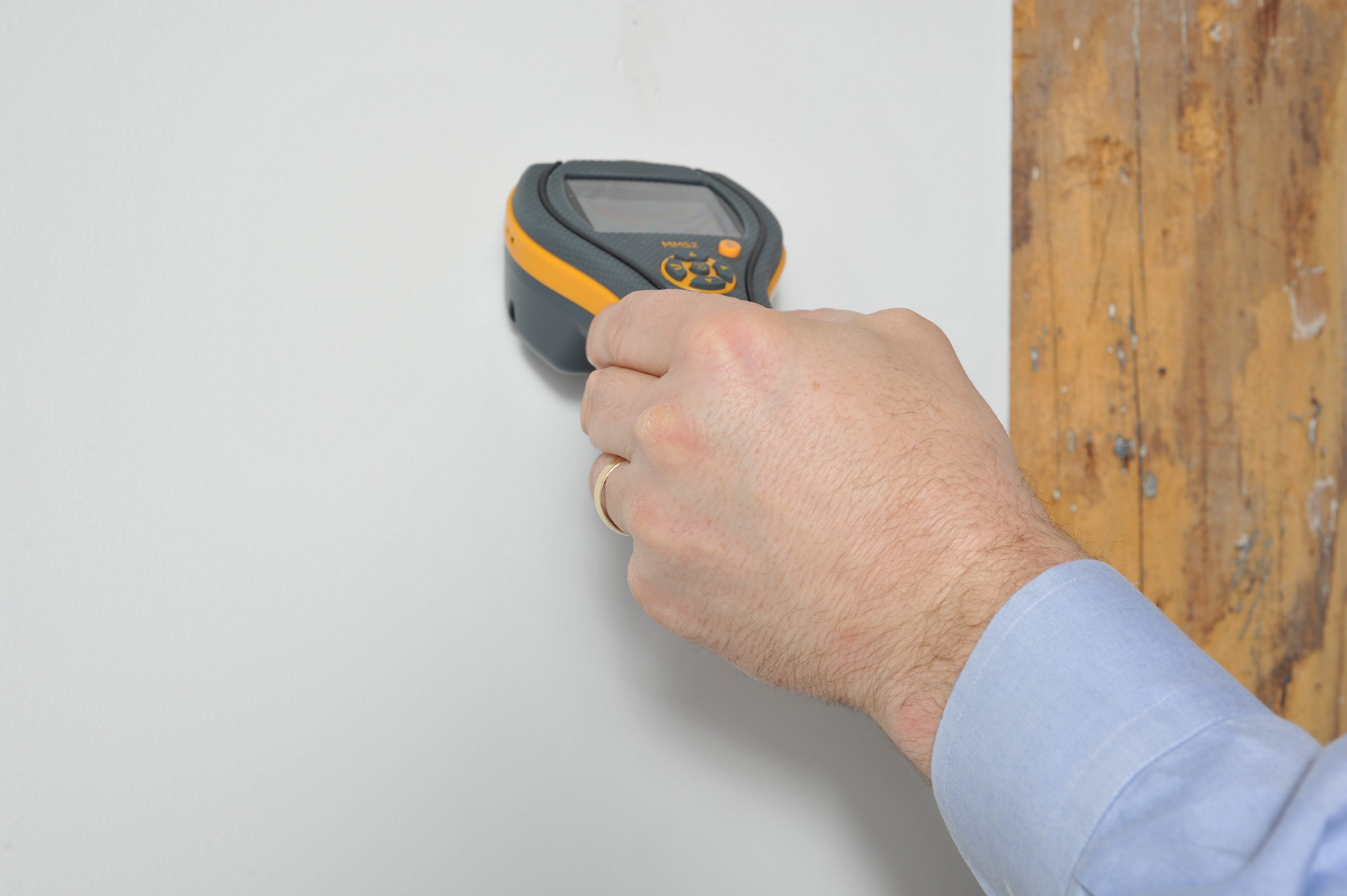
- Moisture mapping before sampling
- HVAC system evaluation
Humidity conditions during testing also matter. Sampling during high indoor humidity may yield different results than during stabilized conditions.
That’s why moisture correction should occur alongside testing.
AC Systems and Airborne Spread
When condensation problems occur, AC systems may circulate spores if growth has developed near the air handler or inside ducts.
This can lead to:
- Odor intensifying when AC runs
- Dust-like particles near vents
- Widespread spore distribution
In North Miami Beach and Aventura high-rise condos, shared ventilation can further complicate detection.
Testing helps determine whether contamination remains localized or has entered duct systems.
When Testing Prevents Larger Remediation
Acting quickly after an AC condensation issue can limit mold growth to a small area.
If testing is performed early:
- Remediation scope may remain contained
- Insulation replacement may be limited
- Structural drying can prevent deeper spread
If months pass before testing:
- Growth may extend into multiple rooms
- Duct cleaning may be necessary
- Larger containment areas are required
In humid climates, delay increases scope.
Structural Drying Before Testing
If condensation issues are ongoing, moisture must be corrected before reliable testing.
Professional drying may include:
- Dehumidifiers
- Air movers
- Removal of saturated insulation
- Drain line repair
Testing without moisture correction risks inaccurate results.
Long-Term Prevention After Condensation Problems
Once moisture is resolved and testing confirms safe conditions, prevention becomes the priority.
Recommended steps include:
Routine AC maintenance twice per year
Flushing condensate lines regularly
Installing float switches
Upgrading drain pans to corrosion-resistant materials
Sealing and insulating ductwork
Monitoring indoor humidity between 45–55%
Inspecting AC closets after heavy storms
In North Miami’s humid climate, ongoing monitoring is essential.
Why Local Experience Matters
Mold testing after AC condensation problems in North Miami differs from testing in dry regions.
Understanding how:
- Coastal humidity affects drying timelines
- Salt air accelerates drain pan corrosion
- Attic heat intensifies duct sweating
- Continuous AC cycling impacts humidity levels
ensures more accurate evaluation.
Tip Top Water and Fire Damage Restoration has inspected North Miami properties where minor AC drain clogs led to hidden mold growth behind closets — detected early through moisture mapping and targeted testing.
Without early evaluation, those cases could have expanded significantly.
A Practical Takeaway
AC condensation problems are common in North Miami. What matters is how quickly they’re addressed.
If moisture lingered beyond a day or two, mold testing becomes a smart precaution — not an overreaction.
Testing provides clarity:
- Is growth present?
- Is air quality affected?
- Is remediation necessary?
In a climate where humidity is constant, small condensation problems can escalate quietly.
Quick action limits damage. Delayed evaluation increases risk.
In North Miami, understanding the connection between AC condensation and mold growth helps property owners protect both structure and indoor air quality before minor moisture becomes a larger restoration project.