A Property Owner’s Guide to Carpet Cleaning After Water Damage in North Miami Beach
North Miami Beach, Florida, is a vibrant coastal community where beautiful waterfront homes, high-rise condominiums, and single-family residences coexist. While the city offers scenic beauty and proximity to Biscayne Bay, the area’s coastal weather, high humidity, and seasonal storms make homes particularly vulnerable to water damage. Carpets, in particular, are highly susceptible, as water intrusion can cause staining, structural issues, and mold growth if not addressed promptly. For homeowners, landlords, and property managers, understanding the process of carpet cleaning after water damage is essential to protect property value, indoor air quality, and long-term home health.
1. Why Carpet Cleaning Matters After Water Damage
Carpets are more than decorative floor coverings; they act as a buffer for moisture in homes. When water infiltrates:
- Carpets absorb water rapidly, often soaking into the padding and subfloor.
- Prolonged dampness creates a breeding ground for mold and mildew.
- Odors and discoloration can set in quickly, especially in humid coastal environments.
- Structural elements beneath the carpet, such as wooden floors or slab foundations, can become damaged over time.
Immediate and professional carpet cleaning is critical to prevent minor water intrusion from escalating into serious property damage.
2. Common Causes of Water Damage to Carpets in North Miami Beach Homes
Several factors contribute to carpet water damage in the region:
- Storms and heavy rainfall: Flooding can enter through windows, doors, and foundation cracks.
- Plumbing leaks: Burst pipes, faulty water heaters, and leaking appliances can saturate carpets.
- Air conditioning condensation: AC units produce moisture that may seep into nearby carpets if drain lines or drip pans fail.
- Spills and accidental overflows: While smaller than floods, these incidents still require prompt cleaning to avoid long-term damage.
Understanding the source of water intrusion helps professionals determine the most effective cleaning and drying techniques.
3. Early Signs Homeowners Should Watch For
Identifying water damage early is key:
- Wet or damp spots on carpets
- Persistent musty or moldy odors
- Discoloration or warping of carpet fibers
- Buckling, stretching, or separation of carpet seams
- Water pooling along edges or under furniture
Even if visible moisture seems minimal, hidden dampness can affect the carpet pad and subfloor, creating conditions for mold and structural damage.
4. Hidden Challenges in Coastal Homes
North Miami Beach properties face unique challenges:
- High humidity: Moisture binds to carpet fibers, slowing natural drying and promoting mold.
- Salt air exposure: Coastal air accelerates corrosion in flooring staples, tack strips, and metallic fasteners.
- Older construction: Older homes may have carpet installed directly on concrete slabs or with degraded padding, making extraction more complex.
- Slab foundations and multi-story layouts: Water may seep beneath carpeting in ways that are not immediately visible.
These factors necessitate a professional approach to ensure thorough cleaning and long-term protection.
5. Why DIY Carpet Cleaning Often Fails After Water Damage
Many homeowners attempt to dry or clean carpets themselves, but DIY methods often fall short:
- Incomplete drying: Surface drying may leave padding and subfloor damp.
- Mold growth: Hidden moisture provides a perfect environment for microbial growth.
- Inadequate extraction: Manual vacuuming cannot remove water deeply embedded in fibers or padding.
- Damage from improper cleaning agents: Household products may stain or deteriorate carpets.
Professional carpet cleaning addresses both visible water and hidden moisture, minimizing the risk of future problems.
6. The Professional Carpet Cleaning Process After Water Damage
Step 1: Assessment
Technicians evaluate the carpet type, water source, and extent of saturation. This includes:
- Identifying affected areas
- Testing moisture levels in carpet, padding, and subfloor
- Assessing for contamination from flood or stormwater
Step 2: Water Extraction
Using industrial-grade equipment:
- High-capacity water extractors remove standing water from carpet and padding
- Carpet lifting techniques ensure complete extraction from edges and seams
- Moisture mapping identifies areas that require additional attention
Step 3: Drying and Dehumidification
To prevent mold growth:
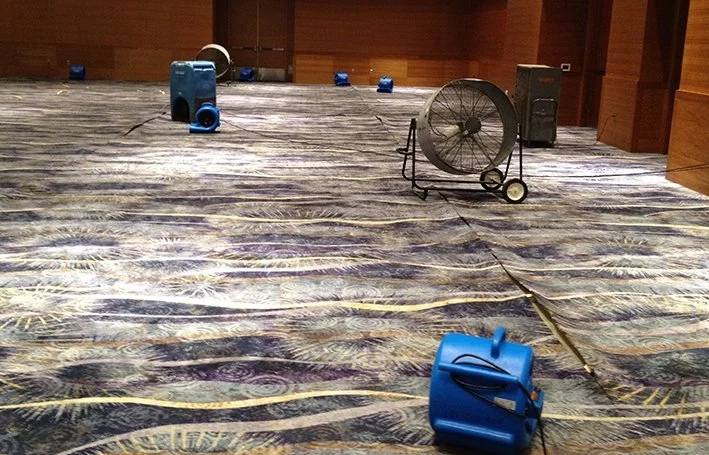
- Air movers and industrial dehumidifiers accelerate drying
- Continuous moisture monitoring ensures carpets, padding, and subfloor are fully dry
- Targeted airflow prevents moisture from lingering in hidden areas
Step 4: Cleaning and Sanitizing
- Carpet fibers are cleaned using specialized solutions to remove dirt, contaminants, and odors
- Antimicrobial treatments prevent mold and mildew in humid coastal environments
- Upholstery and nearby fabrics may also be treated to ensure complete sanitation
Step 5: Restoration
- Damaged padding or subflooring is replaced if necessary
- Carpets are groomed, stretched, and returned to their original appearance
- Preventive strategies, like moisture barriers or protective coatings, are recommended for future protection
7. Preventive Strategies for Homeowners
After cleaning, preventive measures help reduce future water damage risks:
- Routine inspections: Check plumbing, AC systems, and water heaters regularly.
- Humidity control: Use dehumidifiers or AC systems to maintain optimal indoor humidity.
- Protective flooring: Consider water-resistant carpet padding or area rugs in flood-prone areas.
- Proper drainage: Ensure gutters, downspouts, and exterior grading direct water away from the foundation.
- Emergency preparedness: Have a response plan for storms or plumbing emergencies.
Preventive strategies complement professional restoration to safeguard property and reduce repair costs.
8. Lessons from Real North Miami Beach Homes
Experience with local properties shows:
- Immediate intervention significantly reduces mold risk and carpet damage
- Hidden moisture under padding is a common cause of long-term issues
- AC condensate leaks are a frequent source of indoor water damage
- Seasonal inspections and preventive maintenance are key in coastal climates
These insights reinforce the need for proactive management alongside professional cleaning services.
9. Why Local Expertise Matters
Local professionals, such as Tip Top Water and Fire Damage Restoration, understand:
- The effects of coastal humidity on carpets and subfloors
- How storm surges and flooding influence water intrusion
- Appropriate cleaning, drying, and sanitization techniques for different carpet types
- Preventive measures tailored to North Miami Beach properties
Engaging local experts ensures comprehensive restoration and long-lasting protection.
10. Final Thoughts
Carpet cleaning after water damage in North Miami Beach is not just about aesthetics—it’s essential for protecting health, structural integrity, and long-term property value. Professional intervention ensures thorough water extraction, drying, cleaning, and restoration, while preventive strategies reduce the risk of future damage. Coastal homeowners who act quickly, rely on local expertise, and implement proactive maintenance can preserve their homes and enjoy a safe, healthy living environment even in Florida’s humid, flood-prone conditions.