Explaining the Process of AC Moisture Repair in Bayfront Homes in North Miami
Air-conditioning systems in bayfront homes in North Miami operate under demanding conditions. High humidity, salt-laden air, and frequent temperature differences between indoor and outdoor environments all contribute to moisture-related problems. Over time, condensation and drainage issues can lead to damp ceilings, stained walls, and even mold growth if not addressed promptly.
Understanding how AC moisture repair works helps homeowners and property managers recognize problems early and take the right steps to prevent long-term damage.
Why AC Moisture Problems Are Common in Bayfront Homes
Bayfront properties are exposed to environmental conditions that increase moisture levels both indoors and outdoors.
Humidity is one of the primary factors. Warm coastal air contains large amounts of moisture, and when this air enters a home, air-conditioning systems must work harder to remove it. This increased workload produces more condensation, which must be drained properly to prevent leaks.
Salt in coastal air also affects HVAC components. Over time, salt can contribute to corrosion in metal drain pans, fittings, and coils, increasing the likelihood of slow leaks.
In addition, many bayfront homes have attic or ceiling-mounted ductwork. When cold air moves through ducts in warm spaces, condensation may form on duct surfaces, allowing moisture to drip into insulation or drywall.
What AC Moisture Problems Typically Look Like
Moisture issues related to air-conditioning systems often develop gradually.
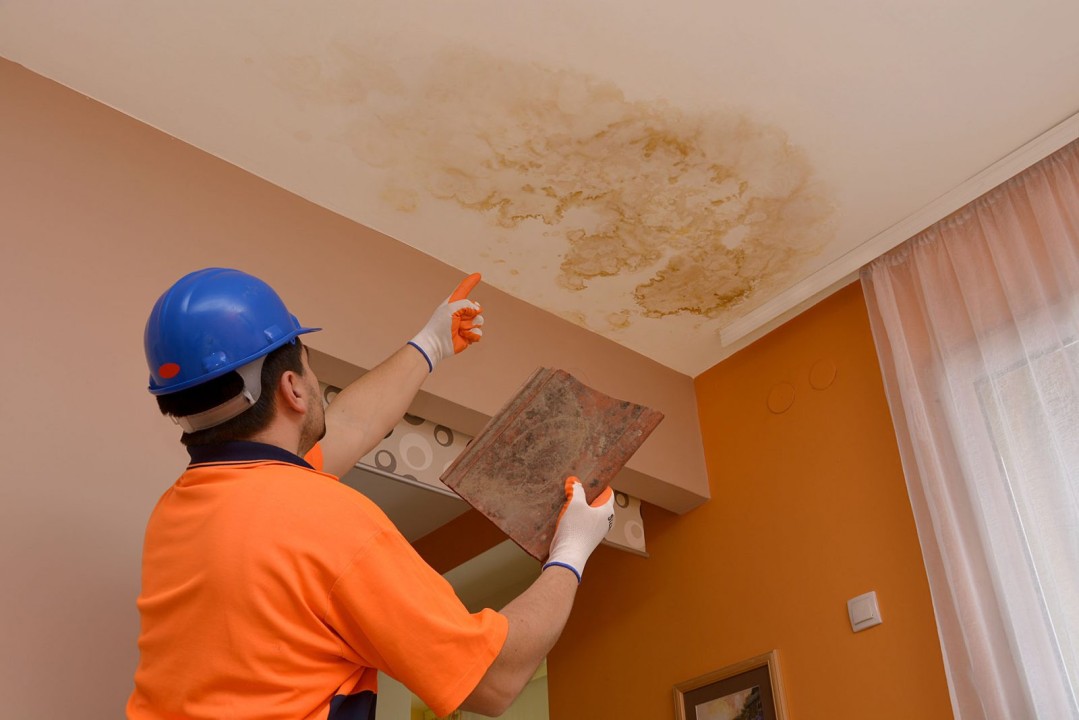
One of the most common signs is water staining on ceilings or walls near vents or air-handling units. These stains may appear faint at first and gradually become more noticeable.
A musty odor near vents or mechanical closets is another early indicator. This smell often suggests that moisture has been present long enough for microbial growth to begin.
Some homeowners notice increased indoor humidity or condensation on windows, even when the AC is running continuously. This can indicate that the system is not removing moisture effectively.
In certain cases, small puddles or damp spots appear near air handlers or drain lines, signaling that condensation is not draining properly.
Step 1: Inspection and Identifying the Source
The first step in AC moisture repair is a detailed inspection.
Technicians begin by examining the air handler, evaporator coils, drain pans, and condensate drain lines. These components are the most common sources of moisture problems.
Moisture meters are often used to check surrounding walls, ceilings, and flooring for hidden dampness. Thermal imaging may also be used to detect moisture behind surfaces without opening walls.
Humidity levels inside the home are measured as well, since elevated humidity often contributes to recurring moisture problems.
Companies such as Tip Top Water and Fire Damage Restoration frequently discover that moisture has spread farther than expected, particularly in humid coastal environments.
Step 2: Repairing Drainage and Mechanical Components
Once the source of moisture is identified, repairs begin.
Clogged condensate drain lines are cleared to restore proper drainage. If drain pans are cracked or corroded, they may need to be replaced.
Air filters are often inspected and replaced if airflow restrictions are contributing to condensation problems. Evaporator coils may also be cleaned to improve efficiency and reduce excess moisture production.
In some cases, duct insulation must be repaired or upgraded to prevent condensation from forming on duct surfaces.
These repairs address the root cause of moisture problems and prevent water from continuing to accumulate.
Step 3: Drying Affected Areas
If moisture has spread to surrounding materials, drying is an essential part of the repair process.
Air movers and dehumidifiers are used to remove moisture from both building materials and the surrounding air. This step helps prevent mold growth and structural damage.
Drying may take several days in coastal homes, especially when outdoor humidity remains high. Monitoring equipment is used to confirm that materials have returned to safe moisture levels before repairs are completed.
Thorough drying is one of the most important steps in preventing recurring problems.
Step 4: Repairing and Restoring Damaged Materials
After drying is complete, any damaged materials are repaired or replaced.
This may include patching drywall, repainting ceilings, or replacing insulation that has absorbed moisture. Baseboards and trim may also need repair if water exposure caused warping or discoloration.
Restoration ensures that the home is returned to its original condition while also addressing the underlying moisture issue.
Hidden Challenges in Bayfront Homes
AC moisture repair in bayfront homes often presents additional challenges.
High humidity slows drying times, which means moisture can remain trapped longer than expected. Salt air may also accelerate corrosion in HVAC components, requiring more frequent inspections and maintenance.
Limited ventilation in certain areas of a home can allow moisture to accumulate, especially in closets, storage areas, or mechanical rooms.
Understanding these challenges helps technicians plan repairs more effectively and prevent recurring issues.
Mold Risks Associated with AC Moisture
One of the main reasons AC moisture problems must be addressed quickly is the risk of mold growth.
Mold thrives in warm, damp environments, and even small amounts of trapped moisture can allow spores to develop. Because AC moisture problems often occur in hidden areas, mold may grow behind walls or ceilings before becoming visible.
Prompt detection, drying, and humidity control significantly reduce this risk and help maintain indoor air quality.
The Role of HVAC Maintenance
Regular maintenance plays a major role in preventing AC moisture problems.
Replacing air filters regularly helps maintain proper airflow, which reduces the risk of coil freezing and excess condensation. Keeping drain lines clean prevents clogs that can lead to overflows.
Periodic inspections of ductwork and insulation help identify condensation issues before they cause damage.
In many homes across North Miami Beach and Biscayne Park, routine maintenance has prevented small moisture problems from turning into larger repairs.
Practical Tips for Homeowners
Property owners can take several steps to reduce the likelihood of AC moisture problems.
Monitor indoor humidity levels, especially during humid months. Dehumidifiers can help maintain safe moisture levels when needed.
Inspect ceilings and walls near vents periodically for early signs of staining or condensation.
Schedule regular HVAC inspections and ensure that drain lines are cleaned as part of routine maintenance.
After storms or periods of prolonged humidity, check mechanical closets and attic spaces for signs of dampness.
Taking these steps helps prevent moisture from accumulating and reduces the need for extensive repairs.
Why Local Experience Matters
AC moisture repair in coastal environments requires an understanding of how humidity, salt air, and building construction affect moisture behavior. Professionals familiar with North Miami, Aventura, and nearby bayfront communities know where moisture problems are most likely to occur and how to address them effectively.
Tip Top Water and Fire Damage Restoration has handled many AC moisture repair cases in bayfront properties where early inspections prevented significant structural damage.
Local experience helps ensure repairs are thorough and designed to prevent recurrence.
A Calm, Practical Next Step
AC moisture problems can seem minor at first, but they often lead to larger issues if ignored. By recognizing early warning signs, scheduling inspections when needed, and maintaining HVAC systems regularly, homeowners can prevent long-term damage.
With proper inspection, repair, and drying, most AC moisture problems in bayfront homes in North Miami can be resolved efficiently, helping property owners maintain comfortable and well-protected living spaces.