Moisture Detection in North Miami After Roof Leaks: What to Watch For
Roof leaks are one of the most deceptive sources of water damage in coastal South Florida. In North Miami, a roof leak rarely stays confined to the ceiling area where it first appears. Because of high humidity, frequent rain, salt air exposure, and the way homes are constructed, water from a roof leak can travel far beyond its original entry point—often remaining hidden long after the rain stops.
For homeowners, landlords, and property managers, understanding moisture detection after a roof leak is critical. Even small or “temporary” leaks can lead to mold growth, structural deterioration, and indoor air quality issues if moisture is not properly identified and addressed. This guide explains what to watch for after a roof leak in North Miami, where moisture commonly hides, and why professional detection is often necessary in coastal homes.
Why Roof Leaks Are Especially Risky in North Miami
Roof leaks behave differently in North Miami than in drier climates. Several local factors increase the risk of hidden moisture damage:
- High humidity slows natural drying
- Frequent rain cycles reintroduce moisture before materials dry
- Salt air accelerates material breakdown and seal failure
- Warm temperatures allow mold to develop quickly
- Slab foundations and attic designs trap moisture inside structures
Because of these conditions, moisture from a roof leak can remain active inside walls, ceilings, and insulation for weeks—even if visible stains seem minor.
How Roof Leaks Spread Moisture Inside a Home
One of the biggest misconceptions is that water drips straight down from the roof to the ceiling below. In reality, roof leak moisture often:
- Travels along roof decking and rafters
- Follows framing members downward
- Pools inside insulation
- Runs along electrical wiring or plumbing
- Migrates into wall cavities
By the time a ceiling stain appears, moisture may already be present in multiple areas of the home.
Early Warning Signs After a Roof Leak
Some warning signs are obvious, while others are subtle and frequently overlooked.
Visible Indicators
- Brown or yellow ceiling stains
- Peeling or bubbling paint
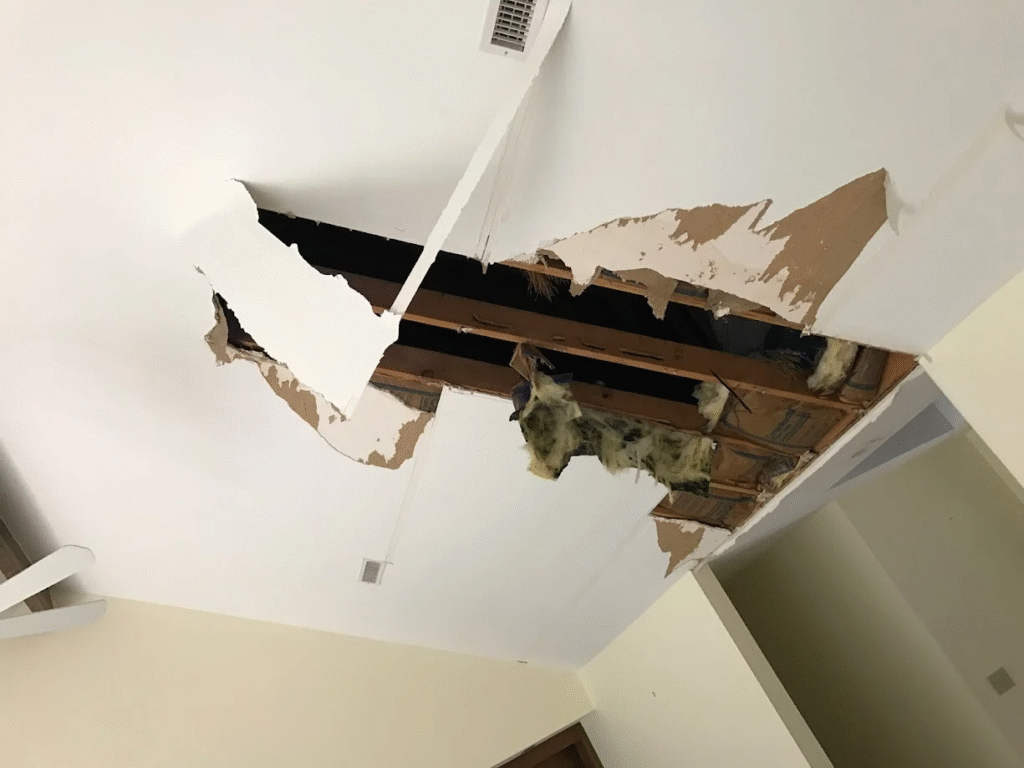
- Sagging drywall
- Dripping water during or after rain
Less Obvious Indicators
- Musty or damp odors
- Warmer or cooler spots on ceilings or walls
- Increased indoor humidity
- Soft drywall when pressed
- Warping of trim or baseboards
These subtle signs often indicate hidden moisture that requires further investigation.
Common Areas Where Moisture Hides After Roof Leaks
Real-world inspections in North Miami homes consistently reveal moisture in places homeowners rarely check.
Attic Insulation
Roof leaks often saturate insulation first. Wet insulation:
- Loses its effectiveness
- Holds moisture for long periods
- Creates ideal conditions for mold
Even after roof repairs, insulation may remain damp unless professionally dried or replaced.
Ceiling Cavities
Moisture can spread across ceiling cavities before becoming visible. Inspectors often find:
- Damp drywall beyond stained areas
- Moist framing members
- Condensation forming long after rainfall
Wall Cavities
Water traveling along framing can end up inside walls far from the original leak. This can cause:
- Mold growth behind drywall
- Soft or crumbling wall surfaces
- Odors that seem to come from nowhere
Electrical and Lighting Fixtures
Ceiling lights, fans, and junction boxes can trap moisture. This poses:
- Electrical safety concerns
- Corrosion risks
- Hidden moisture pockets
Closets and Storage Areas
Closets near exterior walls or beneath roof slopes are common moisture traps. Poor airflow allows dampness to linger unnoticed.
Why Moisture Detection Is Essential After Roof Leaks
Simply repairing the roof does not resolve moisture damage inside the home. Without proper detection:
- Wet materials may remain hidden
- Mold can begin growing within 24–48 hours
- Structural wood can weaken over time
- Odors can persist and worsen
- Repairs may need to be redone later
Moisture detection identifies where water has traveled—not just where it entered.
How Professionals Detect Moisture After Roof Leaks
Professional moisture detection uses specialized tools and methods designed for coastal environments.
Moisture Meters
Used to measure water content in:
- Drywall
- Wood framing
- Insulation
- Flooring
These readings help determine whether materials are drying properly or still saturated.
Thermal Imaging Cameras
Thermal imaging identifies temperature differences caused by evaporative cooling. Moist areas often appear cooler than dry materials, even when no staining is visible.
Humidity Measurements
High localized humidity levels often indicate hidden moisture behind walls or ceilings.
Visual and Structural Assessment
Professionals also inspect:
- Roof decking from the attic
- Framing members
- Ventilation effectiveness
- Airflow patterns
This holistic approach prevents missed moisture pockets.
Why DIY Inspection Often Misses Hidden Moisture
Homeowners often rely on visual checks, fans, or household dehumidifiers. While helpful, these steps have limitations:
- Surface drying can mask deeper moisture
- Hidden insulation remains wet
- Wall cavities are inaccessible
- Humidity returns quickly in coastal air
Without professional detection, moisture problems often resurface weeks or months later.
The Link Between Roof Leaks and Mold Growth
Roof leaks are one of the leading causes of mold growth in North Miami homes.
Why Mold Develops So Quickly
- Warm temperatures accelerate growth
- Humidity prevents full drying
- Organic materials (drywall, wood) provide food
- Poor ventilation traps moisture
Mold often begins growing behind walls or above ceilings before homeowners realize there is a problem.
Post-Leak Moisture Monitoring: What Homeowners Should Do
After a roof leak, property owners should:
- Monitor indoor humidity daily
- Check ceilings and walls for new stains
- Pay attention to odors
- Avoid sealing or painting over damaged areas too soon
- Schedule professional moisture detection
Even if the roof has been repaired, moisture inside the structure may still need attention.
Long-Term Risks of Ignoring Hidden Moisture
If moisture from a roof leak is not properly detected and dried, long-term consequences can include:
- Mold remediation costs
- Structural wood rot
- Ceiling or wall collapse
- Electrical system damage
- Reduced property value
- Recurring indoor air quality issues
Early detection dramatically reduces these risks.
Prevention Strategies for North Miami Homeowners
Regular Roof Inspections
Annual inspections—especially before and after storm season—help catch small issues early.
Attic Ventilation
Proper ventilation helps reduce moisture buildup after leaks.
Humidity Control
Maintaining indoor humidity between 45–55% supports drying and prevents mold growth.
Prompt Professional Assessment
Any roof leak, no matter how small, should trigger moisture detection—not just roof repair.
Why Local Experience Matters
Moisture behavior in North Miami is shaped by:
- Coastal humidity cycles
- Storm frequency
- Salt air material degradation
- Local construction methods
Tip Top Water and Fire Damage Restoration has experience detecting moisture patterns specific to North Miami homes, where roof leaks often cause hidden damage beyond visible ceiling stains.
Real-World Lessons from North Miami Properties
Local inspections consistently show that:
- Moisture often spreads far beyond visible damage
- Insulation is frequently overlooked
- Closets and wall cavities hide early mold growth
- Delayed detection leads to higher restoration costs
These lessons highlight the importance of proactive moisture assessment.
Final Thoughts
Moisture detection after roof leaks in North Miami is not optional—it is essential. Coastal weather, high humidity, and frequent rain allow moisture to linger and spread inside homes long after a roof repair is completed. What looks like a minor ceiling stain can hide significant moisture damage inside walls, insulation, and structural components.
By understanding where moisture hides, recognizing early warning signs, and relying on professional detection methods, homeowners can prevent mold growth, protect structural integrity, and avoid costly repairs. In a coastal environment like North Miami, finding moisture early is the most effective way to stop long-term damage before it starts.