
Mold Remediation in Bayfront Homes in North Miami: Lessons Learned from Real Local Homes
Living on the bay in North Miami has its advantages. The breeze, the water views, the quiet streets near Biscayne Park and Miami Shores — it’s a beautiful place to call home. But bayfront living also comes with a reality many homeowners don’t anticipate: persistent moisture.
Over the years, working in homes along the water in North Miami, North Miami Beach, and Surfside, one pattern shows up again and again. Mold doesn’t usually explode overnight. It develops slowly, quietly, and often in places homeowners rarely check.
Here are the real lessons learned from local bayfront homes — and what they mean for long-term protection.
Understanding Mold in Bayfront Properties
Mold needs three things: moisture, organic material, and time.
Bayfront homes naturally provide all three:
- High outdoor humidity
- Salt-heavy coastal air
- Frequent rainstorms
- AC systems running nearly year-round
- Older construction with porous materials
Even newer homes in Aventura and Bal Harbour aren’t immune. Modern insulation and tighter building envelopes can actually trap moisture if ventilation isn’t properly designed.
In coastal North Miami, mold is rarely caused by a single dramatic flood. More often, it starts with small, repeated moisture exposure that never fully dries.
Why Mold Happens So Often Along the Bay
Bayfront properties face conditions inland homes don’t.
Constant Humidity Exposure
Even on dry days, outdoor humidity levels remain elevated. That moisture migrates indoors through tiny gaps, especially in older homes.
Salt Air and Corrosion
Salt accelerates deterioration of metal components in AC systems, window frames, and fasteners. Corrosion leads to tiny leaks that go unnoticed.
Wind-Driven Rain
Storms push water horizontally. We often find moisture intrusion around bay-facing windows and sliding doors in North Miami Beach homes.
Attic Heat and Poor Ventilation
In Surfside and Biscayne Park, attic temperatures climb dramatically. When humid air meets cooler surfaces, condensation forms inside roof decking.
Homes closest to the water experience higher and more consistent moisture loads than properties even a few streets inland.
Common Signs Homeowners Notice
Many homeowners first notice cosmetic changes.
Typical early signs include:
- Bubbling paint near windows
- Musty smells after AC runs
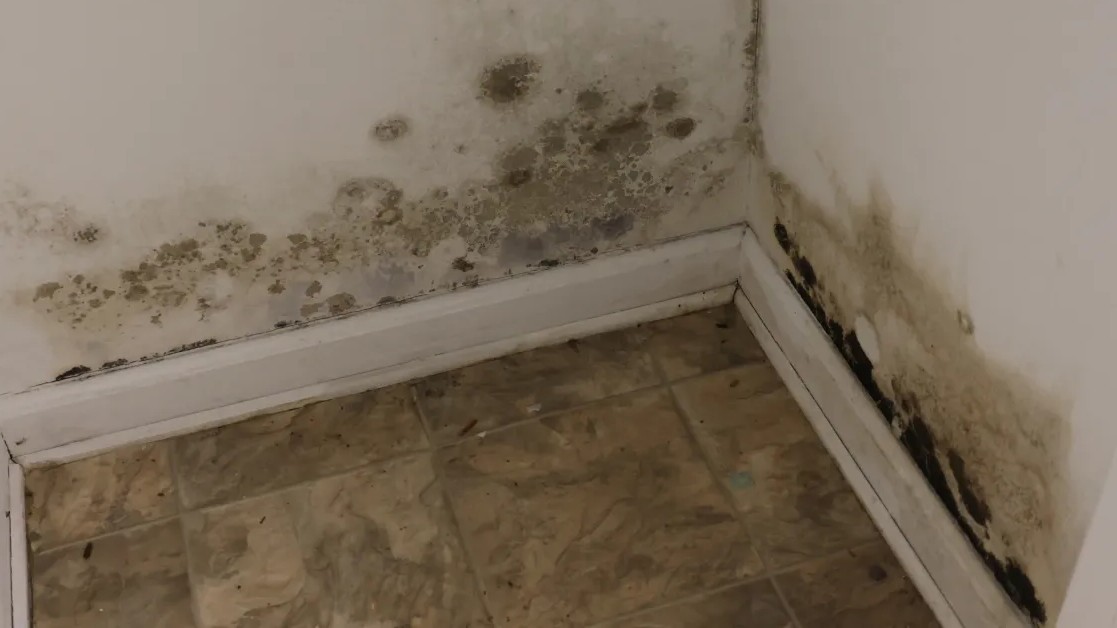
- Dark spots near baseboards
- Warped wood flooring
- Staining around ceiling corners
- Persistent humidity indoors
In bayfront homes, mold frequently appears on exterior-facing walls first. That’s where wind-driven moisture and temperature differences combine.
But visible mold is usually just part of the picture.
Hidden or Overlooked Sources in Bayfront Homes
From real North Miami cases, the most common hidden mold areas include:
Behind Built-In Cabinets
Cabinet backs against exterior walls trap humid air.
Inside AC Closets
Condensation and restricted airflow create damp drywall conditions.
Under Hardwood Floors
Slow vapor intrusion from slab foundations leads to subfloor mold.
Attic Roof Decking
Poor ventilation causes condensation buildup under roofing materials.
Inside Ductwork
High humidity condenses inside inadequately insulated ducts.
In one Miami Shores property near the water, surface mold was visible in a closet. Inspection revealed the entire exterior wall cavity had elevated moisture due to wind-driven rain infiltration.
Why DIY Mold Removal Usually Fails
Wiping mold off drywall rarely solves the problem.
Common DIY mistakes include:
- Cleaning without fixing moisture source
- Painting over affected areas
- Using household bleach on porous materials
- Ignoring attic and crawl space conditions
- Skipping humidity measurement
In bayfront homes, moisture is often structural, not surface-level. Without proper moisture detection, mold returns.
We’ve seen homeowners in Aventura repaint walls multiple times before discovering the issue was coming from unsealed window flashing exposed to coastal storms.
Professional Mold Inspection & Testing Explained
Effective remediation starts with understanding the full scope.
A thorough inspection includes:
- Moisture mapping of walls and flooring
- Thermal imaging for hidden intrusion
- Humidity readings throughout the home
- Attic and duct inspection
- Checking window and door perimeters
- Evaluating AC drainage and airflow
In coastal properties, we pay close attention to exterior-facing walls and attic ventilation systems.
Testing may be recommended if the mold type or spread pattern is unclear, especially in larger bayfront homes with multiple levels.
Proper Mold Removal & Remediation Process
Mold remediation is controlled removal, not simple cleaning.
The proper process typically includes:
Containment
Isolating affected areas to prevent spore spread.
Air Filtration
Using negative air machines to control airborne particles.
Removal of Damaged Materials
Drywall, insulation, or flooring that cannot be salvaged is safely removed.
Structural Drying
Moisture levels are reduced before rebuilding begins.
Cleaning and Treatment
Non-porous surfaces are cleaned and treated appropriately.
In North Miami bayfront homes, drying is often the most critical step. High ambient humidity means drying must be monitored carefully.
Tip Top Water and Fire Damage Restoration has handled numerous coastal properties where correcting moisture intrusion was more complex than removing visible mold.
Flood Restoration & Water Damage Repair in Coastal Areas
Even minor flooding can amplify mold risk in bayfront neighborhoods.
Storm surge and heavy rains in North Miami Beach frequently result in:
- Garage flooding
- Baseboard water intrusion
- Slab moisture wicking upward
- Saturated insulation
If water isn’t dried properly within the first 24–48 hours, mold growth accelerates in Florida’s climate.
Structural drying with professional equipment ensures framing, subfloors, and cavities reach safe moisture levels before repairs.
Air Ducts, AC Systems & Mold
AC systems in coastal homes run constantly.
If duct insulation degrades due to attic heat and salt air exposure, condensation forms inside ducts. This leads to:
- Musty odors
- Reduced airflow
- Mold growth within duct insulation
In many Biscayne Park homes, duct upgrades and improved insulation dramatically reduce repeat mold cases.
Regular AC inspections are essential in bayfront environments.
How to Prevent Mold in North Miami Bayfront Homes
Prevention requires ongoing moisture control.
Key long-term steps include:
- Maintaining indoor humidity below 55%
- Inspecting exterior seals before storm season
- Improving attic ventilation
- Ensuring proper drainage slope around foundations
- Regular AC system maintenance
- Upgrading duct insulation when needed
In homes closest to the water, dehumidification may be necessary year-round, not just during summer.
Routine inspections after heavy storms can catch small intrusions before they develop into structural mold issues.
Why Local Experience Matters
Mold remediation in a dry inland climate is different from remediation along Biscayne Bay.
Coastal air, storm exposure, and nonstop humidity create unique conditions in North Miami, Bal Harbour, and Surfside properties.
Understanding how moisture behaves in these environments changes how inspections are performed and how repairs are designed.
Tip Top Water and Fire Damage Restoration has worked in bayfront homes where moisture patterns repeat year after year due to design and exposure factors specific to coastal construction.
Experience in local conditions allows remediation to address not just the mold, but the reason it formed.
A Calm, Trust-Based Approach
Mold in a bayfront home doesn’t mean the property is failing. It means moisture needs better management.
When remediation focuses on:
- Accurate moisture detection
- Controlled removal
- Proper structural drying
- Ventilation correction
- Long-term humidity control
The problem becomes manageable.
North Miami’s coastal lifestyle comes with environmental challenges. With informed inspections and preventive planning, bayfront homes can remain healthy, dry, and structurally sound for years to come.