Mold Remediation in Surfside: Real-World Observations from Local Properties
Mold remediation in coastal South Florida is rarely straightforward, and Surfside is no exception. Located along the Atlantic coastline just north of Miami Beach, Surfside presents a unique combination of environmental and structural conditions that make mold growth both common and complex. While mold can develop anywhere moisture is present, the way it behaves in Surfside properties is heavily influenced by humidity, salt air, ocean winds, and building design.
Through real-world observations from local homes and condominiums, certain patterns consistently appear. Mold problems in Surfside are often hidden, fueled by subtle moisture issues rather than catastrophic flooding. Understanding these patterns helps property owners recognize early warning signs and approach remediation more effectively.
This guide explores how mold develops in Surfside properties, what remediation typically involves, and what local experience reveals about long-term solutions.
Why Mold Is So Common in Surfside Properties
Surfside’s coastal environment creates nearly perfect conditions for mold growth:
- Year-round high humidity
- Frequent rainstorms and tropical systems
- Salt air that accelerates material deterioration
- Wind-driven rain impacting building exteriors
- Extensive use of air conditioning systems
Even in well-maintained homes, these conditions can create hidden moisture pockets that support mold growth.
Observation #1: Most Mold Growth Is Hidden, Not Visible
One of the most consistent findings in Surfside homes is that visible mold is often just a small part of the problem.
What Inspectors Commonly Discover
- Mold behind drywall on exterior-facing walls
- Damp insulation in attic spaces
- Growth under laminate or engineered wood flooring
- Mold inside AC closets and duct systems
In many cases, homeowners notice a faint odor or minor discoloration, only to learn that moisture has been present behind surfaces for weeks or months.
Observation #2: Humidity Alone Can Trigger Mold
In Surfside, mold growth is not always caused by a dramatic water event. High humidity can be enough.
Homes with:
- Poor ventilation
- Closed-up rooms
- Infrequently used spaces
- Oversized or poorly maintained AC systems
often develop condensation on walls and ceilings. Over time, this condensation supports mold growth—especially in closets, bathrooms, and along exterior walls.
This type of mold problem can go unnoticed because there is no obvious leak.
Observation #3: Air Conditioning Systems Are Frequent Contributors
Air conditioning is essential in Surfside, but it can also be a major moisture source.
Real-world remediation projects often reveal:
- Clogged condensate drain lines
- Overflowing drip pans
- Damp duct insulation
- Condensation inside air handlers
When AC systems are located inside closets or ceiling cavities, moisture can accumulate without detection. Mold often spreads from these areas into adjacent walls and ceilings.
Observation #4: Storm-Driven Water Intrusion Is Subtle but Significant
Surfside’s coastal storms frequently drive rain sideways into buildings.
Moisture often enters through:
- Window seals
- Balcony doors
- Roof flashing
- Exterior wall penetrations
Because wind-driven rain may only affect certain angles of a property, moisture can be localized and hidden. In many remediation cases, the initial water intrusion occurred during a storm months earlier.
Observation #5: Older Construction Increases Mold Risk
While Surfside includes modern condominiums, many properties are older.
Common vulnerabilities in older buildings include:
- Aging roof materials
- Deteriorated window seals
- Outdated ventilation systems
- Porous building materials
These features make moisture intrusion more likely and allow dampness to linger longer.
The Mold Remediation Process in Surfside Properties
Based on real-world cases, successful mold remediation typically follows a structured process.
Step 1: Comprehensive Inspection
Professionals assess:
- Visible mold growth
- Moisture levels in walls and ceilings
- HVAC systems
- Exterior building conditions
Tools such as moisture meters and thermal imaging cameras help identify hidden dampness.
Step 2: Identifying and Correcting the Moisture Source
Mold remediation cannot succeed unless the moisture source is addressed.
This may involve:
- Repairing roof leaks
- Resealing windows
- Clearing AC drain lines
- Improving ventilation
Without this step, mold is likely to return.
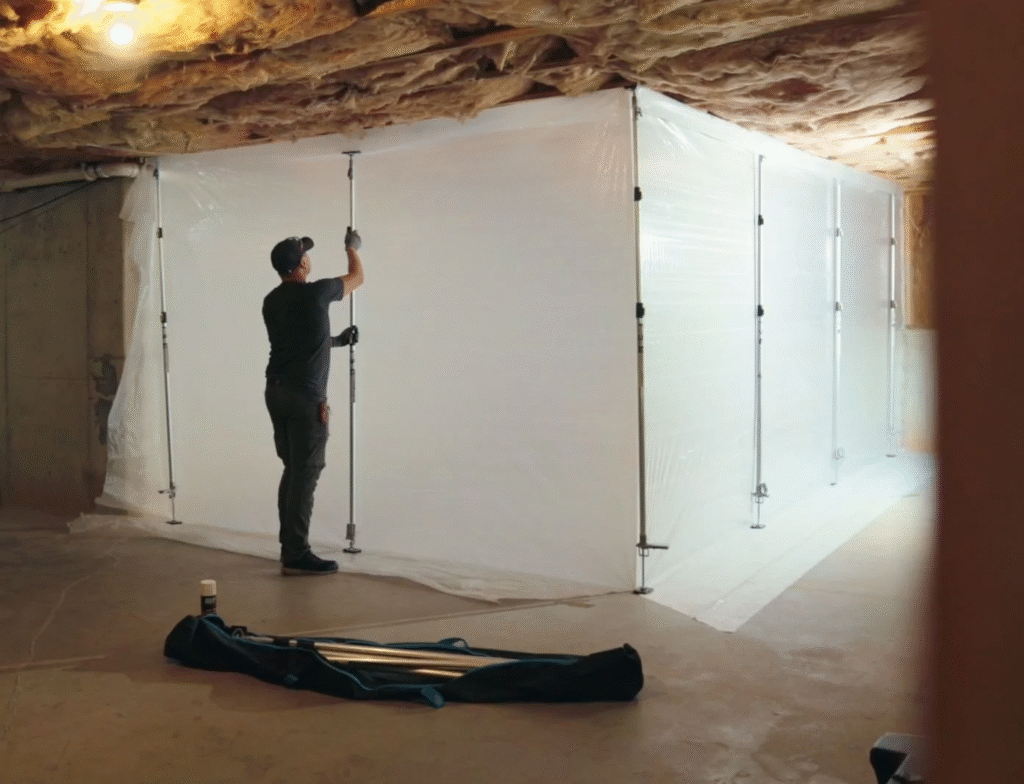
Step 3: Containment
To prevent spores from spreading, remediation teams establish containment areas using:
- Plastic sheeting barriers
- Negative air pressure systems
- HEPA air filtration devices
Containment is especially important in condos where shared air systems can distribute spores.
Step 4: Removal of Contaminated Materials
Porous materials with heavy mold growth are often removed, including:
- Drywall
- Insulation
- Carpet padding
- Ceiling tiles
- Baseboards
In Surfside’s humid climate, materials frequently absorb moisture deeply, requiring removal rather than surface cleaning.
Step 5: Cleaning and Treatment
Remaining structural surfaces are cleaned and treated with antimicrobial solutions to discourage regrowth.
This step is crucial in high-humidity environments.
Step 6: Drying and Monitoring
Industrial dehumidifiers and air movers are used to dry affected areas.
Because Surfside’s outdoor humidity remains high, drying may take longer than expected. Continuous moisture monitoring ensures materials return to safe levels before reconstruction begins.
Common Mistakes Property Owners Make
Real-world remediation cases often reveal avoidable missteps:
- Painting over mold without drying
- Using household cleaners on structural mold
- Ignoring minor roof or AC issues
- Delaying professional inspection
- Assuming odor will disappear on its own
These actions often allow mold to spread further.
Condo-Specific Challenges in Surfside
Many Surfside properties are condominiums, which present additional complexities:
- Shared plumbing systems
- Water migration between units
- Limited access to exterior building components
- HOA coordination requirements
Moisture originating in one unit may affect others, making early detection and communication essential.
Long-Term Prevention Strategies
Based on observations from local properties, prevention should focus on moisture control.
Maintain Indoor Humidity
Keep levels between 45–55% using properly sized AC systems or supplemental dehumidifiers.
Service HVAC Systems Regularly
Clean condensate lines and inspect air handlers annually.
Inspect After Storms
Even if no damage is visible, check ceilings and walls for subtle changes.
Improve Ventilation
Ensure closets and bathrooms have adequate airflow.
Schedule Periodic Moisture Checks
Proactive monitoring identifies issues before they escalate.
The Financial Impact of Delayed Remediation
In Surfside’s competitive real estate market, mold issues can significantly affect property value.
Delays can result in:
- Larger remediation zones
- Structural repairs
- Prolonged occupancy disruption
- Disclosure complications during sale
Early remediation is often far less expensive than waiting until mold spreads.
Why Local Experience Makes a Difference
Mold behavior in Surfside differs from inland Florida communities. Coastal humidity, salt air, and storm patterns shape how moisture moves through buildings.
Professionals familiar with Surfside properties understand:
- Wind-driven rain intrusion patterns
- Slab and high-rise moisture migration
- AC system vulnerabilities
- Common building envelope weaknesses
Tip Top Water and Fire Damage Restoration has worked with Surfside property owners to identify and remediate mold issues shaped by local environmental conditions.
Final Thoughts
Mold remediation in Surfside is not simply about removing visible growth—it is about understanding how moisture behaves in a coastal environment. Real-world observations from local properties show that mold often begins quietly, fueled by humidity, minor leaks, or condensation inside hidden spaces.
By recognizing early warning signs, addressing moisture sources promptly, and following a thorough remediation process, property owners can protect both their homes and their investment. In a community where ocean air and tropical weather are constant influences, proactive moisture management is the most reliable defense against mold.
In Surfside, successful mold remediation begins with awareness—and continues with consistent attention to the environmental realities of coastal living.