
Mold Removal in Bayfront Homes in North Miami: Real-World Observations from Local Properties
Bayfront homes in North Miami offer stunning views and convenient access to waterfront living, but coastal properties also face constant exposure to humidity, storms, and salt air. These environmental conditions make homes along Biscayne Bay especially vulnerable to hidden moisture problems that often lead to mold growth requiring professional removal.
At QualityAir Mold Inspection & Testing, many inspections across North Miami begin after homeowners notice persistent musty odors or mold spots that return even after cleaning. In many real-world cases, mold contamination has already spread behind walls or beneath flooring long before visible warning signs appear.
Understanding how mold removal works—and what inspectors commonly observe in local waterfront properties—helps homeowners prevent recurring issues while protecting long-term property value.
A Common Scenario in Bayfront North Miami Homes
A typical situation begins with what appears to be a minor moisture incident. During a storm, rainwater enters through aging balcony doors or window seals. In other cases, condensation from air-conditioning systems or small plumbing leaks introduces moisture into wall cavities.
Cleanup usually happens quickly. Floors are dried, and surfaces look normal again. Homeowners assume the issue has been resolved.
Weeks later, however, musty odors begin appearing, or paint starts bubbling in corners or near vents. Homeowners often try repainting or cleaning, only to see the problem return.
During professional inspections, moisture is frequently discovered trapped inside walls or beneath flooring where mold growth has already developed. Because the initial water intrusion seemed minor, professional evaluation was delayed, allowing contamination to spread quietly.
This pattern appears regularly in North Miami’s bayfront communities.
Why Bayfront Homes Experience More Mold Issues
Coastal homes naturally face higher moisture exposure than inland properties.
Common contributing factors observed in local inspections include:
- Constant exposure to humid coastal air
- Storm-driven rain entering buildings
- Aging balcony and window seals
- AC condensation problems
- Plumbing leaks between neighboring units
- Limited ventilation in bathrooms or kitchens
Moisture often travels through walls or ceilings before visible damage appears. Because drying takes longer in humid coastal environments, materials remain damp long enough for mold colonies to grow unnoticed.
Salt air exposure can also slowly degrade seals and materials, allowing moisture intrusion over time.
Real Observations from Local Inspections
Across North Miami’s waterfront neighborhoods, inspectors repeatedly encounter similar patterns.
One common finding involves mold growth behind walls exposed to wind-driven rain. Moisture enters through small exterior vulnerabilities and becomes trapped inside insulation.
Another frequent issue involves HVAC condensation. When air handlers or ducts produce excess moisture, dampness may spread into ceilings or wall cavities.
In condominium buildings, moisture sometimes travels between units through shared plumbing or ventilation pathways, spreading contamination beyond the original leak location.
Homeowners are often surprised that mold frequently develops in areas that never visibly flooded.
How Mold Growth Affects Bayfront Properties
Mold growth almost always signals an ongoing moisture problem that gradually damages building materials.
Common long-term impacts include:
- Ceiling or wall deterioration
- Damaged drywall and insulation
- Warped cabinetry or flooring
- Persistent musty odors
- Increased indoor humidity
- Reduced cooling efficiency
Moisture trapped in insulation forces HVAC systems to run longer, increasing energy consumption.
In North Miami’s competitive housing market, mold concerns may also delay property sales, as buyers frequently request inspections when odors or stains are noticed.
Addressing mold early protects indoor comfort and resale value.
Why Inspection Comes Before Mold Removal
Many homeowners believe mold removal should begin immediately once visible growth appears. However, professional inspection is the critical first step.
A mold inspection identifies moisture sources and determines how far contamination has spread. Inspectors examine kitchens, bathrooms, HVAC systems, ceilings, balconies, and exterior exposure areas.
Mold testing or indoor air quality testing may also be recommended when contamination is suspected but not visible or when documentation is required during property transactions.
QualityAir Mold Inspection & Testing focuses on inspection and testing so remediation efforts address root moisture causes rather than cosmetic symptoms.
Removing mold without fixing moisture conditions usually results in the problem returning.
Why DIY Mold Cleanup Often Fails
Homeowners frequently attempt mold removal themselves using cleaning products or repainting affected areas. While surfaces may appear improved temporarily, mold often returns.
Cleaning visible mold does not remove contamination hidden behind walls or beneath flooring. Moisture remains trapped, allowing mold growth to continue unseen.
Painting over mold traps moisture and may worsen long-term damage.
Professional remediation includes containment, safe removal of contaminated materials, and correction of moisture problems—steps DIY cleanup rarely accomplishes effectively.
Step-by-Step Mold Removal Process
Professional mold removal follows a controlled process designed to prevent contamination from spreading throughout the home.
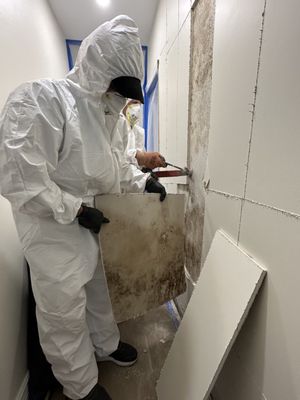
First, affected areas are isolated using containment barriers to prevent mold spores from reaching clean parts of the property.
Air filtration equipment captures airborne mold particles during removal.
Next, contaminated materials such as drywall, insulation, or carpeting are removed when they cannot be safely cleaned. Remaining surfaces are professionally cleaned to eliminate mold residues.
After removal, the moisture source must be corrected. Repairs may involve fixing plumbing leaks, improving ventilation, or resolving condensation problems.
Finally, follow-up inspections or testing may confirm contamination has been successfully eliminated and moisture levels corrected.
Proper remediation always focuses on eliminating moisture conditions so mold does not return.
An Insight Many Bayfront Homeowners Don’t Expect
One consistent lesson from local inspections is that small, unnoticed moisture problems often cause more long-term damage than major flooding events.
Large water incidents usually prompt immediate professional drying. However, slow plumbing leaks or condensation problems may continue unnoticed for months.
By the time odors or visible mold appear, contamination may already be widespread behind surfaces.
Routine inspections after plumbing or storm repairs often prevent larger remediation costs later.
Practical Prevention Steps for Bayfront Homes
Preventing mold growth requires consistent moisture control and routine maintenance.
Air-conditioning systems should receive regular servicing to ensure condensation drains properly and humidity remains controlled.
Balcony doors, windows, and exterior seals should be inspected after storms to catch leaks early.
Bathrooms and kitchens should be ventilated during cooking and showering to reduce humidity buildup.
Furniture should not be placed tightly against exterior walls where condensation may occur.
Leaks should be repaired immediately, and wet materials dried quickly after intrusion events.
Periodic professional inspections help confirm hidden moisture problems have not developed.
Preventive maintenance significantly reduces long-term repair expenses.
Why Local Experience Matters in North Miami
Moisture behavior differs significantly in coastal communities compared to inland areas. Inspectors must understand how North Miami’s humidity, storms, and coastal exposure influence moisture movement inside homes.
Our experience inspecting properties throughout North Miami’s bayfront neighborhoods allows us to quickly recognize moisture patterns common to waterfront homes and recommend practical prevention strategies suited to local conditions.
Local expertise leads to faster identification of risks and realistic solutions.
Practical Guidance for North Miami Property Owners
If your bayfront home develops persistent musty odors or visible mold signs, professional inspection helps prevent problems from worsening.
QualityAir Mold Inspection & Testing provides professional mold inspection and mold testing services while coordinating remediation when necessary.
Taking action early protects indoor comfort, prevents structural damage, and helps maintain long-term property value in North Miami’s coastal environment.
Mold removal should be viewed as part of routine home maintenance—ensuring hidden moisture problems are corrected before they lead to costly repairs or ongoing indoor air quality concerns.