
What Really Causes the Need for Indoor Air Quality Improvement in North Miami Beach
Indoor air quality problems in North Miami Beach rarely start with “bad air.”
They start with moisture.
In a coastal city where humidity stays elevated most of the year, AC systems run constantly, and high-rise buildings share ventilation pathways, indoor air quality (IAQ) issues develop quietly. By the time someone notices a musty smell or persistent dust buildup, the root cause has usually been active for weeks — sometimes months.
Understanding what truly drives indoor air quality problems in North Miami Beach helps property owners correct the source instead of masking the symptoms.
Humidity: The Primary Driver
Humidity is the foundation of most IAQ issues in South Florida.
In North Miami Beach, outdoor humidity levels frequently exceed 70%. Even inside climate-controlled condos and homes, humidity can creep above recommended levels if:
- AC systems are undersized or oversized
- Drain lines are clogged
- Duct insulation is compromised
- Buildings remain closed for extended periods
When indoor humidity rises above 55–60%, it creates conditions that allow:
- Mold growth
- Dust mite activity
- Odor retention
- Material deterioration
Many IAQ concerns in Sunny Isles Beach and Aventura trace directly back to unmanaged humidity.
AC Systems That Never Get a Break
Air conditioning systems are central to indoor air quality in this region.
Because they operate almost year-round, minor issues become major contributors to air contamination.
Common AC-related causes include:
- Dirty evaporator coils
- Clogged condensate lines
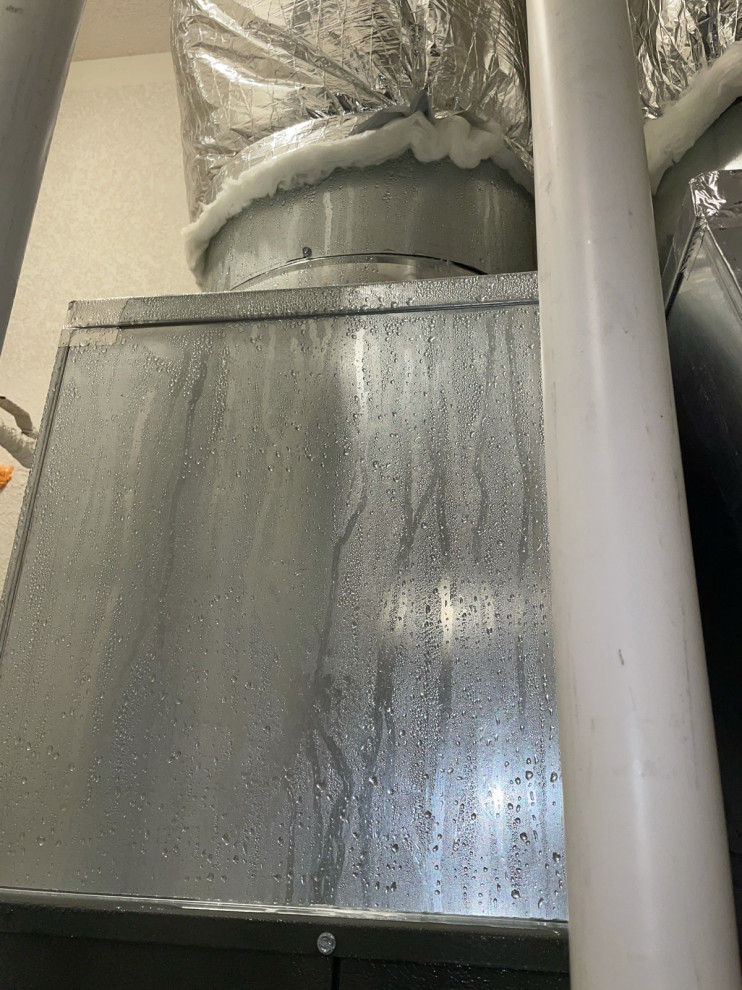
- Wet air handler insulation
- Leaky duct connections
- Poor airflow balance
When condensation remains inside the system, mold growth can occur within ductwork and mechanical closets.
Once contamination enters the air stream, it circulates through the entire property.
Air duct cleaning and system evaluation often become part of IAQ improvement plans.
High-Rise Living and Shared Air Pathways
North Miami Beach is dominated by condo towers.
High-rise buildings introduce unique IAQ challenges:
- Shared plumbing stacks
- Vertical duct shafts
- Pressurized hallways
- Common ventilation systems
Odors and airborne particles don’t always stay within one unit.
If a neighboring condo experiences water damage, mold growth, or smoke damage, particles can migrate through shared infrastructure.
This is particularly common in waterfront buildings near Bal Harbour and Surfside, where mechanical systems are complex and heavily used.
Improving indoor air quality sometimes requires evaluating not just the unit — but the building systems connected to it.
Water Damage That Was Never Fully Dried
Incomplete water damage repair is one of the most common hidden causes of poor air quality.
In North Miami Beach properties, water intrusion can come from:
- Storm-related leaks
- Balcony drainage failures
- AC condensation problems
- Plumbing leaks inside walls
- Flooding from upper units
If structural drying wasn’t properly completed, moisture remains trapped inside:
- Drywall
- Insulation
- Subflooring
- Cabinet bases
Even when surfaces look clean, damp materials can contribute to musty odor and airborne contaminants.
Professional moisture detection often reveals hidden sources affecting IAQ.
Mold Growth Behind the Scenes
Not all mold is visible.
In humid coastal climates, growth often occurs in concealed areas:
- Inside air handler closets
- Behind kitchen cabinets
- Beneath laminate flooring
- Inside duct insulation
- In attic insulation
Mold inspection and testing sometimes confirm what odor and discomfort suggest.
IAQ improvement frequently overlaps with mold remediation, especially when moisture has been ongoing.
Addressing air quality without addressing hidden mold simply delays the problem.
Coastal Salt Air and Material Deterioration
Salt air exposure in North Miami Beach accelerates corrosion.
When salt particles combine with humidity and indoor dust, they contribute to:
- Deterioration of HVAC components
- Metal rust inside air handlers
- Degraded insulation
- Fine particulate buildup
Over time, these particles circulate through duct systems and affect breathing comfort.
Coastal conditions are different from inland cities. IAQ strategies must account for environmental exposure.
Renovations and Construction Dust
In rapidly developing areas like Aventura and Sunny Isles Beach, ongoing construction also affects indoor air quality.
Fine particulate dust enters buildings during:
- Window or door replacements
- Flooring upgrades
- Nearby exterior construction
- Interior remodeling
Without proper containment and filtration, dust accumulates inside ducts and on coils.
Air duct cleaning and filtration upgrades often become necessary after renovation projects.
Why DIY Solutions Don’t Fix the Root Cause
Homeowners often attempt:
- Portable air fresheners
- Standalone air purifiers
- Deodorizing sprays
- Opening windows for ventilation
While these may temporarily reduce odor, they don’t solve underlying moisture or contamination issues.
True IAQ improvement involves:
- Moisture control
- HVAC evaluation
- Duct inspection
- Mold assessment when needed
- Structural drying if moisture persists
Surface-level fixes rarely resolve structural air quality concerns.
The Professional Approach to Indoor Air Quality Improvement
Improving IAQ in North Miami Beach properties typically involves:
1. Moisture Assessment
Checking humidity levels and identifying damp materials.
2. HVAC Inspection
Evaluating coils, drain lines, duct connections, and insulation.
3. Air Duct Cleaning (When Necessary)
Removing dust and microbial buildup from duct interiors.
4. Mold Inspection
Determining whether hidden contamination is contributing to odor or discomfort.
5. Structural Drying
If moisture is detected, professional drying prevents ongoing air contamination.
Companies like Tip Top Water and Fire Damage Restoration approach IAQ concerns by identifying environmental and mechanical contributors specific to coastal properties.
Without addressing moisture, air quality improvements are temporary.
Preventing Future Indoor Air Quality Problems
Property owners in North Miami Beach can reduce IAQ risks by:
- Keeping indoor humidity below 55%
- Servicing AC systems annually
- Cleaning condensate lines regularly
- Monitoring air handler closets for dampness
- Inspecting for leaks after storms
- Scheduling periodic duct inspection
Preventive maintenance is especially important in high-rise buildings where air circulation affects multiple units.
Small moisture issues escalate quickly in humid climates.
Why Local Experience Makes a Difference
Indoor air quality in North Miami Beach is shaped by:
- Coastal humidity
- High-rise infrastructure
- Continuous AC usage
- Storm-related water intrusion
- Salt air exposure
Local professionals understand how these factors interact.
Experience across North Miami Beach, Miami Shores, Biscayne Park, and surrounding bayfront communities influences how inspections are conducted and which problem areas receive priority.
IAQ improvement here is not generic.
It’s climate-specific.
A Practical Perspective
Indoor air quality problems in North Miami Beach rarely appear overnight.
They build gradually — driven by moisture, HVAC strain, and environmental exposure.
The solution isn’t masking odor or increasing airflow temporarily.
It’s identifying moisture sources, correcting system deficiencies, and restoring proper environmental balance.
In a coastal city where humidity never truly leaves, air quality management is part of responsible property care.
When approached methodically, most IAQ issues can be corrected — and prevented from returning.