
Preventing Future Problems: Mold Inspection in Bayfront Homes in North Miami
If you own a bayfront home in North Miami, mold prevention isn’t seasonal.
It’s structural.
Living along Biscayne Bay means constant exposure to humidity, salt air, elevated groundwater, and wind-driven rain. Even when there hasn’t been a leak or flood, moisture pressure builds quietly inside walls, attics, and HVAC systems.
That’s why mold inspection in waterfront properties isn’t just reactive — it’s preventative.
Let’s break down how mold inspections help prevent future problems and what makes bayfront homes uniquely vulnerable.
Why Bayfront Homes Carry Higher Mold Risk
Waterfront homes face moisture from multiple directions at once:
- Humid bay air entering through doors and windows
- Salt particles attracting moisture indoors
- Slab foundations exposed to high water tables
- Attic heat combined with trapped humidity
- Constant air conditioning condensation
Unlike inland homes, moisture here is ongoing — not occasional.
Even without visible water damage, structural materials can remain slightly damp for extended periods.
That’s where inspections matter.
What a Preventative Mold Inspection Looks For
A proper inspection in a bayfront home focuses on early indicators — not just visible growth.
Key evaluation areas include:
- Exterior-facing walls
- Attic insulation and roof decking
- HVAC air handlers and ductwork
- Slab edges and baseboards
- Cabinet interiors in kitchens and bathrooms
Moisture meters and infrared tools often detect damp areas before mold becomes visible.
Catching those areas early prevents full remediation later.
Exterior Walls: The First Vulnerable Zone
In waterfront properties, exterior walls take constant exposure from:
- Wind-driven rain
- Salt air
- Temperature shifts
- Seal deterioration
Small failures in window seals or door thresholds allow slow moisture intrusion.
Early signs include:
- Slight paint bubbling
- Minor drywall discoloration
- Warped baseboards
- Faint musty odor near exterior walls
An inspection identifies hidden moisture before mold spreads into framing.
Attics in Coastal Homes
Hot air rises, carrying moisture with it.
In bayfront homes, attic spaces often trap humid air if ventilation is not balanced properly.
Inspectors look for:
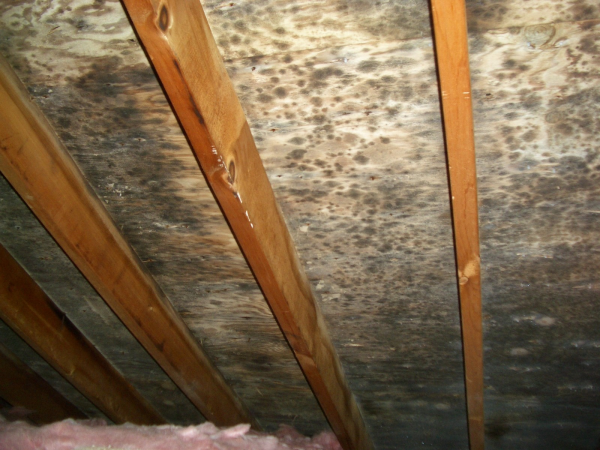
- Dark spotting on roof decking
- Damp insulation texture
- Rusting nails or fasteners
- HVAC duct condensation
Attic mold can quietly affect indoor air quality below.
Routine inspection prevents attic issues from migrating into living spaces.
HVAC Systems and Airflow Issues
Air conditioning systems in North Miami run nearly year-round.
If systems are oversized, poorly maintained, or improperly draining, they can:
- Leave excess humidity in the home
- Accumulate condensation inside ductwork
- Spread spores if growth develops
Mold inspections often include checking:
- Drain pans
- Air handler compartments
- Supply and return ducts
- Vent registers
Preventative inspection of HVAC systems stops mold from circulating through the entire property.
Slab Foundations and Groundwater Pressure
Bayfront homes frequently sit on slab foundations.
With elevated water tables near Biscayne Bay, moisture can migrate upward from below.
Signs inspectors evaluate:
- Baseboard swelling
- Cracks in tile grout
- Soft spots in flooring
- Damp readings along slab edges
Ground moisture combined with high indoor humidity creates ideal mold conditions behind walls.
Monitoring these zones early avoids hidden structural growth.
Why Salt Air Makes Mold Worse
Salt doesn’t just corrode metal.
It attracts and retains moisture.
When salt particles settle indoors, they increase the time surfaces remain damp — especially during humid weeks.
This makes coastal homes more susceptible to slow, persistent mold growth even without major water events.
Mold inspection in bayfront homes must account for salt-related moisture retention.
Air Sampling vs. Visual Inspection
Many waterfront homeowners assume no visible mold means no problem.
But in humid coastal environments, mold often grows inside:
- Wall cavities
- Under flooring
- Inside duct insulation
- Behind built-in cabinetry
Air sampling compares indoor spore levels to outdoor levels.
If indoor levels are elevated or certain species dominate, further investigation is warranted.
Air testing provides clarity when visual signs are minimal.
When Inspections Are Most Important
Bayfront property owners should strongly consider mold inspection after:
- Storm surge events
- Heavy rain with wind exposure
- Roof repairs
- Plumbing leaks
- AC drain overflows
- Prolonged humidity spikes
Even if surfaces appear dry, hidden moisture may remain.
Early inspection limits long-term damage.
Preventative Maintenance After Inspection
A mold inspection doesn’t just confirm problems.
It provides direction for prevention.
Recommendations may include:
- Installing whole-home dehumidification
- Improving attic ventilation
- Resealing windows and doors
- Adjusting HVAC cycling
- Monitoring indoor humidity levels
The goal is long-term moisture control.
Because in bayfront homes, moisture isn’t temporary.
It’s environmental.
Real-World Observations from North Miami Waterfront Homes
Across multiple inspections, consistent patterns emerge:
- Exterior wall moisture is common but often unnoticed.
- HVAC systems frequently show early condensation buildup.
- Slab-edge moisture contributes more than homeowners expect.
- Attic humidity is underestimated in coastal climates.
- Early inspections significantly reduce remediation costs.
Small moisture pockets become major contamination zones when ignored.
Preventative inspection keeps problems small.
Cost vs. Consequence
Preventative mold inspection is minor compared to full remediation.
If mold spreads unchecked, repairs may involve:
- Drywall removal
- Insulation replacement
- Duct cleaning
- Containment setup
- Air filtration systems
In high-value bayfront homes, structural damage impacts property value quickly.
Routine inspection protects investment.
Final Thoughts
Mold inspection in bayfront homes in North Miami is not about reacting to visible damage.
It’s about preventing future problems before they expand.
Coastal humidity, salt air, groundwater pressure, and constant AC use create continuous moisture exposure.
Inspection provides early detection.
Early detection prevents demolition.
And in waterfront properties, proactive moisture management is what keeps minor issues from becoming major structural concerns.