
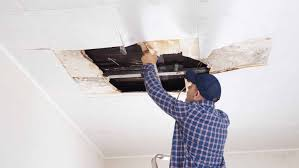
What to Expect During Inspection and Repair: Water Leak Detection Challenges in Coastal Neighborhoods Near Biscayne Bay
Water leak detection near Biscayne Bay isn’t straightforward.
In coastal neighborhoods, moisture is everywhere. High humidity, salt air, wind-driven rain, and elevated groundwater levels all complicate the process of identifying a true plumbing leak versus environmental moisture intrusion.
For property owners, understanding what to expect during inspection and repair helps avoid confusion — and prevents unnecessary demolition.
Let’s walk through the realities of leak detection in waterfront communities.
Why Leak Detection Is More Complicated Near the Bay
Inland properties usually deal with isolated plumbing failures.
Coastal homes deal with overlapping moisture sources:
- Humid air condensation
- Roof and flashing intrusion from wind
- Balcony or sliding door seal failure
- Slab moisture migration
- Salt air attracting moisture indoors
When water staining appears on a wall or ceiling, it’s not always a broken pipe.
Distinguishing between plumbing leaks and environmental intrusion is the first challenge.
Step 1: Initial Visual Assessment
Inspection begins with identifying visible clues such as:
- Ceiling staining
- Warped baseboards
- Bubbling paint
- Soft drywall
- Musty odors
In coastal homes, inspectors pay close attention to whether damage is:
- Directly below plumbing fixtures
- Near exterior-facing walls
- Around windows or doors
- Along slab edges
Location helps narrow the source.
But visual signs alone aren’t enough in humid environments.
Step 2: Moisture Mapping and Meter Testing
Because humidity levels are naturally high near Biscayne Bay, moisture readings must be interpreted carefully.
Inspectors use:
- Pin moisture meters
- Non-invasive scanners
- Hygrometers
- Infrared thermal imaging
The goal is to identify moisture patterns.
Plumbing leaks usually show concentrated moisture at a specific point that spreads outward.
Environmental intrusion tends to show broader, less defined patterns.
Thermal imaging is especially helpful in locating hidden moisture behind walls without unnecessary cutting.
Step 3: Pressure Testing Plumbing Systems
If a plumbing leak is suspected, pressure testing is performed.
This involves:
- Isolating water lines
- Monitoring pressure drop
- Checking for system instability
In slab-on-grade homes common near the bay, slab leaks can occur beneath flooring.
These are harder to detect because:
- Concrete retains moisture
- Groundwater levels are already elevated
- Slab edges often show minor dampness naturally
Pressure testing confirms whether the issue originates from the plumbing system.
Step 4: Roof and Exterior Evaluation
Wind-driven rain is a common cause of moisture issues in coastal neighborhoods.
Inspectors evaluate:
- Roof flashing
- Sealant around vents
- Window and door seals
- Balcony thresholds
- Exterior wall penetrations
In many cases, water intrusion occurs only during storms.
That means staining may appear days after rainfall.
This intermittent pattern can make detection more challenging.
Step 5: HVAC System Inspection
Air conditioning systems run constantly in South Florida.
When drainage lines clog or insulation deteriorates, condensation may accumulate inside walls or ceilings.
Inspectors check:
- Air handler drain pans
- Condensate lines
- Duct insulation
- Vent registers
AC-related leaks often mimic plumbing issues.
Without HVAC inspection, the source may be misdiagnosed.
Step 6: Slab and Groundwater Considerations
Coastal neighborhoods near Biscayne Bay often have high water tables.
After heavy rainfall, groundwater pressure increases beneath foundations.
Moisture may migrate upward into:
- Tile grout lines
- Baseboards
- Wood flooring edges
This type of intrusion is slow and consistent — not sudden.
Distinguishing between slab moisture and plumbing leaks requires careful monitoring and testing.
What Makes Repairs More Complex
Once the source is identified, repair begins.
But coastal conditions influence the repair process.
Salt Air Corrosion
If moisture has mixed with salt residue, metal fasteners and wiring may corrode faster.
Affected materials must be evaluated for structural integrity.
Humidity Slows Drying
Even after a leak is repaired, drying takes longer near the bay.
Industrial dehumidifiers are often necessary to bring moisture levels back to normal.
Simply repairing the pipe isn’t enough.
Moisture trapped in drywall or subfloors can lead to mold growth if not properly dried.
Mold Risk Is Higher
In warm coastal environments, mold can begin forming within 24–48 hours.
That’s why moisture control continues after plumbing repair.
Air scrubbers and antimicrobial treatments may be used if contamination is suspected.
What Property Owners Should Expect
Leak detection in coastal neighborhoods typically involves:
- Non-invasive testing first
- Moisture mapping across affected areas
- Pressure testing if plumbing is suspected
- Exterior inspection for intrusion points
- HVAC system evaluation
Only after narrowing down the source should limited demolition occur.
Rushing into cutting walls without confirmation often causes unnecessary damage.
A methodical approach prevents over-repair.
Common Misconceptions
Many homeowners assume:
- Any stain means a burst pipe
- Dry surfaces mean the problem is gone
- Opening windows helps drying
In humid coastal air, open windows can increase indoor moisture.
Dry surfaces don’t guarantee dry wall cavities.
And not every stain is plumbing-related.
Accurate diagnosis saves time and money.
Prevention After Repair
Once the leak is resolved, preventing recurrence becomes the focus.
Recommended steps often include:
- Monitoring indoor humidity levels
- Servicing HVAC drain lines
- Inspecting exterior seals annually
- Checking roof flashing after storms
- Installing water detection sensors
In waterfront properties, routine maintenance is essential.
Moisture pressure never truly disappears near the bay.
Final Thoughts
Water leak detection in coastal neighborhoods near Biscayne Bay requires precision.
Multiple moisture sources overlap, making diagnosis more complex than inland properties.
During inspection and repair, expect:
- Detailed moisture testing
- Careful source confirmation
- Gradual, targeted demolition
- Controlled drying
- Ongoing humidity management
In coastal environments, solving the visible issue is only part of the solution.
True repair addresses the source, stabilizes moisture levels, and protects the structure from future exposure.
Near the bay, moisture is constant.
Proper detection is what keeps it from becoming permanent damage.