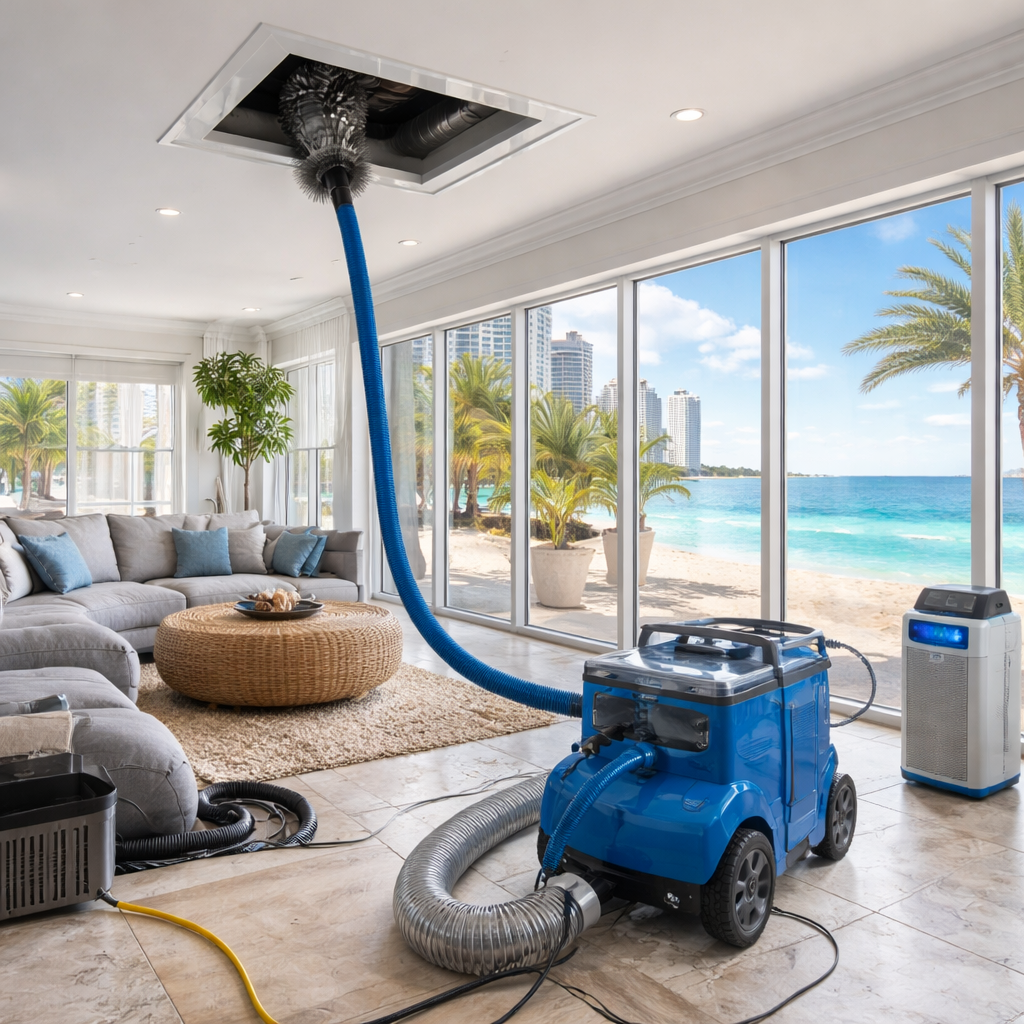
How Coastal Weather Influences Indoor Air Quality Improvement in Sunny Isles Beach
Sunny Isles Beach, a picturesque coastal city in North Miami-Dade, is renowned for its oceanfront high-rises, luxury homes, and vibrant lifestyle. While living near the beach offers stunning views and refreshing sea breezes, it also brings unique environmental challenges that impact indoor air quality (IAQ). Coastal weather, characterized by high humidity, salt-laden air, and frequent storms, directly influences the air we breathe indoors. For homeowners, landlords, and property managers, understanding these effects is critical for maintaining healthy indoor environments and preventing damage to HVAC systems, ducts, and structural components.
Indoor air quality improvement in Sunny Isles Beach requires a holistic approach that considers both environmental factors and property-specific vulnerabilities. Proper assessment, regular maintenance, and professional cleaning are essential to ensure that residents enjoy clean, breathable air and a safe living environment, particularly in high-humidity coastal conditions.
Understanding Indoor Air Quality in Coastal Homes
Indoor air quality refers to the cleanliness and healthiness of the air within a home or building. Poor IAQ can result from a combination of factors:
- Particulate Matter: Dust, pollen, and debris accumulate in living spaces, especially when HVAC systems circulate contaminated air.
- Microbial Growth: Mold, mildew, and bacteria thrive in humid environments, spreading spores throughout indoor spaces.
- Chemical Pollutants: Off-gassing from furniture, building materials, and cleaning products can affect air quality.
- Smoke and Odors: Tobacco, cooking, or smoke damage from fires can infiltrate walls and ductwork, creating persistent odors.
In Sunny Isles Beach, coastal weather amplifies these issues by introducing moisture, salt, and storm-related contaminants into homes.
How Coastal Weather Impacts Indoor Air Quality
1. High Humidity
Sunny Isles Beach experiences consistently high humidity due to its proximity to the Atlantic Ocean. Humid air can:
- Promote mold and mildew growth on walls, ceilings, and HVAC components.
- Increase moisture accumulation in carpets, furniture, and insulation.
- Reduce the effectiveness of air filtration systems, allowing more airborne particles to circulate.
Homes with poor ventilation are particularly susceptible to persistent dampness and poor indoor air quality.
2. Salt-Laden Air
The salty coastal air can infiltrate homes through windows, doors, and ventilation systems, causing:
- Corrosion of metal ductwork and HVAC components, creating rough surfaces that trap dust and debris.
- Increased wear on filters, requiring more frequent replacement.
- A catalyst for microbial growth due to the combination of moisture and metal surfaces.
Salt air also contributes to odors that can linger in indoor spaces if not properly managed.
3. Storms and Heavy Rainfall
Tropical storms and heavy rain events can exacerbate indoor air quality issues by:
- Causing water intrusion through roofs, windows, and foundations.
- Introducing dust, debris, and organic matter into HVAC systems.
- Increasing moisture levels that fuel mold growth, particularly in attics, crawlspaces, and wall cavities.
After storms, immediate inspection and remediation are critical to prevent long-term IAQ problems.
4. Temperature Fluctuations
Coastal weather often brings sudden temperature changes, which can:
- Increase condensation on walls, windows, and ductwork.
- Encourage mold growth in poorly ventilated areas.
- Impact the efficiency of dehumidifiers and AC systems designed to control indoor humidity.
Common Indoor Air Quality Problems in Sunny Isles Beach Homes
Coastal weather conditions contribute to several IAQ challenges for residents:
- Mold and Mildew: High humidity and water intrusion create ideal conditions for microbial growth.
- Dust and Debris Accumulation: Coastal winds can carry fine particulate matter that settles inside homes.
- Odor Issues: Humidity and moisture can trap odors from cooking, pets, or smoke damage.
- HVAC Contamination: Ductwork and AC units can harbor dust, mold spores, and bacteria if not regularly cleaned.
- Respiratory Irritation: Poor indoor air quality may trigger allergies, asthma, or other respiratory symptoms.
Identifying these problems early allows homeowners to implement targeted solutions to improve air quality.
Steps to Improve Indoor Air Quality in Coastal Homes
1. Professional HVAC and Duct Cleaning
- Regular cleaning removes dust, mold spores, and microbial buildup from ductwork.
- Sanitization and inspection of AC units help prevent contamination from moisture or debris.
- Proper maintenance ensures the system operates efficiently, reducing energy costs and improving airflow.
2. Moisture Control
- Dehumidifiers maintain indoor humidity below 55%, limiting mold growth and microbial proliferation.
- Seal leaks in roofs, windows, and plumbing systems to prevent water intrusion.
- Use moisture-resistant materials in bathrooms, kitchens, and basements.
3. Ventilation Enhancement
- Properly designed ventilation systems help circulate fresh air while removing contaminants.
- Exhaust fans in kitchens and bathrooms prevent moisture accumulation.
- Air exchangers and energy recovery ventilators improve airflow in high-humidity environments.
4. Air Filtration and Purification
- HEPA filters remove fine particulate matter, dust, and allergens.
- Activated carbon filters reduce odors from smoke, cooking, or pets.
- Air purifiers with UV-C technology can neutralize airborne bacteria, viruses, and mold spores.
5. Regular Maintenance and Inspection
- Schedule annual inspections to identify hidden moisture, mold growth, or duct contamination.
- Monitor indoor humidity and temperature to prevent conditions conducive to microbial growth.
- Replace filters regularly and clean HVAC components to maintain efficiency and air quality.
Coastal Weather-Specific Considerations
Sunny Isles Beach residents must consider the following environmental factors when improving IAQ:
- Salt Corrosion: Metal ducts and AC units near the ocean may require corrosion-resistant coatings or more frequent maintenance.
- High Humidity Seasons: Peak rainy seasons and tropical storm periods require heightened vigilance for moisture accumulation.
- Storm Preparedness: Flooding and water intrusion during storms necessitate immediate inspection and drying to prevent mold growth.
- Ventilation Challenges in High-Rises: Multi-level condos may have shared ventilation systems that require specialized cleaning to prevent cross-contamination.
Professional restoration companies familiar with local weather conditions can tailor strategies to address these unique challenges effectively.
Health and Safety Benefits
Maintaining high indoor air quality in coastal homes provides multiple benefits:
- Reduced Allergens and Irritants: Cleaning ducts, filters, and surfaces minimizes exposure to dust, pollen, and microbial contaminants.
- Mold Prevention: Controlling moisture prevents mold growth, which can trigger respiratory problems.
- Improved Comfort: Proper airflow and humidity control create a more pleasant indoor environment.
- Energy Efficiency: Well-maintained HVAC systems operate more efficiently, reducing energy costs.
- Peace of Mind: Residents can enjoy their coastal home without worrying about lingering odors or hidden contaminants.
Long-Term Strategies for Maintaining Indoor Air Quality
- Routine HVAC Inspections: Ensure components are free from moisture, corrosion, or microbial buildup.
- Preventive Maintenance: Clean ducts, replace filters, and sanitize AC units regularly.
- Humidity Control: Install dehumidifiers and monitor indoor moisture levels year-round.
- Storm Preparation: Seal vulnerable areas and inspect drainage systems prior to hurricane season.
- Professional Assistance: Engage experienced local restoration professionals to address hidden IAQ issues, particularly after storms or flooding events.
Implementing these strategies helps homeowners protect their property, preserve indoor air quality, and ensure long-term health and safety.
Why Local Expertise Matters
Sunny Isles Beach’s coastal climate requires a specialized approach to IAQ improvement. Local professionals understand:
- The effects of high humidity and salt-laden air on HVAC systems and indoor spaces.
- How storm surges, heavy rainfall, and wind-driven debris impact homes.
- Techniques for mold prevention, duct cleaning, and air purification suited to high-humidity coastal environments.
Tip Top Water and Fire Damage Restoration combines local knowledge with professional experience to improve indoor air quality, protect HVAC systems, and ensure healthy living spaces in Sunny Isles Beach homes.
Conclusion
Coastal weather in Sunny Isles Beach has a significant impact on indoor air quality, from high humidity and salt-laden air to storm-driven water intrusion. Poor indoor air quality can lead to mold growth, dust accumulation, odors, and respiratory issues, particularly in homes that are not properly maintained or ventilated.
Improving indoor air quality requires a combination of professional HVAC and duct cleaning, moisture control, ventilation enhancement, air filtration, and regular inspections. Preventive strategies, tailored to the local coastal environment, ensure long-term protection, comfort, and health for homeowners, landlords, and property managers.
By understanding the influence of coastal weather on indoor environments and implementing targeted solutions, residents of Sunny Isles Beach can enjoy a clean, safe, and healthy home year-round, even in the face of high humidity, storms, and salt exposure.