Why Mold Remediation Becomes Necessary in Sunny Isles Beach Following Indoor Flooding
Sunny Isles Beach is one of Florida’s most desirable coastal communities, known for high-rise condos, oceanfront homes, and luxury residential properties. Yet living in such a beautiful coastal environment comes with a unique set of maintenance challenges. One of the most pressing issues following indoor flooding is mold growth.
Even a relatively minor flood event can create conditions that promote rapid microbial proliferation. In Sunny Isles Beach, North Miami Beach, Bal Harbour, Aventura, Miami Shores, Surfside, Biscayne Park, and nearby coastal areas, mold can develop within 24–48 hours in warm, humid indoor conditions. Understanding why mold remediation becomes necessary, how it works, and the consequences of delayed action is critical for property owners, landlords, and property managers.
How Indoor Flooding Creates Ideal Conditions for Mold
Mold is a type of fungus that thrives in warm, damp environments. After indoor flooding, conditions become especially favorable due to:
1. Saturated Materials
Floodwaters saturate carpets, padding, drywall, insulation, and wood. Porous materials like these retain moisture, allowing mold spores to germinate and colonize hidden areas behind walls, under flooring, or in ceiling cavities.
2. Elevated Humidity
Sunny Isles Beach experiences high humidity year-round. Following flooding, indoor humidity rises further, slowing the drying of materials and providing the moisture mold needs to thrive.
3. Warm Coastal Temperatures
Warm indoor temperatures accelerate mold growth. Combined with humidity, this creates an environment where mold can spread rapidly across multiple surfaces.
4. Microbial Contaminants in Floodwater
Floodwater may carry organic debris, bacteria, and other microorganisms. These contaminants provide a nutrient-rich medium for mold, increasing both the speed and intensity of growth.
Common Sources of Mold Following Indoor Flooding
In Sunny Isles Beach properties, mold commonly develops in areas affected by floodwaters:
- Carpets and Padding: Waterlogged carpets and padding often retain moisture even after surface drying.
- Drywall and Baseboards: Walls that absorb floodwater provide extensive surfaces for mold growth.
- Ceilings and Attics: Water may seep upward through walls or around windows, impacting ceiling panels or insulation.
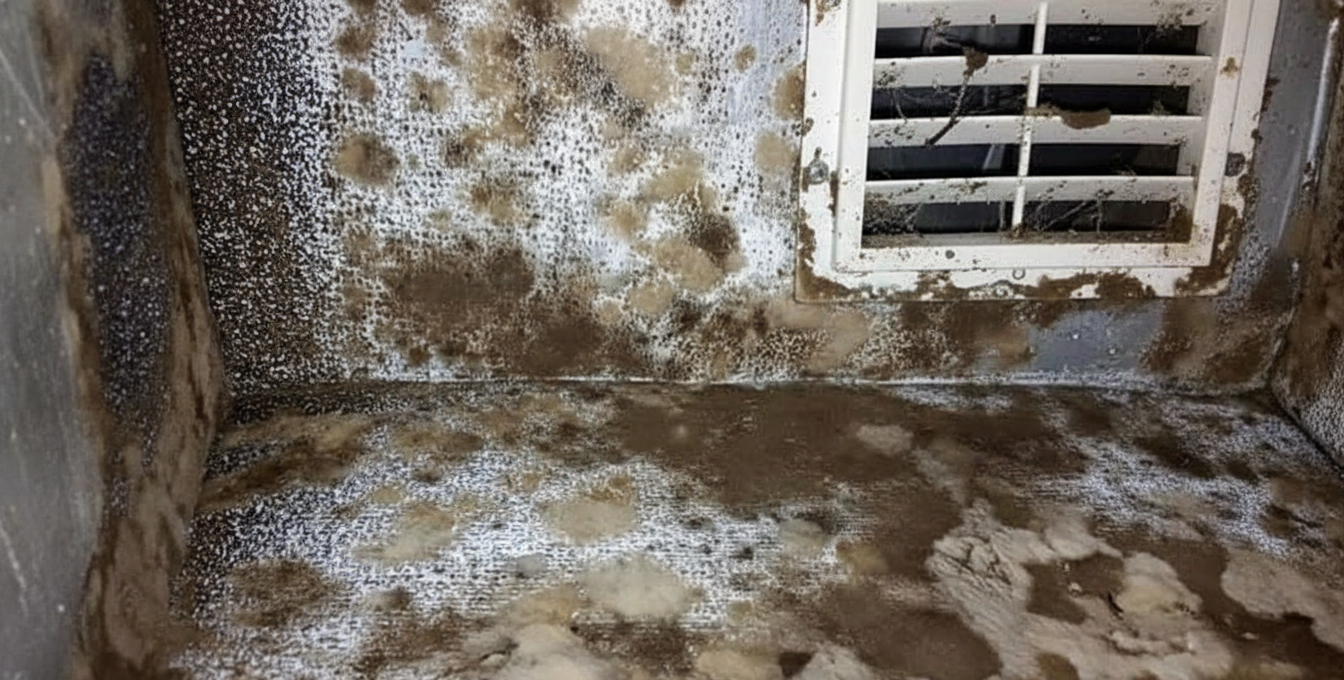
- HVAC Systems: Ductwork and drip pans can harbor moisture, spreading mold spores throughout the home.
- Cabinets and Closets: Enclosed spaces trap moisture and reduce airflow, making them prime locations for microbial growth.
Even when water is removed quickly, residual dampness can cause mold to develop in hidden areas.
Signs That Mold May Be Present After Flooding
Property owners and tenants should watch for both visible and subtle indicators of mold growth:
- Musty Odors: Often the first noticeable sign of hidden mold, especially in enclosed spaces.
- Discoloration: Black, green, or gray patches on walls, ceilings, or baseboards.
- Warped or Bubbling Surfaces: Flooring, drywall, or cabinetry may warp due to moisture and mold activity.
- Allergy-Like Symptoms: Sneezing, coughing, or irritation in residents can indicate mold spores circulating in the air.
- Water Stains: Persistent staining on walls, ceilings, or trim that does not dissipate indicates moisture retention.
Early detection is key to minimizing damage and reducing remediation costs.
Why Mold Remediation Is Essential
Some property owners attempt DIY cleaning after flooding, using bleach or household cleaners. While these may remove surface discoloration, they rarely address the underlying problem. Professional mold remediation is necessary for several reasons:
- Hidden Mold Colonies: Mold often grows behind walls, under flooring, or inside ducts, which cannot be reached with standard cleaning methods.
- Health Risks: Mold spores in the air can affect indoor air quality, potentially triggering respiratory issues.
- Preventing Structural Damage: Untreated mold can compromise drywall, wood framing, and flooring over time.
- HVAC Contamination: Mold in ductwork or air conditioning systems can distribute spores throughout the property, worsening the issue.
- Long-Term Cost Savings: Timely professional remediation prevents secondary damage that could require expensive reconstruction.
In high-humidity areas like Sunny Isles Beach, ignoring mold growth allows it to spread quickly, creating more significant problems.
The Professional Mold Remediation Process
Mold remediation in properties affected by indoor flooding is a structured, methodical process:
1. Inspection and Assessment
Technicians evaluate the extent of mold growth using moisture meters, thermal imaging, and air quality testing. This step identifies affected materials and hidden damp zones.
2. Containment
To prevent spores from spreading to unaffected areas, the remediation team isolates contaminated zones using plastic sheeting, negative air pressure systems, and barriers.
3. Removal of Contaminated Materials
Porous materials like drywall, insulation, and carpet padding are often removed if they cannot be fully cleaned. This prevents mold from returning.
4. Cleaning and Disinfection
Non-porous surfaces such as metal, glass, and tile are cleaned with professional-grade antimicrobial solutions to eliminate remaining spores.
5. Drying and Dehumidification
High-capacity dehumidifiers and air movers reduce indoor humidity and remove residual moisture. Thorough drying prevents mold regrowth.
6. HVAC Inspection
Air ducts and drip pans are inspected and cleaned if contamination is detected, ensuring the system does not recirculate spores.
7. Verification
Post-remediation testing confirms that mold levels have returned to safe standards and moisture sources have been addressed.
Real-World Observations in Sunny Isles Beach Properties
Experience working in Sunny Isles Beach and nearby communities reveals patterns of mold development after flooding:
- Rapid Colonization: Mold can begin to grow within 24–48 hours on damp surfaces.
- Hidden Damage: Walls, ceilings, and subflooring often harbor mold that is invisible until professional inspection occurs.
- Multi-Unit Concerns: In condo buildings, water intrusion in one unit can affect neighboring units, emphasizing the importance of timely remediation.
- HVAC Spread: Contaminated ductwork can distribute spores throughout multiple rooms if not addressed.
These observations highlight why immediate professional intervention is crucial after any indoor flooding event.
Preventing Mold After Flooding
Once mold has been removed, property owners can implement strategies to minimize recurrence:
- Prompt Water Removal: Extraction of standing water and thorough drying of carpets, padding, and flooring.
- Dehumidification: Maintaining indoor humidity below 60% using dehumidifiers and AC systems.
- Regular HVAC Maintenance: Clean condensate lines, drip pans, and ductwork to prevent moisture buildup.
- Seal Windows and Doors: Prevent future water intrusion during storms.
- Routine Inspections: Check for leaks, water stains, or musty odors, especially in attics, closets, and under sinks.
These measures are particularly effective in coastal areas like Sunny Isles Beach where moisture challenges are ongoing.
Why Local Expertise Matters
Mold remediation in coastal Florida requires knowledge of local conditions, building designs, and environmental factors. Factors such as:
- High humidity and year-round warm temperatures
- Salt exposure and its effect on building materials
- Slab foundations and high-rise construction
- AC system design in multi-unit properties
make mold behavior in Sunny Isles Beach different from inland locations.
Tip Top Water and Fire Damage Restoration has extensive experience in Sunny Isles Beach, North Miami Beach, Aventura, Bal Harbour, Surfside, Miami Shores, Biscayne Park, and surrounding neighborhoods. Their teams understand how to identify hidden mold, implement effective remediation, and prevent recurrence in the unique coastal environment.
Moving Forward After Flooding
Mold remediation is not just about removing visible growth—it is about protecting indoor air quality, structural integrity, and long-term property value. Property owners, landlords, and property managers in Sunny Isles Beach should approach indoor flooding proactively:
- Assess Damage Immediately: Even minor water intrusion can cause rapid mold growth.
- Engage Professionals: Certified remediation teams ensure safe and thorough removal.
- Implement Preventive Measures: Drying, dehumidification, and routine inspections minimize future risk.
- Monitor Air Quality: Ensure HVAC systems are clean and functional to maintain healthy indoor air.
In Sunny Isles Beach and surrounding coastal areas, timely mold remediation following indoor flooding safeguards both homes and occupants against the damaging effects of moisture and microbial growth.