Understanding Mold Testing in Sunny Isles Beach in Older Houses
Sunny Isles Beach is known for its oceanfront towers and modern developments, but many neighborhoods also contain older single-family homes and early-generation residential buildings. These properties often carry charm, solid construction, and prime locations—but they also come with hidden risks, especially when it comes to mold. In Sunny Isles Beach, older houses are particularly vulnerable to moisture-related issues that make mold testing not just helpful, but often essential.
Mold testing in older homes is about uncovering problems that are rarely obvious on the surface. Coastal humidity, aging materials, outdated ventilation, and decades of minor water exposure create conditions where mold can develop quietly behind walls, under floors, and inside HVAC systems. This guide explains why mold testing matters in older Sunny Isles Beach houses, how it works, what inspectors look for, and how property owners can use testing results to protect long-term value and indoor air quality.
Why Older Homes in Sunny Isles Beach Are More Mold-Prone
Older houses behave very differently from newer construction, especially in a coastal environment.
Aging Building Materials
Homes built decades ago often contain:
- Older drywall with paper backing that absorbs moisture easily
- Wood framing without modern moisture barriers
- Outdated insulation materials
- Original plumbing lines prone to slow leaks
Over time, these materials become more porous and less resistant to humidity, allowing mold to establish itself with minimal moisture.
Outdated Ventilation and Airflow
Many older Sunny Isles Beach homes were built before:
- Modern ventilation standards
- High-efficiency HVAC systems
- Balanced air return designs
As a result, certain areas—closets, bathrooms, wall cavities, and attics—may experience stagnant air and trapped humidity, which encourages mold growth.
Decades of Coastal Exposure
Older homes have often endured:
- Repeated storm seasons
- Wind-driven rain events
- Minor roof or window leaks that were patched, not fully corrected
- Long-term salt air exposure that degrades seals and fasteners
Even if a home looks well-maintained, moisture history often remains hidden inside structural components.
Why Mold Testing Is Different From Mold Removal
Mold testing is a diagnostic process, not a cleanup service.
- Mold testing identifies whether mold is present, where it may be hiding, and how severe the issue is
- Mold remediation removes mold after testing confirms the problem
In older homes, testing is especially valuable because mold is often concealed behind finished surfaces.
Situations Where Mold Testing Is Especially Important
Persistent Musty Odors
If an older home smells musty despite cleaning and ventilation, mold may be present inside walls, under flooring, or in ductwork.
Recent or Past Water Events
Even water issues that happened years ago—roof leaks, plumbing failures, AC overflows—can leave behind moisture that supports hidden mold growth.
High Indoor Humidity
Older homes often struggle to maintain humidity below safe levels. If indoor humidity regularly exceeds 60%, mold testing is strongly recommended.
Health or Comfort Concerns Indoors
While mold testing does not provide medical advice, unexplained indoor discomfort, irritation, or stale air often prompts homeowners to investigate air quality and moisture conditions.
Before Renovations or Property Sales
Testing before remodeling or selling helps avoid uncovering mold mid-project or during buyer inspections, which can delay timelines and increase costs.
Common Hidden Mold Locations in Older Sunny Isles Beach Homes
Real-world inspections frequently identify mold in places homeowners rarely check.
Behind Drywall
Exterior-facing walls and walls near bathrooms or kitchens often conceal mold caused by condensation or slow leaks.
Under Flooring
Tile, laminate, and wood floors installed over concrete slabs trap moisture, especially in older homes without vapor barriers.
Inside Closets
Closets placed on exterior walls with limited airflow are one of the most common mold locations in older coastal homes.
Attics and Ceiling Cavities
Older attic ventilation designs allow humid air to linger, encouraging mold growth on roof decking and insulation.
HVAC and Duct Systems
Older ductwork and air handlers may contain moisture, dust, and organic debris that support mold growth and distribute spores throughout the home.
How Mold Testing Works in Older Homes
Professional mold testing involves several structured steps.
Step 1: Visual and Environmental Assessment
Inspectors examine:
- Visible discoloration or staining
- Signs of moisture damage
- Condensation-prone areas
- Ventilation effectiveness
They also evaluate the home’s age, construction type, and moisture history.
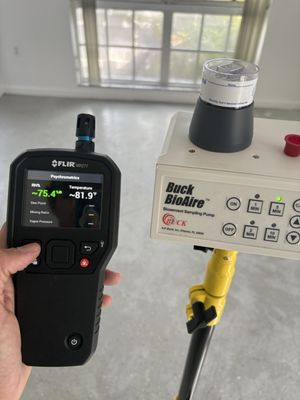
Step 2: Moisture Detection
Mold requires moisture, so testing always includes moisture assessment.
Tools may include:
- Moisture meters for drywall and wood
- Thermal imaging cameras to locate hidden dampness
- Humidity measurements across different rooms
In older homes, moisture often exists without visible leaks.
Step 3: Air Sampling
Air samples compare indoor air to outdoor baseline levels.
This helps identify:
- Elevated mold spore concentrations
- Areas where mold may be hidden
- Whether mold is actively affecting indoor air quality
Step 4: Surface Sampling (When Needed)
Surface samples may be taken from suspected areas to confirm mold presence and guide remediation planning.
Why Testing Is Especially Valuable Before Mold Removal
Testing prevents unnecessary or incomplete remediation.
Without testing:
- Mold may be removed from visible areas while hidden growth remains
- Moisture sources may go unaddressed
- Mold may return after cleanup
Testing helps define scope, location, and priority.
Common Misconceptions About Mold Testing in Older Homes
“If I Don’t See Mold, It’s Not There”
In older homes, mold is more often hidden than visible.
“Bleach Smell Means It’s Clean”
Odors can be masked temporarily while mold remains active inside materials.
“Older Homes Always Have Mold”
Not true—but older homes require closer monitoring due to higher moisture vulnerability.
What Mold Testing Does NOT Do
It’s important to understand the limits of mold testing:
- It does not remove mold
- It does not diagnose health conditions
- It does not replace proper remediation
Testing provides information, which guides responsible decisions.
What Happens After Mold Testing
Based on results, professionals may recommend:
- Targeted mold remediation
- Moisture control improvements
- HVAC or duct inspection
- Structural drying
- Ventilation upgrades
In many older homes, addressing moisture is more important than removing small mold areas.
Long-Term Benefits of Mold Testing in Older Sunny Isles Beach Homes
Property owners who invest in testing benefit from:
- Early detection before major damage
- Lower remediation costs
- Better indoor air quality
- Fewer surprises during renovations
- Stronger resale confidence
Testing turns unknown risks into manageable solutions.
Why Local Experience Matters
Mold behavior in Sunny Isles Beach differs from inland areas.
Local professionals understand:
- Coastal humidity patterns
- Salt air effects on materials
- Older Florida construction methods
- Slab foundation moisture dynamics
Tip Top Water and Fire Damage Restoration has experience working with older homes in Sunny Isles Beach and surrounding coastal communities, where mold testing often reveals issues tied to decades of moisture exposure rather than recent leaks.
Preventive Steps After Testing
Even if testing shows minimal mold, prevention remains essential:
- Maintain indoor humidity between 45–55%
- Keep AC systems and drain lines serviced
- Improve airflow in closets and bathrooms
- Inspect after storms and heavy rain
- Schedule periodic moisture checks
Prevention is especially important in older homes where materials are less forgiving.
Final Thoughts
Understanding mold testing in older Sunny Isles Beach houses is about recognizing how age, moisture, and coastal weather interact over time. Mold rarely appears overnight—it develops quietly, often out of sight, fed by humidity and minor water issues that accumulate over years.
Mold testing provides clarity. It replaces guesswork with facts and allows property owners to make informed decisions about remediation, maintenance, and long-term protection. In a coastal environment where moisture is constant and older homes are common, mold testing is not an overreaction—it is a smart, proactive step toward protecting both the home and the people who live in it.